
The Evolution of Independent Country Music
Country music has always connected deeply with its listeners through honest, relatable stories. Few themes resonate as powerfully as country songs about dad. These tracks often share universal feelings of love, guidance, and nostalgia. They speak to the very core of family bonds.
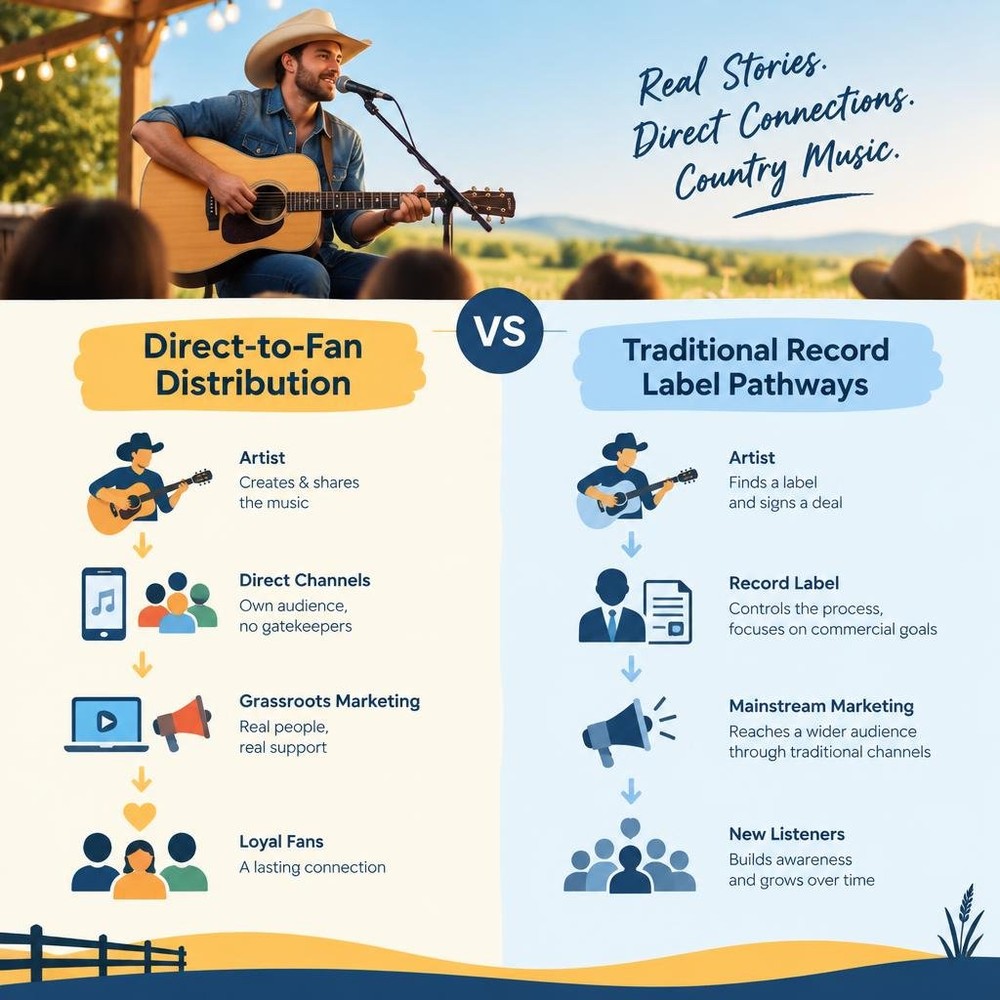
In recent years, we have witnessed a major transformation in how these heartfelt narratives reach their audience. The traditional music industry model is evolving. Now, independent artists are increasingly using a direct-to-fan approach. This allows them to bypass old gatekeepers and connect straight with listeners.
This article will explore the rise of this direct-to-fan model in independent country music. We will see how it empowers artists, like any dedicated independent country music artist, to share their authentic voices and personal stories. We will also examine how this shift helps preserve the raw, emotional truth found in classic and modern country tributes to fathers.
For decades, the path to country music stardom often led through Nashville’s established record labels, publishing houses, and radio gatekeepers. This “Nashville system” provided structure, funding, and widespread distribution, but it often came at the cost of creative control and master ownership for artists. Songs were sometimes crafted by committees, tailored for radio, and polished to fit a commercial mold.
However, the digital revolution has dramatically reshaped this landscape. The rise of streaming platforms, social media, and digital distribution channels has democratized access to audiences, allowing artists to bypass traditional intermediaries. This shift has empowered independent musicians to retain ownership of their masters, exert greater creative autonomy, and tell their stories with an unfiltered authenticity that resonates deeply with listeners. The result is a vibrant ecosystem where genuine, personal narratives—like those found in country songs about dad—can thrive without needing a major label’s green light.
The contrast between the traditional and independent models is stark, particularly when considering the artist’s control over their work and career trajectory.
| Feature | Traditional Record Label Model | Independent Direct-to-Fan Model |
|---|---|---|
| Creative Control | Often limited; A&R teams, producers, and labels influence song choice, production, and image. | High; Artist dictates songwriting, production, branding, and release strategy. |
| Master Ownership | Typically owned by the record label. | Retained by the artist or their independent label. |
| Distribution | Label handles physical and digital distribution through established networks. | Artist uses digital aggregators (e.g., TuneCore, DistroKid) for global streaming/download. |
| Funding | Label advances cover recording, marketing, and touring; recoupable from artist earnings. | Self-funded, crowdfunding, or independent investors; artist retains more revenue. |
| Marketing & Promotion | Label-driven campaigns, radio promotion, PR. | Artist-driven social media, email lists, grassroots efforts, direct fan engagement. |
| Revenue Share | Artist receives a small percentage (e.g., 10-20%) after recoupment. | Artist retains a significantly larger percentage (e.g., 70-100% from direct sales, 70-85% from streaming after aggregator fees). |
| Audience Connection | Indirect, mediated by label and media. | Direct and personal through social media, fan clubs, and direct communication. |
This table illustrates why many artists, particularly those focused on authentic storytelling, are gravitating towards the independent model. It’s a strategic choice that prioritizes artistic integrity and direct connection over the potential for massive, but often fleeting, mainstream exposure.
Key Drivers Behind Independent Country Music Growth
Several factors fuel the continued growth of independent country music. Streaming algorithms, while sometimes criticized, can also help niche artists find their audience, especially when listeners are actively seeking specific themes like “country songs about dad.” Social media platforms provide an unparalleled avenue for artists to share snippets of their lives, behind-the-scenes content, and connect personally with fans, building a loyal community organically.
Fan subscriptions and direct support models, such as Patreon or Bandcamp, allow dedicated listeners to directly fund an artist’s work, ensuring a more stable income stream. Beyond digital, touring income and merchandise sales remain crucial, with independent artists often cultivating more intimate, high-value live experiences. Crucially, retaining catalog control means artists can continue to earn from their music for decades, building a sustainable career on their own terms. This long-term vision is particularly appealing for artists whose music is deeply personal and timeless.
Emotional Storytelling and Family Themes in Modern Country
The independent model is a natural fit for emotional storytelling, especially when it comes to family themes. Country songs about dad are a prime example, often serving as paternal tributes that explore generational legacy, life lessons, and profound personal bonds. Artists like Alan Jackson, Holly Dunn, and Reba McEntire have all contributed iconic tracks that resonate with audiences because they tap into universal experiences of fatherhood.
Consider Alan Jackson’s “Drive (For Daddy Gene).” Released in 2002, this song became a number one hit on the Billboard Hot Country Singles and Tracks chart and even crossed over to the Billboard Hot 100, peaking at number 28. It earned a Grammy Award nomination and won Song of the Year at the 2002 Country Music Association Awards. What makes it resonate? Jackson crafted it as a positive tribute after his father’s passing, blending specific childhood memories—like driving an old plywood boat with a 1975 Johnson motor or learning to drive an old Ford truck—with broader themes of father-son bonding and the passage of knowledge. The raw lyricism and Jackson’s sincere vocal delivery allow listeners to “stroll down memory lane,” connecting their own experiences to his.
Holly Dunn’s “Daddy’s Hands,” released in 1986, offers another powerful example. Despite barely cracking the Top 10 on the country charts and never reaching No. 1, it has achieved lasting cultural impact. The song’s authenticity stems from the fact that Dunn wrote it herself, not a committee, infusing it with an unfiltered honesty that modern country music sometimes struggles to replicate. Lines like “Daddy’s hands weren’t always gentle, but I’ve come to understand…” speak to the complex reality of father-child relationships, encompassing discipline, love, and protection. Fans frequently report hearing it at funerals, weddings, and baby dedications, underscoring its deep emotional resonance and its role in marking significant life milestones. This song highlights how a deeply personal, artist-written tribute can achieve a cultural significance far beyond its initial chart performance.
Reba McEntire’s “Daddy,” featured on her 1979 album Out of a Dream, was the first song she penned that appeared on one of her albums. While not a chart-topper, it laid the groundwork for her authentic storytelling. Inspired by her father, Clark McEntire, a ProRodeo Hall of Fame inductee, the song reflects his ranching life, rodeo achievements, and his hopes for his children. This personal narrative continued years later with the 2016 music video for “Just Like Them Horses,” dedicated to her father and filmed on the family farm, demonstrating a multi-generational narrative of tribute and remembrance.
Modern artists continue this tradition. Luke Bryan’s “Build Me A Daddy,” released in 2020, has garnered over 11.9 million streams on Spotify as of October 2026, showcasing the enduring appeal of father-themed songs. David Staton’s “Thank You Dad” is another poignant example. This deeply personal song, inspired by his father’s illness and passing in 2005, and reflecting his Appalachian heritage and Christian faith, resonated so strongly that over 1,500 people attended his father’s visitation. These examples underscore how themes of legacy, discipline, love, and loss are consistently explored, offering comfort and connection to listeners navigating their own family stories. The universality of these themes, combined with the specificity of personal memories, is what makes these songs resonate across generations and cultural divides.
How Direct-to-Fan Channels Empower Modern Artists
The direct-to-fan model fundamentally shifts the power dynamic in the music industry. Instead of relying on labels to connect them with an audience, artists can now build and nurture their own communities. This is achieved through a variety of channels:
- Community Platforms: Dedicated fan forums, social media groups, and exclusive online spaces allow artists to interact directly with their most loyal supporters, sharing updates, asking for feedback, and fostering a sense of belonging.
- Email Newsletters: A direct and personal line of communication, newsletters allow artists to share new music, tour dates, merchandise offers, and personal stories without algorithmic interference. This is invaluable for sharing the intimate inspirations behind country songs about dad.
- Crowdfunding: Platforms like Kickstarter or Patreon enable fans to directly fund specific projects, from album production to music video creation, giving them a vested interest in the artist’s success.
- VIP Ticketing and Experiences: Offering exclusive meet-and-greets, private acoustic performances, or personalized merchandise creates deeper connections and higher-value experiences for dedicated fans.
This direct interaction allows artists, such as independent country music artists, to share the intricate stories and emotional depth behind their music, fostering a bond that transcends a simple consumer-product relationship. When an artist sings a song about their father, the direct-to-fan model allows them to share the personal anecdotes and inspirations that make the song so powerful, enriching the listener’s experience.

Overcoming Industry Gatekeepers Through Independent Country Music
One of the most significant advantages of the direct-to-fan model is its ability to circumvent traditional industry gatekeepers. Terrestrial radio, once the primary pathway to mainstream success for country artists, often has rigid playlists and a commercial focus that can overlook deeply personal or less “radio-friendly” tracks. Similarly, playlist curation on major streaming services, while influential, can sometimes favor established acts or commercially optimized songs.
Independent artists, however, can achieve organic virality and fan-driven discovery through sheer authenticity. A poignant song, even one that might not fit a mainstream radio format, can spread rapidly through social media shares, word-of-mouth, and dedicated fan communities. This allows songs like David Staton’s “Thank You Dad,” which might not have the marketing budget of a major label release, to find its audience based purely on its emotional impact. While artists like Luke Bryan can achieve massive streaming numbers with songs like “Build Me A Daddy” through a mix of mainstream and digital channels, independent artists demonstrate that chart performance isn’t the sole measure of a song’s lasting impact or cultural significance. The direct-to-fan model ensures that authentic narratives, especially those as universally resonant as country songs about dad, can find their way to the hearts of listeners without needing external validation.
Crafting Authentic Tributes and Songwriting Autonomy
The ability to maintain songwriting autonomy is paramount for artists who wish to craft truly authentic tributes. When an artist writes a song about their father, it often comes from a place of deep personal experience and emotional sincerity. The independent model protects this creative space, allowing for unfiltered narratives that might otherwise be diluted or altered by external pressures.
Consider the distinct power of songs written by the artist themselves, like Holly Dunn’s “Daddy’s Hands” or Alan Jackson’s “Drive (For Daddy Gene),” versus those penned by outside songwriters. While external songwriters can certainly craft moving tributes, there’s an undeniable layer of intimacy and raw emotion when the artist is also the author. This personal connection often translates into a more compelling vocal delivery and a deeper resonance with listeners. Jackson’s decision to write “Drive (For Daddy Gene)” as a “positive tribute rather than a mournful piece” after his father’s death, blending specific memories with universal themes, is a testament to this autonomy. He chose the narrative, the tone, and the details, resulting in a song that became a cornerstone of his career and a beloved classic.
The musical techniques employed in these songs also contribute to their emotional power. Often, a simple acoustic production, featuring classic country instrumentation like steel guitar, acoustic guitar, and fiddle, allows the heartfelt lyrics and vocal delivery to take center stage. This minimalist approach, as seen in many classic country songs about dad, ensures that the story and emotion are paramount, unburdened by overproduction. This focus on authenticity helps preserve the legacy of the father being honored and ensures the narrative remains true to the artist’s vision.
Frequently Asked Questions About Direct-to-Fan Models
The shift towards direct-to-fan models in independent country music raises several questions about its benefits, the types of music it supports, and the practicalities of implementation.
How does the direct-to-fan model benefit independent artists?
The direct-to-fan model offers numerous benefits for independent artists. Firstly, it allows for significantly higher revenue retention, as artists keep a much larger percentage of sales and streaming income compared to traditional label deals. Secondly, it fosters direct communication with fans, building a loyal community and enabling artists to understand their audience’s preferences. Thirdly, it provides release flexibility, allowing artists to release music on their own schedule, without waiting for label approval. Crucially, artists retain intellectual property rights and maintain complete brand control, ensuring their artistic vision is never compromised. This holistic control is especially valuable for artists whose music, like country songs about dad, is deeply personal and reflective of their identity.
Why do family and tribute themes thrive in independent releases?
Family and tribute themes thrive in independent releases primarily due to the emphasis on emotional authenticity and personal memories. Without the pressure to create commercially viable “radio singles,” independent artists are free to delve into deeply personal narratives, such as those found in country songs about dad. This raw honesty builds listener trust and allows for the exploration of generational heritage and complex family dynamics. The grassroots appeal of independent music often attracts an audience that values sincerity over polish, making it the perfect environment for heartfelt, autobiographical songs to find a dedicated listenership.
What tools are essential for managing direct-to-fan country music operations?
Managing direct-to-fan operations requires a suite of essential tools. A robust email list service is critical for direct communication and marketing. Digital streaming distribution platforms (e.g., TuneCore, DistroKid) are necessary to get music onto Spotify, Apple Music, and other services. Artists also benefit from direct storefronts (e.g., Bandcamp, Shopify) for selling merchandise and physical music. Community forums or social media groups help foster fan engagement, while tour tracking and ticketing platforms are vital for managing live performances. These tools empower independent artists to manage their careers comprehensively, from creation to distribution and fan engagement.
Conclusion
The landscape of country music has undergone a profound transformation, driven by the rise of the direct-to-fan model. This shift empowers independent artists to reclaim their artistic freedom, control their narratives, and build sustainable careers rooted in genuine connection with their audience. For themes as universally cherished as country songs about dad, this evolution is particularly significant. It ensures that deeply personal stories, rich with nostalgia, love, and the lessons passed down through generations, can continue to find their way to listeners’ hearts, unmediated and authentic.
As we look ahead to October 2026 and beyond, the independent country music scene is poised for continued growth, offering a vibrant alternative to the traditional industry. It champions the artist’s voice, fosters audience loyalty, and ultimately enriches the tapestry of country music with stories that truly matter.