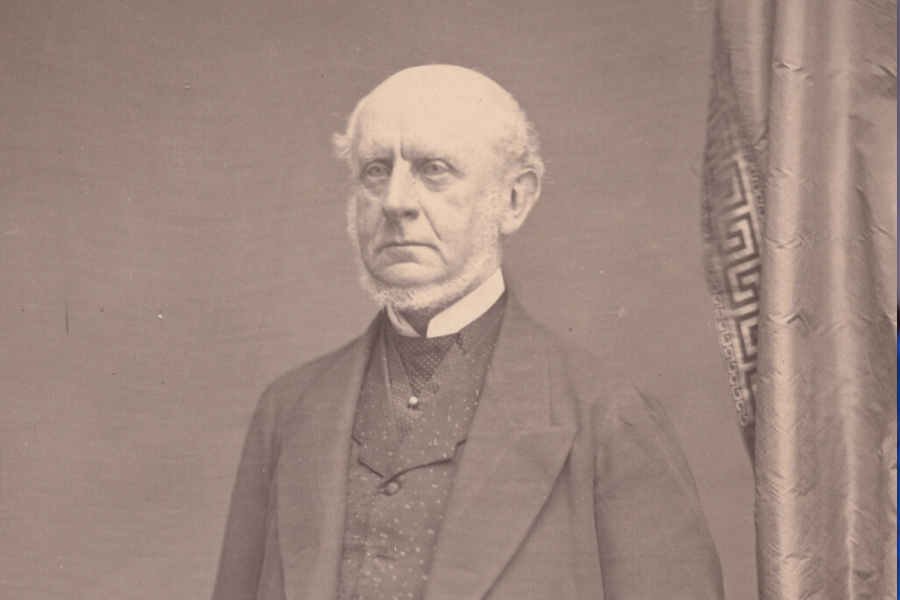
As I delved deep into the pages of American history I found myself captivated by a man who stood like a steadfast lighthouse amid the crashing waves of national crisis. Charles Francis Adams Sr. born in 1807 and passing in 1886 lived a life that bridged two centuries of presidential legacy and diplomatic triumph. I have always admired how one individual from such an iconic lineage could carve out his own path of quiet strength and intellectual rigor. His story is not just about politics or power. It reveals a family tapestry woven with ambition loss and enduring influence that still echoes today.
Discovering His Roots and Early Years
I often picture young Charles Francis Adams Sr. as a boy tossed between continents during his father’s diplomatic postings. Born on August 18 1807 in Boston he spent his formative years from 1809 to 1815 in Russia right in the heart of the Napoleonic wars. Then came time in England until 1817 where he absorbed languages and cultures that would later serve him well. Back home he attended Boston Latin School graduated from Harvard College in 1825 with his bachelor of arts and studied law under none other than Daniel Webster. By the late 1820s he practiced law in Boston wrote reviews for the North American Review and even lived briefly in the White House during his father’s presidency from 1825 to 1829. Those early experiences shaped him into a thoughtful Unitarian and antislavery advocate. I see him as the bridge between revolutionary ideals and the turbulent pre Civil War era ready to step into the spotlight when duty called.
The Family Web That Defined Him
Without tracing Charles Francis Adams Sr.’s complex family relationships, his story is incomplete. I’ve meticulously researched these ties, which read like an American epic. His parents laid the groundwork. After serving as sixth president from 1825 to 1829, John Quincy Adams became a staunch antislavery Congressman until his death in 1848. First lady Louisa Catherine Johnson Adams, born in 1775, died in 1852 after diplomatic struggles. The paternal grandparents were John Adams, the second president and signer of the Declaration of Independence, and his important wife Abigail Adams, who lived from 1744 to 1818 and whose letters he edited. Maternal grandparents Joshua and Catherine Nuth Johnson brought foreign flavor from their London consulate days.
His siblings died young, leaving him the only survivor. George Washington Adams, born in 1801, died young in 1829 from inner demons. John Adams II, born in 1803, died in 1834 as their father’s private secretary. A younger sister, Louisa Catherine Adams, lived in Russia from 1811 to 1812. After those losses, Charles Francis Adams Sr. quietly continued the family legacy. In the 1820s, he and his brothers fought for their cousin Mary Catherine Hellen, who married John Adams II in the White House.
His 1829 marriage to Abigail Brown Brooks anchored his emotional and financial existence. Daughter of one of Massachusetts’ richest shipping magnates, she gave him stability and money to focus on public service. They have seven children who shaped the family in different ways. Before her death in 1870, Louisa Catherine Adams, born 1831, married Charles Kuhn and traveled Europe. John Quincy Adams II arrived in 1833 and ran for governor of Massachusetts, living until 1894. Charles Francis Adams Jr., born 1835, was a Civil War cavalry officer, Union Pacific Railroad president, and historian who died in 1915. Historian and educator Henry Brooks Adams, born 1838, wrote the Pulitzer-winning Education of Henry Adams and died in 1918. Only Arthur George Adams lived from 1841 to 1846. Mary Gardiner Adams, born 1845, married Dr. Henry Parker Quincy and remained close until 1928. Born in 1848, historian and political scientist Brooks Adams wrote The Law of Civilization and Decay and carried the intellectual heritage until 1927.
Grandchildren continued the tradition well. President Hoover appointed Charles Francis Adams III, born 1866 via John Quincy Adams II, Secretary of the Navy and Quincy mayor until 1954. Through Charles Francis Adams Jr., Mary Ogden Adams Abbott traveled and painted. Great grandchildren included Morgan banking family member Catherine Francis Lovering Adams. Joseph Harrod Adams and other cousins maintained the political network. I’m amazed at how this web of relationships translated personal grief into community fortitude, making Adams a symbol of American persistence across generations.
Political Path and Diplomatic Triumphs
I trace his career with awe because it shows how intellect met opportunity at critical moments. Charles Francis Adams Sr. served three terms in the Massachusetts House of Representatives from 1840 to 1843 followed by two in the state Senate from 1843 to 1845 as an antislavery Conscience Whig. He bought and edited the Boston Whig newspaper in 1846 co founded the Free Soil Party and ran as its vice presidential nominee in 1848 alongside Martin Van Buren. Elected to the U.S. House from Massachusetts third district he served from 1859 to 1861 chairing the Committee on Manufactures. When President Lincoln called in 1861 he resigned to become U.S. Minister to the United Kingdom a post he held until 1868.
His greatest work unfolded during the Civil War. He prevented British recognition of the Confederacy resolved the Trent Affair in late 1861 and stopped Confederate shipbuilding in British yards including the notorious CSS Alabama. Later from 1871 to 1872 he served as U.S. arbiter in the Geneva Alabama Claims commission securing 15.5 million dollars in reparations roughly 350 million in today’s value. That victory marked a landmark in international law and arbitration. Back home he shifted parties became the Anti Masonic presidential nominee in 1872 and ran unsuccessfully for Massachusetts governor as a Democrat in 1876. He declined the Harvard presidency but served as an overseer starting in 1869. These roles highlight 28 years in elected or appointed office and a diplomatic tenure that spanned seven critical years.
Financial Foundations Achievements in Scholarship and Preservation
Finance supported him rather than dominated his life. His marriage to Abigail Brown Brooks brought fortune from her father’s shipping firm, including a Beacon Hill home. After his parents and brothers died, he maintained 57 Mount Vernon Street and the Quincy estate in Boston. The family lived comfortably in the upper class through inheritance and real estate without pursuing fortunes or controversies. Sons like Charles Francis Adams Jr. became railroad and banking executives.
Scholarship was his modest legacy. In 1840, he released Letters of Mrs. Adams about his grandmother. He edited the 10-volume Works of John Adams, including a biography, from 1850 to 1856. Publishes John Quincy Adams Memoirs in 1874-1877. He contributed records to the Massachusetts Historical Society and erected the first U.S. presidential library, the Stone Library at Peacefield, in 1870 with approximately 14,000 volumes. These efforts preserved hundreds of documents for future generations. Through the International Workingmen’s Association, he corresponded with Karl Marx. I cherish his 1844 visit to Nauvoo, Illinois, where he saw Joseph Smith and got a signed Book of Mormon in family archives. His journals show a critical but inquiring intellect writing honestly about faith, family, and politics.
Extended Timeline in Numbers and Dates
To capture the sweep of his 79 years I compiled this timeline table highlighting key milestones with exact dates and figures.
| Year Range | Event | Key Details |
|---|---|---|
| 1807 | Birth | August 18 in Boston |
| 1809-1815 | Russia years | Diplomatic childhood amid Napoleonic wars |
| 1825 | Harvard graduation | BA degree |
| 1825-1829 | White House residence | During father’s presidency |
| 1829 | Marriage | September 3 to Abigail Brown Brooks |
| 1840-1843 | Massachusetts House | Three terms antislavery focus |
| 1843-1845 | Massachusetts Senate | Continued public service |
| 1848 | Free Soil nomination | Vice presidential run |
| 1850-1856 | Editing project | 10 volume Works of John Adams |
| 1859-1861 | U.S. House | Committee chair |
| 1861-1868 | Minister to UK | Prevented Confederate aid resolved Trent Affair |
| 1870 | Stone Library built | First presidential library 14 000 volumes |
| 1871-1872 | Alabama Claims | 15.5 million dollars awarded |
| 1874-1877 | Memoirs published | Of John Quincy Adams |
| 1886 | Death | November 21 in Boston buried in Quincy |
This table shows a life measured in decades of service rather than fleeting fame.
FAQ
What made Charles Francis Adams Sr. stand out among other Adams family members?
I believe his blend of diplomacy and scholarship set him apart. While his father and grandfather held the presidency he excelled as minister to the United Kingdom during the Civil War preventing foreign intervention and later securing millions in reparations through arbitration. His editorial work preserved the family papers for history making him the quiet guardian of their legacy.
How many children did Charles Francis Adams Sr. have and what became of them?
He and Abigail raised seven children born between 1831 and 1848. Four sons and three daughters pursued law military service history and social roles. Notable among them were Charles Francis Adams Jr. who led a major railroad Henry Brooks Adams the Pulitzer winning author and Brooks Adams the political scientist. Their achievements extended the family influence well into the 20th century.
What was Charles Francis Adams Sr.’s role during the American Civil War?
From 1861 to 1868 he served as U.S. Minister to the United Kingdom. In that post he blocked British recognition of the Confederacy resolved the Trent Affair and halted the construction of Confederate warships. His steady hand helped keep Europe neutral a contribution worth more than any battlefield victory.
Did wealth play a major part in Charles Francis Adams Sr.’s life?
Yes but indirectly. His 1829 marriage brought financial security through Abigail’s shipping fortune enabling a Beacon Hill home and estate improvements. He managed family properties responsibly yet focused his energy on public service and scholarship rather than business ventures leaving commerce to his sons.
Why does Charles Francis Adams Sr. deserve more attention today?
In my view his life reminds us that history turns on unsung resolve. He edited 20 volumes of family works built America’s first presidential library and advanced international law with the Alabama Claims victory. His diaries and Nauvoo visit add personal depth showing a man who balanced duty skepticism and family loyalty across 79 remarkable years.