The New Landscape of Business Real Estate
The business world no longer fits neatly into traditional boxes. Once, offices were offices, warehouses were warehouses, and retail stores held their own unique footprints. Now, the boundaries blur. Commercial flex spaces have become the hybrid frontier of entrepreneurship, where adaptability, speed, and creativity intersect. As industries shift, the built environment is reshaping itself to meet the fluidity of today’s work models.
Businesses want possibilities, not just locations. Flexible spaces are the malleable clay from which modern business forms are shaped, whether a startup needs a combined work-and-storage zone or a mature company wants to try regional branches without the risk.
The Evolution from Static to Fluid Workspaces
The traditional commercial real estate paradigm was strict. A company would sign a ten-year lease, retrofit a single-purpose office floor, and settle into a routine. Digital infrastructure, mobile technologies, and project-based operations changed that approach. Organizations seek architectural chain-free scaling.
Flex spaces, with their open designs and modular layouts, represent a decisive break from the fixed architecture of conventional offices. They make it possible to evolve without moving, to shift functions without major reconstruction. The modern business model demands this kind of agility; physical spaces are finally catching up.
Flex Spaces as Catalysts for Operational Agility
Agility is no longer trendy. It is now essential to survival. Flexible commercial space ensures continuity when supply chains change overnight or industries switch to remote and hybrid work.
A company using a flex property can start with minimal square footage, test its operations, and then add more space as needed. Conversely, an enterprise facing a market slowdown can reduce its footprint without being strangled by sunk costs. These decisions unfold not over years, but in real time. The flex environment, essentially, is a living space that breathes with the rhythm of business growth and contraction.
Redefining Cost Efficiency and Value
Cost efficiency usually begins with rent but rarely ends. Traditional spaces hide maintenance, modification, and utility costs. Managed infrastructure and ready-to-use facilities reduce these costs in flex spaces. This means immediate savings and consistency for small and mid-sized businesses.
Control matters more than statistics. Unrestricted pause, expansion, and redesign enable long-term financial stability. Predictability becomes the rarest coin in an uncertain environment.
Architectural Freedom and Innovation
In traditional property categories, form follows function. By contrast, flex spaces allow function to lead design. This reversal opens up creative possibilities for how work environments support innovation.
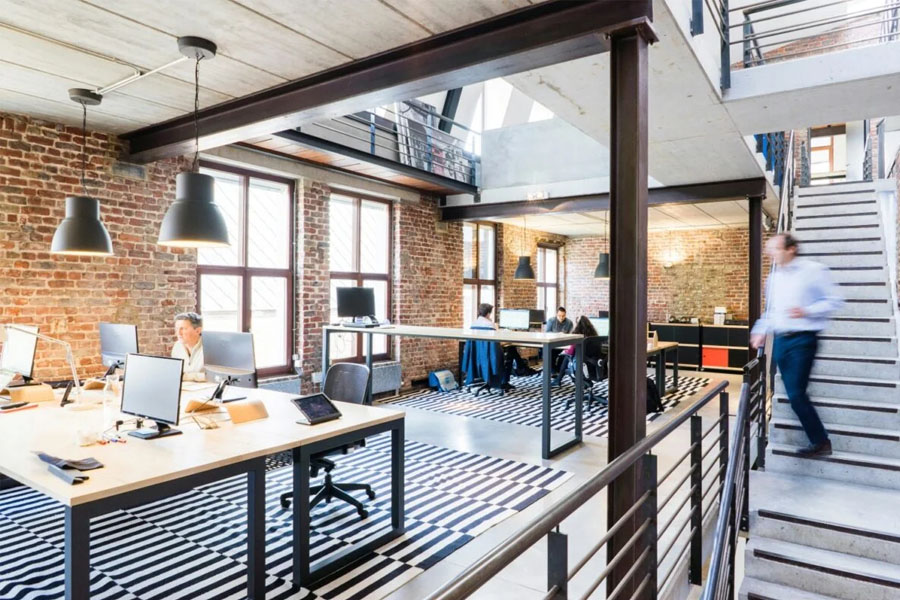
Open floors, high ceilings, and changeable interiors are blank slates. A collaborative hub can become a product design lab or packing station without structural changes. Walls feel like transitory acquaintances you use when needed. This architectural freedom fosters new business ideas by making the physical environment adaptable.
The Human Element: Collaboration and Culture
A building is never just walls. It is an ecosystem where culture either flourishes or fades. Flex spaces excel at cultivating the informal encounters that spark creativity. Shared courtyards, open communal zones, and mixed-use facilities invite collaboration across industries.
When entrepreneurs, freelancers, and small firms share one address, synergy becomes more than a catchphrase. Ideas spill across hallways and projects intertwine. This accidental collaboration often plants the seeds of innovation. Traditional properties, isolated in function and design, struggle to reproduce such organic community dynamics.
Strategic Locations and Accessibility
Geography plays a decisive role in the success of a business. Flex spaces often emerge in transition zones between commercial districts, industrial corridors, and residential neighborhoods. This geographic versatility serves two audiences—the workforce and logistics.
Thanks to city centers, employees commute less and enterprises have quicker access to suppliers and clients. Strategically combining office and light industrial benefits helps organizations position themselves for opportunity. Once determined by zoning and cost, location is now strategic.
Technology Integration in Modern Flex Environments
The infrastructure of a flex space mirrors the digital heartbeat of its tenants. Advanced networking, smart building systems, and integrated data management tools are embedded into the architecture. Automation handles temperature control, access, and energy use.
Technology creates a responsive environment where digital and physical layers interact seamlessly. A workspace that anticipates rather than reacts gives the impression that the building understands its occupants’ pace. Flex environments naturally attract forward-thinking companies that view technology as an architectural principle.
The Psychological Impact of Spatial Flexibility
Flexibility affects thinking as much as physical space. Flexible teams report increased morale and inventiveness. Open space symbolizes open thinking.
Reconfigurable work spaces promote equality and momentum, while rigid cubicles indicate hierarchy and permanence. Strong psychological message: environment supports change, which is safe. This assurance can be crucial in industries that innovate through experimentation.
Environmental Responsibility and Sustainability
Sustainability legitimizes modern commercial real estate. Flex spaces’ efficient design supports it. Shared amenities reduce energy waste, smaller footprints reduce resource consumption, and adaptive reuse of older buildings reduces construction.
Landlords can meet environmental regulations and stay competitive by using eco-friendly materials and technologies. Energy savings and public impression of green-certified properties benefit businesses. Flexibility extends beyond architecture to resource stewardship.
Market Trends Pointing Toward Greater Flexibility
Global market data reflects a consistent increase in businesses adopting flexible property solutions. Driven by volatility in economic cycles and the constant evolution of technology, the preference for temporary, scalable spaces continues to rise.
Former long-term lease tenants are testing hybrid properties for regional presence. Flex sites help entrepreneurs prototype business models before investing. Real estate is becoming a strategic instrument due to its versatility.
FAQ
What types of businesses benefit most from commercial flex spaces?
Flex rooms benefit startups, e-commerce suppliers, design studios, and small manufacturers with variable demand. Their quick space reconfiguration lets them match physical operations to business conditions.
How do flexible leases differ from standard commercial leases?
Flexible leases typically run for shorter terms and include amenities like utilities and maintenance services. These agreements reduce upfront costs and allow tenants to exit or expand more easily than they could with long-term, fixed contracts.
Are flex spaces suitable for corporate enterprises or mainly for startups?
While startups pioneered the trend, established corporations increasingly use flex spaces for satellite offices, innovation hubs, and regional expansions. The format allows them to test markets and maintain mobility without heavy investment.
Do flex spaces compromise professionalism or image?
Absolutely not. Modern flex designs are elegant and functional. Many have high-end finishes, conference facilities, and reception services to maintain image and flexibility.
How does technology contribute to the efficiency of flex spaces?
Technical integration streamlines processes with automated and digital technologies. Security, sustainability, and cost efficiency are improved via energy monitoring and access control.
Are flexible commercial spaces future-proof?
Flex spaces are more future-proof than conventional models. Their flexible architecture, tech-integrated systems, and changeable lease arrangements make them the most resilient commercial real estate.