Early life and family roots
I have always been struck by the quiet scaffolding behind great fortunes. Maria was born into a respectable, steady family life on 24 June 1821. Her father, Rev. Samuel Kissam, served as a clergyman and provided a moral backbone to a household that prized duty and domestic order. Her mother, Margaret Hamilton Adams, brought the practical steadiness that would shape Maria into the kind of woman who could navigate both parsonage modesty and the dizzying social peaks that lay ahead. Those two influences explain why she could step, without obvious strain, into a life of abundance and public expectation.
Marriage and the Vanderbilt ascendancy
I picture the wedding of 28 September 1841 as a hinge moment. Maria married William Henry Vanderbilt and entered a family that was transforming American industry and urban life. William Henry was the son of a self-made titan; that meant Maria’s world widened into railroads, real estate, and a new vocabulary of public visibility. Her life from 1843 onward was occupied by births, house management, social hosting, and the slow accumulation of family influence through estates, investments, and marriages.
Children and their dates
I find that dates steady a narrative. Maria and William Henry raised nine children between 1843 and 1862. The house was often full of youthful noise, and the children carried the Vanderbilt energy into business, philanthropy, and society. Below is a concise ledger of names and years that I refer to like anchors.
| Child name | Birth — Death |
|---|---|
| Cornelius Vanderbilt II | 1843 — 1899 |
| Margaret Louisa Vanderbilt | 1845 — 1924 |
| Allen William Vanderbilt | 1846 — 1847 |
| William Kissam Vanderbilt | 1849 — 1920 |
| Emily Thorn Vanderbilt | 1852 — 1946 |
| Florence Adele Vanderbilt | 1854 — 1952 |
| Frederick William Vanderbilt | 1856 — 1938 |
| Eliza Osgood Vanderbilt | 1860 — 1936 |
| George Washington Vanderbilt II | 1862 — 1914 |
My reading of her role in money and society
I don’t credit Maria with running railroads or investing, but to call her ornamental is to overlook her influence. She was the center of manners, marriages, and philanthropy as wife to the family patriarch. I consider her an informal legacy steward. Maria’s entertaining, social cues, and household ritual management helped turn raw capital into social capital as the family holdings became estates and substantial endowments. After her husband’s death on 8 December 1885, she retained life interests in family estates and dominated the family’s social geography.
Portraits, houses, and public image
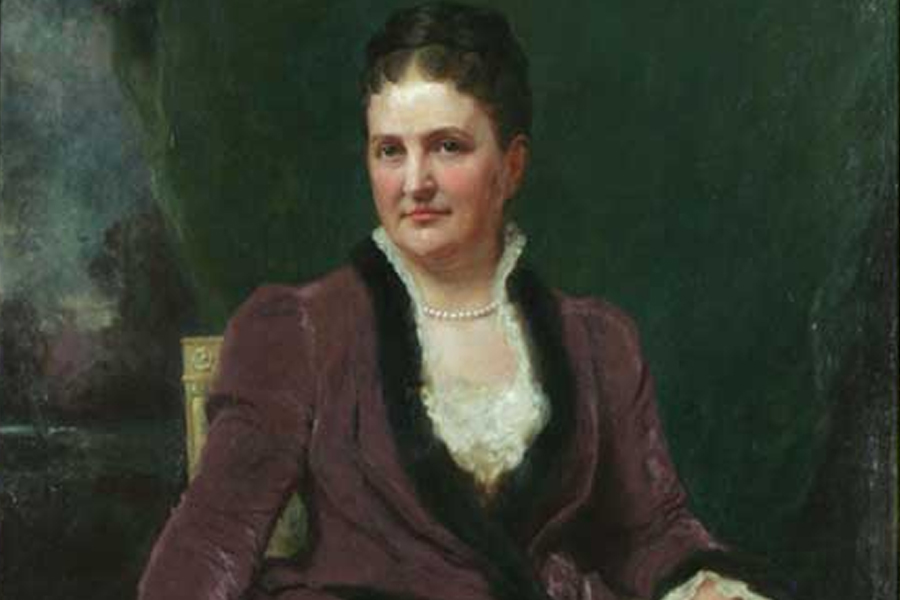
Portraits are often seen as public reputations. Maria sat with famous artists, curating their public image through posture, attire, and gaze. Fifth Avenue mansions and country vacations were theatrical sets for the family. After her youngest son established Biltmore Estate, Maria became a hostess and wise elder, laying invisible behavior and taste signs in each room. Her presence in New York society, especially City, was modest but decisive. John Singer Sargent nailed that delicate, authoritative stance.
An extended timeline in numbers
I like timelines because they make motion legible.
- 1821: Born on 24 June.
- 1841: Married on 28 September.
- 1843 to 1862: Nine children born, including Cornelius in 1843 and George in 1862.
- 1877: The family’s public profile swelled as the older generation’s wealth consolidated.
- 1885: Husband died on 8 December.
- 1896: Maria passed away on 6 November, after 75 years witnessed in the sweep of American change.
The next generation and how I see influence passing down
I watch the family like a relay. Children and grandchildren took the relay baton and ran in different directions: railroad boardrooms, philanthropy, art collecting, and estate building. One grandson, Cornelius Vanderbilt III, carried forward a name and an inventive streak. The family network radiated into new surnames and alliances through marriage, and each married in the pattern of social arithmetic that made the Vanderbilt presence both larger and more distributed.
Frequently Asked Questions
Who exactly was Maria Louisa Kissam?
I would say she was a woman who became the quiet center of one of America’s most consequential families. Born in 1821 and married in 1841, she handled household and social responsibilities at a level that shaped how the Vanderbilts presented themselves to the nation.
What did she do for a living?
She did not have a profession in the modern sense. Her work was domestic management, social leadership, and parenting. Those tasks translated into cultural labor that amplified the family name and smoothed relationships among America’s upper crust.
How many children did she have and who were they?
I count nine children born between 1843 and 1862. Their names include Cornelius, William Kissam, Emily Thorn, Florence Adele, Frederick William, Eliza Osgood, and George Washington among others. One child, Allen William, died in infancy.
Did she ever live at Biltmore?
She did not build Biltmore herself, but she was connected closely to it through her son George. She visited and acted as an early hostess there when the estate was new, helping to set the tone for a house that would become an American landmark.
How should I picture her personality?
I imagine steadiness: reserve tempered with warmth, an ability to keep rooms moving toward decorum, and a determination to convert private abundance into public stability. Her life reads like a slow, careful painting rather than a sudden portrait.
Where do I see her influence today?
Her influence survives in houses, portraits, and the arrangements of a family that mapped business success into cultural institutions. The ledger of births, marriages, and endowments remains an echo of her quiet authority.
What years bracket her life?
1821 to 1896. These seventy-five years span antebellum America, civil war, Reconstruction, and the rise of industrial modernity.
How many grandchildren did she have?
I count dozens across the Vanderbilt branches. The exact number is large because the family tree expanded through marriages into other significant American houses.
What will historians remember about her?
Historians will likely remember her as a linchpin of household practice whose parenting, hosting, and discretion helped shape a family that left an outsized mark on architecture, philanthropy, and American taste.