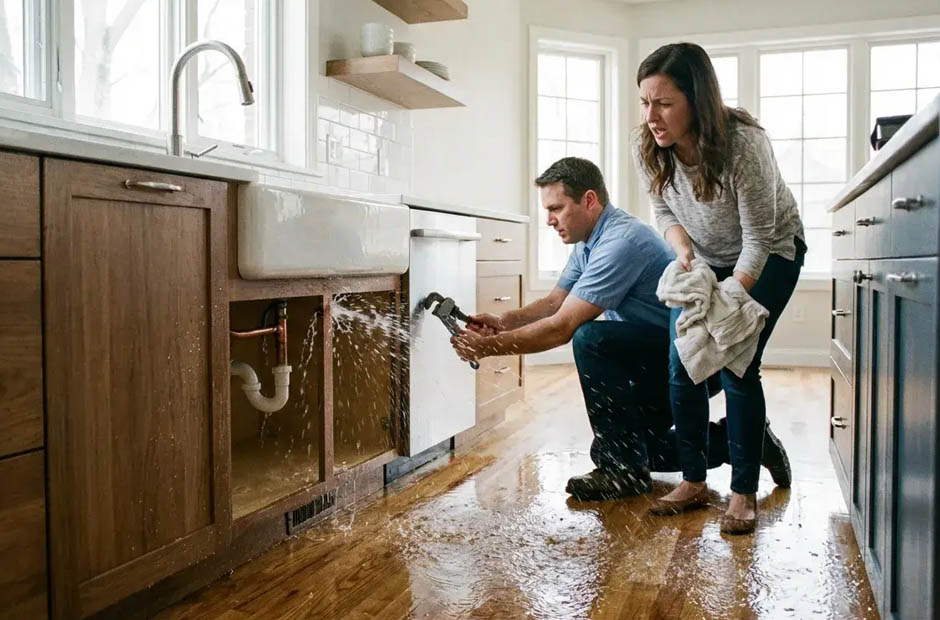
Emergency plumbing issues such as burst pipes, severe drain blockages, or overflowing fixtures can quickly disrupt household functions and make it difficult to complete everyday tasks like cooking or maintaining hygiene. Responding quickly and correctly helps limit water damage and prevents the situation from worsening until professional help or a permanent repair is available. Here’s how to manage emergency plumbing in your home:
Assess the Situation Safely
Engaging an emergency plumbing company helps you reduce the impact of sudden leaks and overflows. Before they begin repairs, you still need to keep the area safe and avoid standing water near exposed wiring. Use a flashlight to view under-sink areas or spaces behind fixtures. Check the following in your home:
- Look for visible damage, such as split pipes, dripping joints, or water stains
- Trace where the water appears to be coming from, such as the supply line
- Keep children, pets, and household items away from the affected area
- Take photos of the damage before cleanup begins
After you assess the area, avoid pulling apart pipes or fixtures on your own. A quick visual inspection will help you clearly identify the problem so you can explain it accurately when contacting a professional. Providing specific details about what you observed allows a plumber to better prepare the right tools and replacement parts before arriving; this helps speed up the repair process.
Turn Off the Water Supply
The main water shut-off valve is typically located where the water line enters your home, and you should turn it off immediately in an emergency. You can also stop the flow at a local fixture valve, such as the shut-off under a sink or behind a toilet, which helps reduce water damage in a specific area. Acting quickly at this stage limits how far water spreads through your space and helps contain the problem.
Knowing the locations of your shut-off valves before an issue occurs saves valuable time during an emergency. If a valve is difficult to turn, you may need to use pliers to fully close it, but avoid forcing it to the point of damage. It is also useful to show other members of your household where these valves are and explain how they operate, so they are able to respond if you are not available.
Valves wear down over time or become stiff, which affects how reliably they function. To check their condition, turn them on and off occasionally to confirm they move smoothly and shut off properly. When you notice resistance, corrosion, or small leaks around a valve, that usually indicates it needs maintenance or replacement.
Contain the Water Damage
Place towels or buckets around the leak to absorb and collect water before it spreads. This helps to limit damage to floors, walls, and nearby fixtures. Cover exposed areas where water continues to drip or flow; placing a tarp or plastic sheet over affected spots blocks further moisture spread.
Moving furniture and valuables away from the water source reduces the risk of damage to personal items. In some situations, sandbags can be used to help block water from spreading into other areas of the home. When furniture is relocated, water exposure to belongings is limited, which helps prevent avoidable losses.
Seek Professional Emergency Plumbing
Hiring a plumbing company provides access to technicians who are trained to work with different types of plumbing systems. These professionals use specialized tools, and they follow established methods to assess and address issues. Plumbers may repair leaks, remove blockages, or restore system flow depending on what they find. Contact a plumbing professional today for prompt assistance with emergency plumbing problems in your home.



