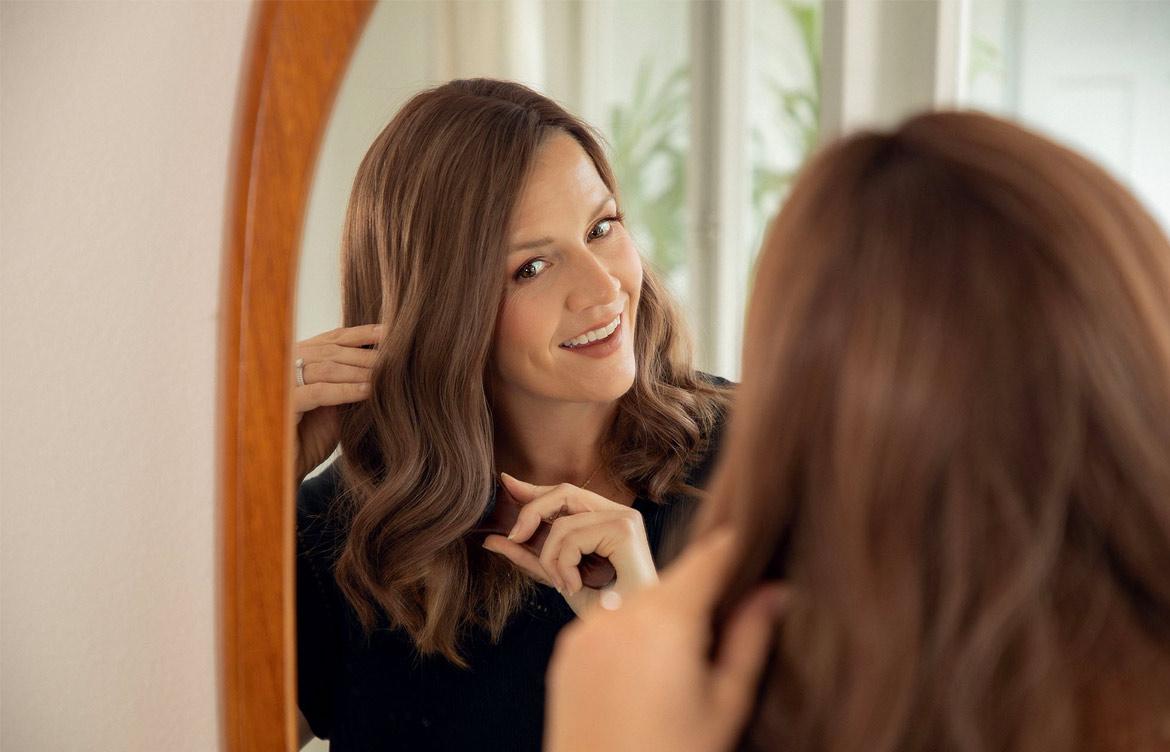
Female hair loss frequently stays hidden because it presents as diffuse crown thinning driven by hormonal shifts, thyroid imbalances, or nutritional gaps rather than a recognizable receding hairline. Resolving it requires identifying the specific biological trigger alongside utilizing advanced cosmetic coverage designed explicitly for thinning parts.
Clinical research shows that female pattern hair loss affects 25% of women by age 50, but physical signs often emerge much earlier. Thinning frequently shows up in a person’s twenties as a widening part, a thinner ponytail, or excess strands collecting in the shower drain.
Because medical treatments take time, the cosmetic category has advanced significantly by offering specific solutions for diffuse thinning. Daniel Alain’s natural-looking hair toppers serve as a prime example of this evolution, immediately restoring volume exactly where women need it most.
1. Different Visual Presentation
Male pattern baldness follows a culturally recognized template involving a receding hairline and a distinct bald spot at the vertex. Unlike that predictable progression, female androgenetic alopecia behaves differently by preserving the front hairline while causing diffuse thinning across the crown and down the natural part.
Because this pattern lacks severe visual boundaries, doctors frequently underestimate the early signs of hair loss that women experience.
A widening part, a visible scalp under harsh overhead lighting, or a general loss of density at the top of the head serve as the primary physical indicators. While people naturally lose up to 100 hairs daily, an increase above this baseline requires professional evaluation.
2. Varied and Overlooked Triggers
Female hair loss causes rarely stem from a single isolated trigger. Androgenetic alopecia, polycystic ovary syndrome, and hormonal fluctuations during perimenopause frequently drive the initial loss.
Nutritional deficits in iron or ferritin, alongside severe caloric restriction, also disrupt the natural growth cycle. Postpartum telogen effluvium typically peaks three to four months after delivery, while medications like oral contraceptives or beta blockers can initiate sudden shedding phases.
Without a clinical evaluation, women’s hair thinning reasons are often incorrectly dismissed as temporary stress or standard aging.
A patient in her early forties might attribute her shedding to work pressure and miss a treatable hypothyroidism diagnosis that a basic blood test would reveal. Accurate identification requires comprehensive blood panels to isolate the specific biological mechanism at fault.
3. Stigma Delays Professional Help
Cultural norms treat male baldness as an expected biological progression, but thinning hair in women carries disproportionate social weight.
Research shows that women experiencing hair loss report higher rates of depression and social withdrawal compared to men facing equivalent physical changes. These psychological stakes prevent open conversations, which means many individuals delay exploring intervention strategies until the thinning reaches an advanced stage.
This hesitation severely limits the efficacy of early-stage treatments. With hair loss in women common among so many age groups, normalizing clinical help becomes much easier. Early action preserves a much wider range of viable management strategies before the follicles become permanently dormant.
4. Limited Medical Interventions
Understanding what helps female hair loss means acknowledging the strict limitations of current pharmacology. Topical minoxidil remains the most widely recommended over-the-counter option, yet it demands indefinite daily application to maintain any new growth.
Oral medications like off-label spironolactone require ongoing prescriptions, carry potential hormonal side effects, and are generally restricted from use by women of childbearing age.
Surgical alternatives present their own severe constraints for this specific demographic. Hair transplant procedures carry industry costs ranging from $10,000 to over $25,000 and demand an invasive recovery period. They also yield less predictable results for diffuse female thinning than they do for localized male baldness.
5. Evolved Cosmetic Enhancements
A decade ago, cosmetic hair pieces carried a reputation for obvious seams, uncomfortable synthetic fibers, and heavy construction. Modern manufacturing has bypassed those outdated limitations by introducing lightweight coverage tools specifically built for partial density loss.
Instead of full wigs, today’s hair toppers clip directly into existing strands at the crown or part line to add immediate volume exactly where diffuse thinning strikes.
High-quality pieces engineered from human hair sit invisibly at the crown to combat the specific thinning pattern most women experience. These modern options now include exact color-matching capabilities, breathable hand-tied bases, and virtual consultations that allow for precise sizing from home.
As a result, the broader market for hair thinning solutions for women has expanded to include pieces that withstand daily heat styling and professional environments.
The Path Forward
If shedding accelerates quickly, scheduling an appointment with a dermatologist to run thyroid, iron, and hormonal blood panels provides a necessary clinical baseline. Exploring discreet human hair toppers designed for crown thinning functions as an effective parallel strategy during the months it takes for medications to show visible results.
Virtual consultations offer a practical entry point to understand how modern, hand-tied pieces integrate with natural growth.
| Author Profile: Daniel Alain is the leading manufacturer and supplier of premium European human hair wigs and toppers for women experiencing hair loss. |