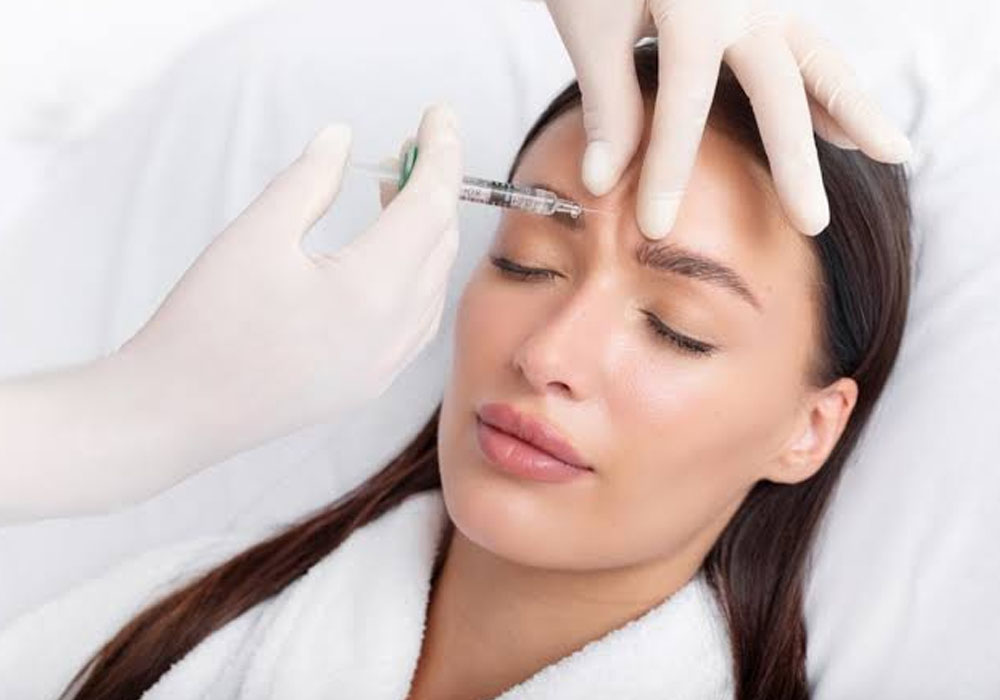
Most decisions about aesthetic treatment are reactive. Something has changed, a line has deepened, volume has shifted, and the response is to address what is already visible. That model makes intuitive sense. It mirrors how people approach most problems: wait until there is one, then solve it.
But there is a growing body of thinking in aesthetic medicine that challenges this sequence, not by dismissing correction but by questioning whether correction is always necessary if the change is addressed thoughtfully before it has the chance to fully form.
How Lines Actually Develop
Facial lines do not appear overnight. They develop through a process that takes years, often decades. Repeated muscle contractions create creases in the overlying skin. Early on, those creases are dynamic, meaning they appear when the muscle contracts and disappear when it relaxes. Over time, with enough repetition, the crease begins to remain visible even when the muscle is at rest. At that point, it has become a static line, and addressing it requires considerably more effort and yields less complete results than addressing it would have at an earlier stage.
This is the biological logic that underpins preventive treatment. Relaxing a muscle before a dynamic crease has had the opportunity to etch itself permanently into the skin means the crease never fully forms. The tissue above a resting muscle does not experience the same repeated folding, and the long-term result is skin that holds its quality for longer.
Why Earlier Is Not the Same as Younger
A common concern about preventive treatment is that starting earlier means treating a face that does not yet have visible problems. That framing misunderstands what the treatment is actually doing. It is not treating a problem that does not exist. It is intervening in a process that is already underway before that process reaches its visible conclusion.
The muscle activity responsible for future lines is already present in a face that shows no lines at all. Addressing that activity early is not premature. It is well-timed. The face is not being changed. The progression of a predictable biological process is simply slowed.
The Maintenance Model
Preventive thinking repositions aesthetic treatment from something reactive and occasional to something proactive and continuous, more like skincare than surgery. Small, consistent interventions maintain a baseline rather than periodically correcting significant change.
This model tends to produce outcomes that are more stable over time because the treatments are smaller, the intervals are managed, and the results never require dramatic correction. People who pursue Botox Adelaide clinics offer on this preventive basis frequently report that the cumulative result over the years looks more natural than reactive treatment because nothing is ever being pulled back from a significant departure.
The face that is maintained gradually looks consistently like itself. The face that is corrected periodically looks, between appointments, like something in transition.
Preventive thinking is not about vanity arriving early. It is about understanding a biological process well enough to stay ahead of it rather than spending years perpetually catching up.