Something has shifted in the way younger buyers approach the purchase of significant jewellery. The shift is not simply about budget, though that plays a role. It is more fundamental: a renegotiation of what the purchase is supposed to mean, what form it should take, and whether the conventions that governed those decisions for previous generations have any particular authority over people who did not inherit them.
The answer, increasingly, appears to be no.
The Lab-Grown Inflection Point
The emergence of gem-quality laboratory-grown diamonds has introduced a structural change that the traditional market is still absorbing. These stones are chemically, physically, and optically identical to mined diamonds. They are not simulants. They are diamonds, produced by replicating the conditions under which natural stones form, but in a controlled environment over weeks rather than billions of years.
The price differential between lab-grown and mined stones of equivalent quality has widened significantly in recent years, making it possible for buyers to acquire a larger, better-cut stone within the same budget, or to redirect spending from the stone itself to the setting, the occasion, or other priorities entirely.
Younger buyers, who are more comfortable with the idea that origin does not automatically determine meaning, have adopted lab-grown stones at a higher rate than previous generations. For many of them, the question of whether a stone formed underground or in a facility is simply not the most important question being asked.
Alternative Stones and Personalised Meaning
Beyond lab-grown diamonds, the range of stones younger buyers are choosing for significant jewellery has expanded considerably. Coloured gemstones, salt-and-pepper diamonds with visible inclusions, rough uncut stones, and distinctive shapes that fall outside traditional round brilliants are all appearing in engagement and anniversary pieces.
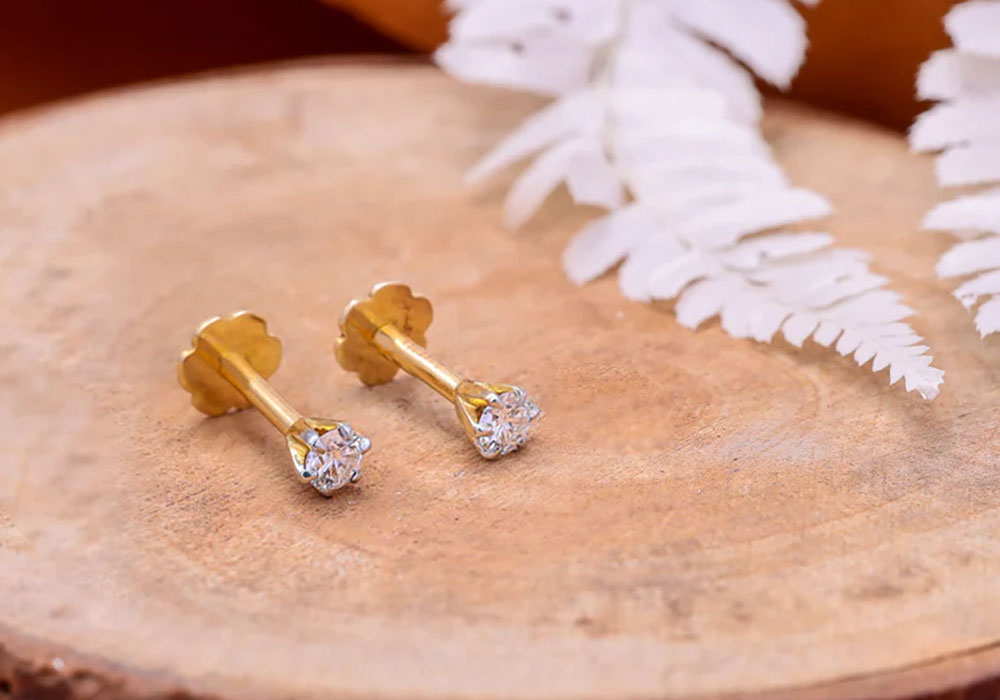
The appeal is not simply aesthetic. It is about specificity. A stone that is visually distinctive, that looks like it belongs to the person wearing it rather than like a default selection from a standard range, carries a different kind of meaning. Diamond earrings featuring mismatched stones, unusual cuts, or unexpected settings are now designed and worn with the same seriousness previously reserved for entirely conventional pieces.
What the Market Is Responding To
Jewellery brands and independent designers have adapted. Offerings that would have seemed eccentric to previous generations, intentionally imperfect surfaces, stones set in unconventional orientations, and pieces that prioritise character over conformity are now mainstream at the mid-to-high market tier.
This is not a rejection of quality. It is a redefinition of what quality is for. The previous generation’s consensus that a specific stone type, cut, and size constituted the correct expression of significant commitment is being replaced by a broader view: that the right piece is the one that actually fits the people involved.
That shift represents something more than a market trend. It reflects a generation’s broader insistence on self-definition over inherited convention, applied here to one of the most personally significant purchases most people ever make.