Understanding the Game’s Foundation
4 Square is deceptively simple—a ball, a grid, four players, and endless energy. Yet behind the lively volleys lies a design that significantly shapes the experience. The surface, layout, and setting of your court can dictate whether a match feels spirited or sloppy. Constructing a well-planned space ensures balance between fun and fairness. It transforms any empty lot or schoolyard into a playground of rhythm, teamwork, and precision.
Choosing the Ideal Playing Surface
A sturdy, flat platform brings a 4 Square game to life. Solid surfaces like concrete and asphalt are used for good reason. Playing continuously, they resist heat warping and maintain ball bounces. Competitive players who value precision will love concrete courts’ sharpness. Asphalt’s softer texture is better for joints and falls.
Big boundary lines can be painted on both sides. These materials are easy to maintain without much exertion. Small fixes to rough patches or cracks will last for years. Durability is essential for long-term setup.
Grass and soil, while accessible, lack solidity. When rain gets them muddy or the ground dips unevenly, safety and performance drop. For outdoor enthusiasts who like a natural look, a compromise exists in recycled rubber tiles or sport court tiles. They simulate the bounce of hard surfaces while cushioning impact, giving an eco-friendly alternative for community installations.
Weather Considerations and Longevity
Weather plays the invisible referee in outdoor games. Sunlight, moisture, and freeze-thaw cycles affect materials. Concrete endures warm summers and chilly winters. Every few years, seal the surface to prevent cracks from growing.
In contrast, asphalt expands somewhat, softens at high temperatures, and tightens after cooling. A sealcoat protects it against changes. Side drains or a little slope help shed water fast, preventing midcourt puddles. Regular checks after storms assure uninterrupted playtime for schools and recreation facilities that use the court.
Precision in Court Marking
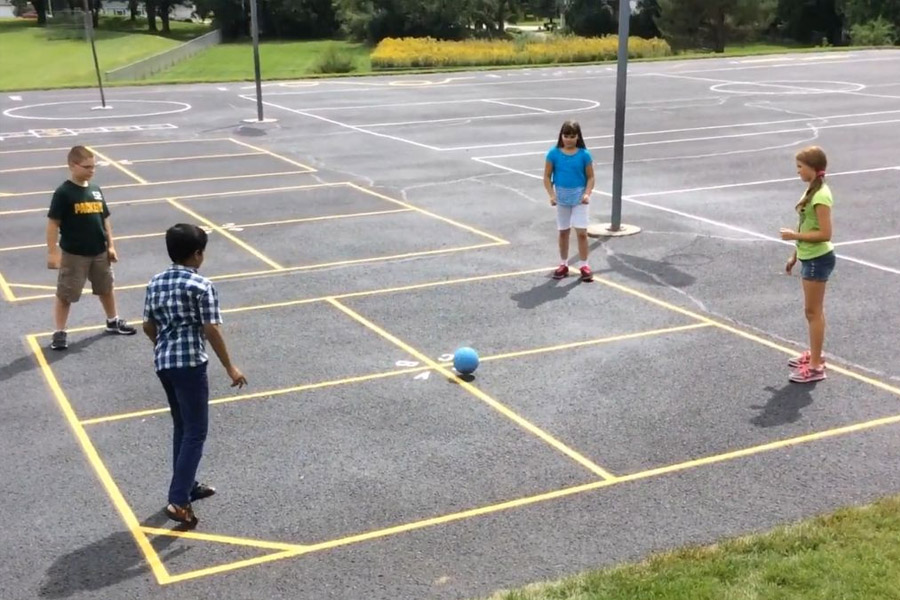
A 4 Square court without crisp lines feels incomplete. The magic lies in symmetry. The official layout measures sixteen feet by sixteen feet, divided into four equal quadrants. Each square stretches four feet on all sides, forming a balanced grid.
Use contrasting colors and clear thickness to mark surfaces so players can instantly identify boundaries. White and bright yellow are classic visibility colors. Paint permanent courts with outdoor acrylic. Chalk or durable floor tape are easy to adjust and remove for temporary setups. Labeling squares simplify turn-taking and reduces arguments. Personal flair can be added with clever numbering or creative names, making each one a tiny badge of identity for the square’s players.
Finding the Perfect Placement
Selecting a location might seem secondary, but the best courts are those thoughtfully placed. Open, level ground away from traffic or obstacles ensures maximum safety. Avoid slopes or tree roots lurking beneath. A smooth concrete driveway, a school playground, or a corner of a community park works beautifully.
Orientation matters too. Positioning the court away from direct afternoon sunlight minimizes glare during late-day games. Light poles or nearby structures providing periodic shade add comfort. The court should also be easily reachable by all players, young or old. Accessibility turns a simple setup into a gathering hub where community spirit thrives.
Safety through Surface Management
Even the best court can fail its players if ignored. As the surface ages, small pebbles, dust, or moisture accumulate, posing slipping hazards. A quick sweep before play maintains both safety and quality of bounce. Prevent moss or mildew buildup in shaded zones. Keeping edges free of debris also stops tripping and limits wear on shoes and equipment.
While a rough surface boosts traction, anything too abrasive can cause scrapes. Balancing this texture is critical. Polishing, grinding, or a thin resurfacing coat can fine-tune the level of grip and smoothness. Think of it as tuning an instrument—small variations in texture create harmony in gameplay.
Temporary and Portable Options
Not every space needs a permanent fixture. Temporary courts thrive at block parties, camps, or special school events. Chalk lines on asphalt revive childhood memories in seconds. For indoor spaces, modular mats or interlocking court tiles set up quickly and pack away easily. They provide reliable traction and absorb shock, making them perfect for gym floors or basements.
Using tape or portable boundary strips, hosts can experiment with varied dimensions or smaller practice zones. Traveling families might use lightweight mats to turn parks or driveways into tournament grounds.
Expanding Layouts for Group Play
Larger groups call for inventive layouts. Multiple courts lined next to one another create a bustling tournament atmosphere. Keep a gap of at least three feet between grids to reduce interference when balls ricochet sideways. To minimize confusion, assign a distinct color to each court’s boundary lines. Blue, red, yellow, and green zones spark competition and visual appeal.
These setups bring structure to big gatherings while keeping transitions smooth. Children, teens, and adults can circulate across courts like flowing water, building friendly rivalries and shared enthusiasm. In schools, this arrangement encourages teamwork and physical activity, filling recess periods with organized chaos.
Enhancing the Experience with Creative Elements
Courts need not be simple. Give each square personality with quirky details. Painting waves, geometric designs, or school mascots within borders boosts engagement. For evening matches, wrap solar or soft LED strips around edges. Awnings or portable benches encourage longer games and social pauses between rounds.
For communities, accessible seating, small signage for rules, and recycling bins nearby reflect eco-conscious design. Thoughtful touches convert the court from simple play space to vibrant social hub.
FAQ
What size should a standard 4 Square court be?
A typical setup is 16 feet by 16 feet, divided into four 4-foot squares. Younger players can play on smaller courts, but keeping proportions even maintains game balance.
Can 4 Square be played indoors?
Yes. Indoor courts thrive on gym floors or community halls. Use removable tape or interlocking mats to define lines without damaging surfaces. Ensure floors have adequate grip to avoid slipping.
How can I reduce glare on outdoor courts?
Position your court with one edge facing north or south so sunlight travels across it rather than directly into players’ eyes. Using light-diffusing shades or nearby trees for partial coverage helps during bright hours.
Which surface is safest for children?
Asphalt and concrete are durable but harder on falls. For younger players, cushioned tiles or textured rubber mats provide softer landings without sacrificing bounce consistency.
How often should court lines be repainted?
Under moderate use, permanent outdoor paint lasts 1-2 years. Heavy play areas may need annual painting. After rain or heavy traffic, renew temporary chalk or tape lines.
Can multiple courts be linked together?
Absolutely. Positioning several courts side by side encourages tournaments and group activities. Leave enough buffer space between grids to prevent overlapping games and confusion.
What is the best way to maintain a 4 Square court?
Sweep frequently, keep the surface dry, and inspect for cracks or lifting paint. Regular cleaning and prompt repair preserve safety and extend the court’s life.
Are eco-friendly materials suitable for court construction?
Yes. Recycled rubber, sustainable composites, or low-VOC paints reduce environmental impact while offering excellent durability. These materials serve well for urban or school-based installations focused on sustainability.
How can weather protection be enhanced?
Applying a sealant every few years, installing side drainage, and covering the court during prolonged bad weather prevent erosion and protect your investment.
Can unique designs or art be added without affecting play?
Certainly. Expressive graphics placed within boundaries enhance aesthetics without altering gameplay, provided paint thickness remains minimal and surface texture stays consistent.