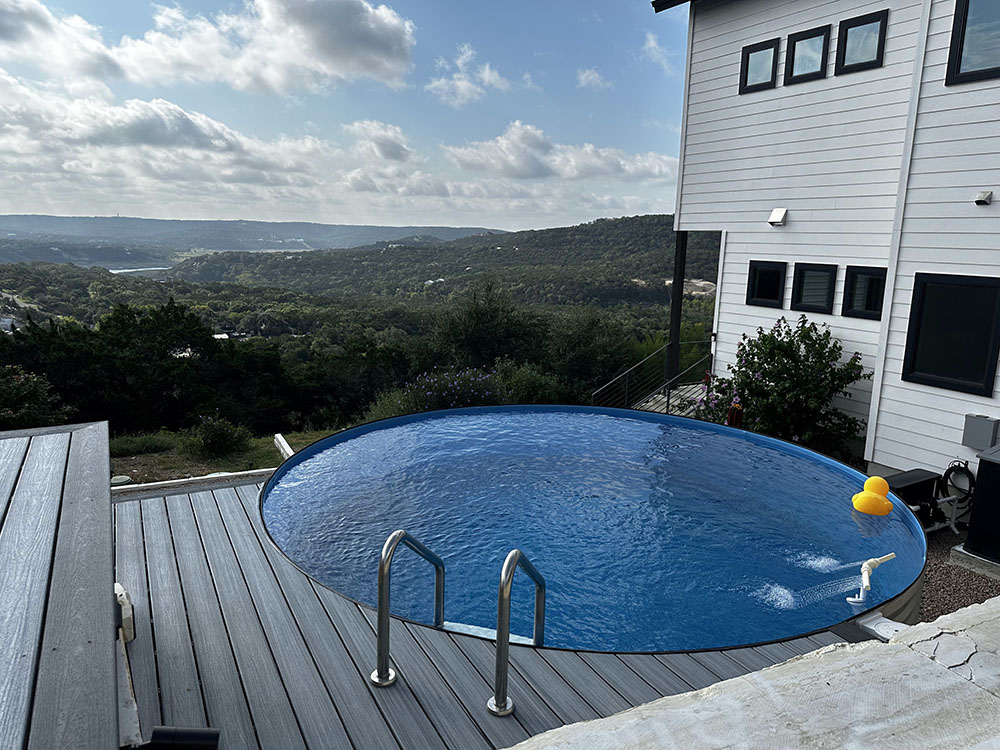
Galvanized steel tank pools have become a popular backyard option across the US – and it’s easy to see why. They’re compact, relatively affordable, and go up in a fraction of the time a traditional pool takes. Before you commit to one, though, it’s worth understanding exactly what you’re getting into – how they’re built, how long they last, and whether there’s a better version of the same idea.
What Is Galvanized Steel and Why Is It Used for Tank Pools?
Galvanized steel is regular steel coated in a layer of zinc. That zinc keeps moisture, oxygen, and harsh weather from eating through the metal underneath. The process is called hot-dip galvanization – steel panels are dipped into molten zinc to create a thick, even coating inside and out.
Farmers have used galvanized steel tanks for decades to hold water for livestock. They hold up in all kinds of weather and don’t need much attention to keep going. That’s why people started repurposing them as backyard pools – the material was already proven to handle water long-term. Add a vinyl liner and a basic pump, and you have a functional place to cool off.
How to Turn a Galvanized Tank Into a Swimming Pool
Setting up a galvanized tank as a backyard pool involves more steps than it might seem at first. The ground has to be perfectly level before anything else – even a slight slope puts uneven pressure on the walls over time. A compacted sand base or concrete pad handles this. Then comes the liner, which isn’t optional. Without one, pool chemicals gradually break down the zinc coating, and the water absorbs zinc ions. A protective underlayment goes in first to prevent punctures, and the liner fits snugly on top.
Filtration matters too. Water sitting still in a tank heats up fast and turns murky without proper circulation. A pump and sand filter keep things moving and clean. You’ll also need a way in and out – a deck, steps, or a ladder each require their own planning and budget. StainlessSwim builds fully custom galvanized swimming pools with professional installation handled from start to finish – no sourcing parts, no guesswork.
Does Galvanized Pools Rust?
Not easily, and not quickly. The zinc coating corrodes slowly over time instead of letting the steel underneath rust, which means the tank stays intact for years. That said, if the coating gets scratched or damaged and bare steel is exposed to water and pool chemicals, rust can start to creep in.
A proper vinyl liner prevents this. When water never touches the steel directly – only the liner – the risk of rust drops dramatically. StainlessSwim uses 18-gauge galvanized steel panels paired with a heavy-duty vinyl liner and a protective underlayment to keep pool water fully separated from the steel shell.
How to Seal a Galvanized Stock Tank?
Sealing the tank correctly is one of the most important parts of the setup. Water should only ever touch the liner, never the steel itself. Foam underlayment goes along the bottom and walls to cushion the liner and prevent tears. Then a vinyl liner is fitted inside the tank and locked in place at the top with a trim ring. All fittings – skimmer, return, drain – need to be cut carefully and sealed with pool-grade hardware. When done correctly, the water stays fully isolated from the metal. Skip any of these steps, and leaks and rust become a real problem down the line.
Why It Works Better Than a Basic Stock Tank Pool?
A farm stock tank and a purpose-built galvanized pool use the same base material, but they’re built for entirely different purposes. Stock tanks are designed to hold water for animals – not for people swimming in chemically treated water through multiple seasons. Purpose-built pools like those from StainlessSwim use heavier-gauge steel, real pool filtration, and proper liner systems designed to handle chemical exposure, bather load, UV, and temperature swings. They come in sizes from 9 to 21 feet in diameter, can be installed above ground, semi in-ground, or fully recessed, and can be outfitted with LED lighting, a heat and cool unit, and custom decking to match your backyard.
How Long Do Galvanized Stock Tanks Last as Pools?
A basic farm stock tank used as a pool – with no liner and no dedicated pool equipment – typically holds up for 3 to 7 years before wear and rust become serious problems. Add a proper liner and balanced water chemistry, and that number goes up noticeably. StainlessSwim pools are built with 18-gauge steel – roughly 40% thicker than a standard stock tank wall – along with hot-dipped zinc coating and a full liner system. With basic upkeep, expect 10 or more years of reliable use. The steel itself can last decades, and if anything needs replacing first, it’s usually the liner – a straightforward fix that doesn’t require replacing the whole pool.
Conclusion: Should You Build a Galvanized Tank Pool?
Galvanized steel pools are a solid option for homeowners who want a real pool without the cost or disruption of an in-ground build. The material is proven, the look is clean and modern, and installation takes a fraction of the time. That said, the gauge of steel, liner quality, filtration setup, and how well everything is installed all determine how the pool holds up over the years. A repurposed stock tank and a professionally built galvanized pool share the same basic material – but the end result is very different.
The details that don’t show up in photos are often the ones that matter most – how the liner is secured, whether the base was properly leveled, how the fittings are sealed, and what kind of filtration is actually running the water. Get those right, and a galvanized pool is something you’ll use and enjoy for years. Get them wrong, and you’re dealing with rust, leaks, and murky water by the second summer. That’s the practical difference between a pool that was put together carefully and one that wasn’t.
If you’re seriously considering a galvanized pool, StainlessSwim is worth a look. Every pool is custom-built and professionally installed – from site prep to filtration to decking – so you’re not piecing together a solution from multiple sources and hoping it holds up.