Bridging Speed and Precision in Modern Fabrication
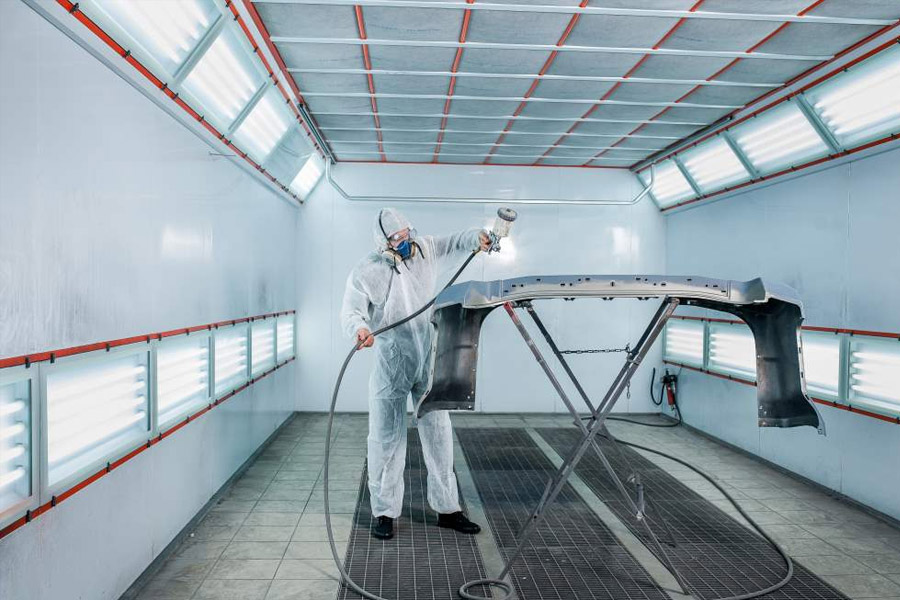
Modern paint booth engineering shows how industrial systems are becoming modular and adaptive. Durability was formerly determined by welding. Precision bolt-together designs are changing production and space management within enterprises. Bolt-together booths combine modular construction speed with industrial finishing stability.
Installing a booth is now more like building a flexible framework that can grow with the facility. These systems reflect an industry-wide preference for speed, control, and versatility over permanence.
The Quiet Revolution in Assembly Time
Every business leader knows that time translates directly into cost. The bolt-together booth design compresses project schedules into smaller, more predictable blocks. Panels arrive pre-engineered for fast alignment, eliminating hours once spent on welding, grinding, and surface finishing. Each bolt replaced a spark, every turn of a wrench became an act of precision rather than waiting.
Installation agility is more than convenience in high-volume manufacturing lines where a day’s delay might affect output projections. It creates competitive advantage. Faster deployment lets maintenance personnel restore operations without interruption, boosting productivity.
Flexibility That Follows Business Growth
Once, fixed welded structures anchored factory operations in one spot. Bolt-together systems altered that narrative. Managers can partially dismantle and rebuild the booth without the damage and losses of welded assemblies when expanding or moving. Portability makes infrastructure a tool in a global market with rapid pivots and demand shifts.
Modularity allows reconfiguration. To accommodate new coating technologies, a corporation can expand its booth or exhaust system. This approach supports scalable production, where infrastructure adapts to digital systems. Industrial machinery organized for change, not resistance.
Accuracy as a Built-In Feature
The bolt-together method uses predrilled holes, brackets, and coordinated panel shape. Precision is built into components before they get on site. Installers match pieces using labeled sequences to reduce guesswork. Precision that once required a welder’s skills is now built into every item.
Structural alignment directly influences performance within a paint booth. Smooth, even seams shape predictable airflow, ensuring paint particles move evenly across surfaces. When panels meet precisely, internal pressure remains balanced, yielding consistent finishes. This accuracy extends the system’s service life, reducing the need for modifications or structural corrections later.
A Safer Path to Industrial Assembly
The removal of onsite welding mitigates many hazards that traditionally burden manufacturing sites. Without open flames or molten metal, installers operate in a much cleaner, cooler environment. The shift from welding torches to hand tools represents more than convenience; it signals a commitment to worker safety and compliance.
Reducing exposure to fumes and sparks also means fewer restrictions on adjacent operations. Facilities can continue routine tasks nearby while assembly teams build the booth, keeping the remainder of the production line active. The entire process embodies a safety-first philosophy that does not sacrifice progress for caution.
Maintenance Simplified Through Smart Access
Paint booths eventually require attention: filters must be replaced, ductwork inspected, and lighting cleaned. Traditional welded joints often turned these tasks into prolonged shutdowns. Bolt-fastened panels, by contrast, function like removable gates to the booth’s inner workings. Technicians unbolt, service, and reseal without disruption to the booth’s frame or alignment.
This replaceable component improves maintenance efficiency. Repairs take less time and cost less with predictable disassembly. Many facilities depend on easy access to maintain production schedules.
Unified Strength Across Every Join
Each bolt in a modular structure represents a deliberate, calculated point of tension. Because these systems rely on standardized fasteners spaced at engineered intervals, the resulting framework exhibits equal strength throughout. Unlike welded joints whose reliability may vary with skill or surface preparation, bolted connections remain uniform.
Uniform load distribution contributes to structural integrity and sustained performance. The booth maintains alignment under both air pressure and vibration. In environments that demand precision air currents to ensure flawless finishes, consistent joint strength guarantees internal stability that safeguarding expensive paint jobs from blemishes.
A Cost Perspective Grounded in Sustainability
Installation costs depend on time, safety, and materials. Each hour of skilled labor or welding supply cost saved adds sustainability. Bolt-together designs use modular metal components that can be moved or reused, reducing cutting and demolition waste.
The capacity to unbolt, repair, and reinstall extends material life. Moving booths avoid becoming industrial scrap when operations change. Such sustainability is monetary as well as environmental. It protects investments by adapting hardware to production needs.
Adapting Bolt-Together Concepts Beyond Paint Booths
An innovation for completing settings currently affects industry. Cleanrooms, spray enclosures, and temporary testing facilities are modular. These cross-industry applications demonstrate that bolt-together architecture is now a mainstream construction concept.
Combining stiffness and responsiveness is appealing. Engineers increasingly plan for modularity to allow future changes without costly disruptions. This approach mimics modern software development, where systems are functional while iterating.
A Cultural Shift Toward Modular Engineering
Industry digitization and lean manufacturing must be reflected in physical infrastructure. Bolt-together paint booths illustrate the shift toward modular, efficient, data-aligned physical assets. They represent how design thinking combines speed and precision to improve manufacturing.
Weld inspection charts and metal fatigue assessments are now discussed alongside modular approach, lifetime analytics, and adaptive reuse. Such systems encourage resilience rather than permanence, encapsulating the ethos of ongoing improvement valued in process optimization models.
FAQ
How does a bolt-together booth influence operational downtime?
The speedier installation and easier maintenance of a bolt-together booth lowers downtime. Parts can be pre-staged, aligned, and secured in days instead of weeks, and later service includes unbolting portions rather than cutting welds. Minimal production disruptions occur.
Can bolt-together booths meet strict safety and code standards?
Yes. These systems meet worldwide manufacturing and safety standards. Hardware and panels are often structurally tested as much as welded systems. Because assembly avoids open flames, installation compliance is easier to document.
What makes bolt-together construction more cost-effective?
Lower project costs result from less labor, faster installation, and easier relocation. Modular components can be reused or resized, spreading initial investment across operational phases.
Are bolt-together booths suitable for large-scale operations?
They are explicitly designed for scalability. Manufacturers can extend booth length or height by adding panels without substantial redesign, allowing gradual expansion as production grows. The bolt pattern ensures additions integrate seamlessly with existing sections.
How do bolt-together joints maintain air pressure consistency?
Fastening points are designed to equally transfer pressure across the structure. Connection seam gaskets or sealants keep connections airtight when built. Air leaks could compromise coating consistency or filtration balance without homogeneity.
What kind of maintenance benefits come from removable panels?
No cutting is needed to access ductwork, filters, and lighting through removable panels. Reinstalling panels and replacing parts quickly saves hours of labor and reduces replacements for damaged materials in welded units.
Is the noise level different during assembly of bolt-together booths?
Yes. Without continuous welding and grinding, site noise diminishes substantially. The calmer environment benefits other ongoing construction or production tasks nearby, reinforcing the system’s suitability for occupied facilities.
Can this modular approach reduce environmental impact?
Eliminating on-site welding reduces emissions, energy, and waste. Booth relocation and shrinking reduce disposal and new material fabrication’s environmental impact. These elements boost sustainability throughout numerous product cycles.