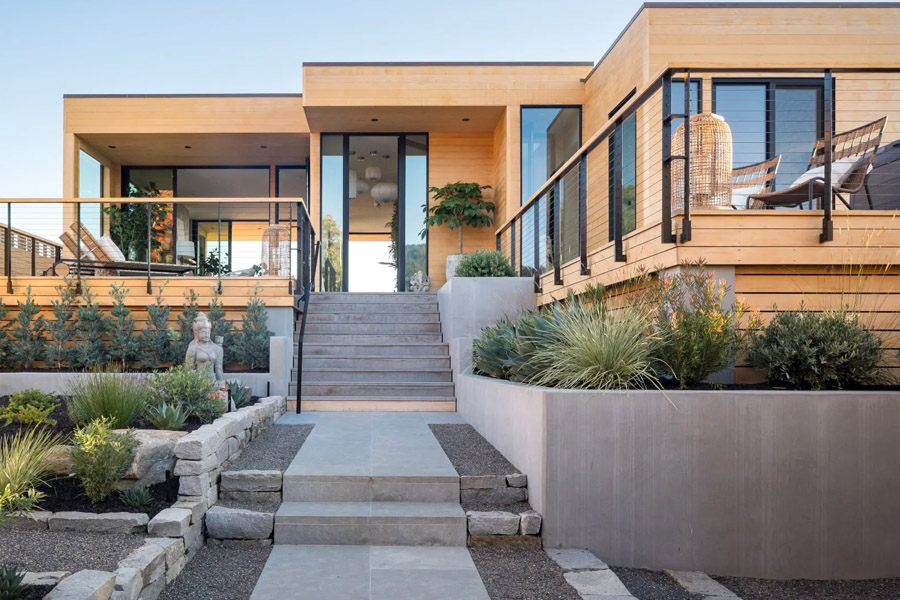
Walk through any large, beautifully designed home, and something happens before you consciously register it. Your pace changes. Your posture shifts. You feel either expansive and free or slightly unsure of where to go next. That response is not accidental. It is the result of deliberate spatial decisions made long before a single wall was built.
The way space is arranged in a large home affects the people inside it. It influences how families gather, how guests move, how light travels through rooms, and how sound behaves on a quiet afternoon. These are not abstract ideas. They are lived, daily experiences that begin with a floor plan.
The Path Through a Home Tells a Story
Every home has a circulation path, the invisible route people take as they move from room to room. In grand residences, this path can feel like a journey. A wide entry hall opening onto a double-height living area sends a clear signal: this is a place of welcome and arrival. A narrow corridor leading into a kitchen sends a very different one.
Mansion floor plans that prioritise intuitive flow produce homes where people feel comfortable without knowing exactly why. The transitions feel natural. You always know where you are. That sense of orientation is reassuring, and it shapes how freely people enjoy the space.
Light Is a Design Material
One of the most underappreciated elements in large-home design is how daylight serves as a structural tool. Where windows are placed, how they align across a floor plan, and whether sunlight can travel from one side of a home to the other all determine the mood of a space at any given hour. Wellness experts have explored this link, confirming that built environments directly shape physical and mental experience.
Rooms that receive morning light are naturally energising. Those who catch the long afternoon sun feel warm and unhurried. When a floor plan accounts for the sun’s movement across a day and a season, it produces a home that feels alive in a way no fixture or finish can replicate.
Volume and the Human Scale
Ceiling height and room proportion affect how people feel inside a space. A room with generous volume and considered proportions encourages quiet confidence. It says, without words, that you are meant to be here, and the space was built with your comfort as the priority.
Rooms that feel cavernous without warmth or compressed without intention subtly unsettle occupants. The best large home designs understand that volume must be balanced with intimacy, and grand scale works best when anchored by spaces that feel genuinely human.
A Home That Works With You
A well-considered floor plan does not just determine where the bedrooms and bathrooms go. It shapes the tempo of daily life, the quality of rest, and the experience of simply being home.
When people fall deeply in love with a house, they often say the place just feels right. They are responding to the invisible intelligence of a layout designed to work quietly in their favour.