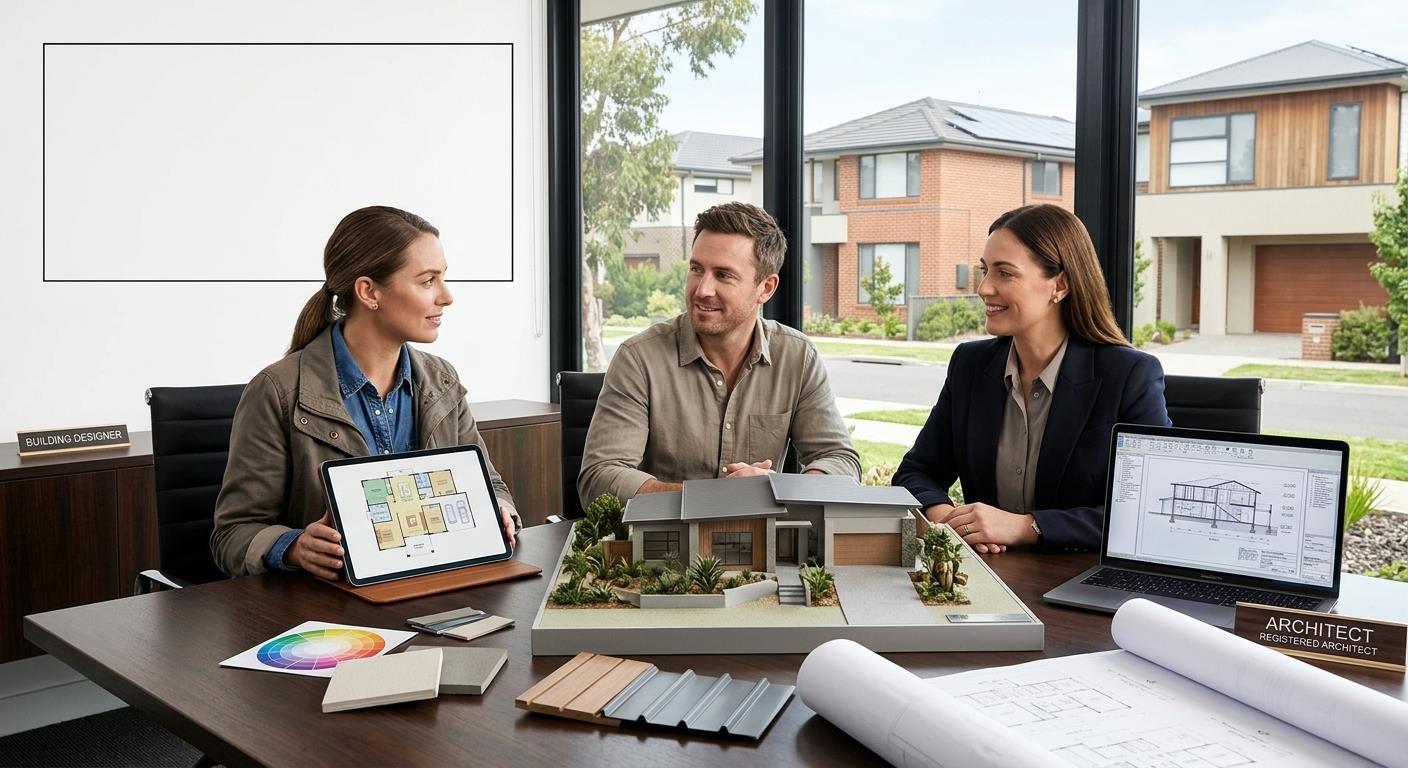
If you are planning a new home, an extension, a dual occupancy, or any kind of residential development, one of the first questions that comes up is who you actually need to help you. Most people assume the answer is an architect. But for a large number of projects across Victoria, a building designer in Melbourne is not only a suitable choice but often a better fit for what the project actually requires.
When deciding between two professionals to help you with your project, it is not only important to understand what each title means, but it is also necessary to verify that the individual you select has the appropriate expertise, focus, and knowledge concerning the processes involved with the planning and approval of your specific project.
What Is the Difference Between a Building Designer and an Architect?
Both building designers and architects create building designs, floor plans, and documentation. The difference lies in their registration, scope of practice, and how they approach a project.
Architects, who hold current registrations, are sensitive; they have attended university and completed a degree in (or similar to) architecture; they have been employed in the various capacities that satisfy the design registration authority while under supervision by a registered architect.
Most architects work on large-scale commercial projects or are commissioned to design bespoke homes, often requiring unique architectural authorship or a design of significance (hence being referred to as ‘designers’).
Building designers do not hold any type of formal architectural qualification and therefore only prepare designs and plans for submission to the relevant authority without the need to have an architectural registration completed in their own right. In Victoria, building designers are regulated and work in accordance with different levels of competency in relation to the classes of buildings and the complexity of the buildings they work on.
For most residential projects, including new homes, extensions, townhouses, dual occupancies, and small to medium multi-unit developments, a building designer is fully qualified to manage the design and documentation process from start to finish.
What Does a Building Designer Actually Do?
A building designer in Melbourne that property owners typically engage will handle far more than just the drawings. A good building designer takes responsibility for producing designs that work architecturally, comply with planning controls, and are buildable within a realistic budget.
Generally speaking, the scope of work in commercial architecture involves producing drawings for buildings that meet the owner’s specified needs and the style of neighbouring structures, designing and arranging that meet all applicable zoning and planning regulations, preparing documentation for use when applying for a permit from the local council and corresponding with the local council and other agencies during the permit submission and approval.
Beyond the design itself, an experienced building design consultancy will also assist with preparing planning reports, shadow diagrams, neighbourhood character assessments, and other supporting documents that councils require as part of a permit application. This is where a significant amount of the value is delivered, particularly for projects that involve overlays or other planning complexities.
The types of projects a building designer typically works across include townhouse developments, dual occupancy and dual occupancy townhouse projects, new homes, extensions and alterations, renovations, multi-unit developments, places of assembly, childcare centres, and land subdivisions.
When Does a Project Actually Require an Architect?
There are situations where an architect is the more appropriate choice. Large-scale commercial buildings, complex institutional projects, and developments that require the specific registration or authorship that comes with architectural credentials may fall into this category.
In most residential developments throughout both Victoria and Melbourne, as a location for the project, the distinction between registration is unlikely to influence the quality and/or outcome of the design of the project. A more significant factor is whether the professional you engage has a strong knowledge of the respective local planning system, produces designs that align with all applicable site controls, and has the relevant experience to navigate the approval process effectively.
If you are choosing an architect (for example, an architect of a residential addition or a townhome development) based on their title being more prestigious, that may not always be the best decision. The question should not be what title the professional has, but whether the person has the skill set and experience necessary to carry out your project successfully.
What Should You Look for in a Building Designer Near You?
When searching for a building designer near you, the most important factors go well beyond qualifications. Experience with the specific type of project you are planning, familiarity with the planning controls that apply in your area, and the ability to manage the full process from feasibility through to approval are all critical.
A building designer who only creates drawings and hands them off for someone else to manage through council is a very different proposition from one who understands the planning system and can guide a project strategically from the beginning. The latter is what makes a genuine difference to outcomes.
Seek a designer who will build on the learning you provide about the limitations of your site, develop strong applications, not just as small as possible, and continue to develop capabilities effectively from experience working through up to now, aiding in managing objections and council responses on construction projects.
Why Does Planning Knowledge Matter So Much in Building Design?
This is one of the most underappreciated aspects of choosing a building designer. Design and planning are not separate disciplines that happen in sequence. They are deeply connected, and the best outcomes come when both are considered together from the very beginning.
Designers in Melbourne, Vic., with knowledge of what is required for planning permits will provide residential designs that respond to the local environment, comply with setbacks and height, consider overlooking and overshadowing early on in their design process and comply with zoning and overlay controls.
When design and planning strategy are integrated from the start, the approval pathway becomes significantly smoother. Attempting to fix design problems after the council has raised concerns is always more expensive and time-consuming than building compliance into the design from the outset.
This is why working with a building design consultancy that combines design capability with genuine planning expertise tends to produce better results than working with two separate professionals who are not aligned on strategy.
What Is a Building Design Consultancy and How Is It Different?
A building design consultancy is a practice that offers both design and town planning services under one roof. Rather than engaging a building designer for drawings and then a separate planning consultant to manage the approval process, clients work with a single team that handles both.
This matters because the two disciplines inform each other constantly throughout a project. Design decisions affect planning outcomes. Planning constraints affect design options. When the same team is responsible for both, the decisions made at each stage reflect a full understanding of the implications for the other.
For property owners in Melbourne and Victoria, this kind of integrated approach tends to result in more efficient projects, fewer surprises, and a stronger chance of approval the first time around.
How Does the Process Work With a Building Designer in Victoria?
For most residential projects in Victoria, the process with an experienced building designer will move through a clear sequence of stages.
The starting point is always feasibility. Before any design work begins, the site’s zoning, overlays, and planning constraints are reviewed to confirm what is achievable and what risks need to be managed. This step is critical and is one of the most commonly skipped, often at a high cost to the property owner later.
Once feasibility is confirmed, conceptual design work begins with compliance built in from the start. The design is developed alongside an understanding of what the relevant council is likely to support, what the neighbourhood character requirements are, and how the proposal will perform against the planning controls that apply.
After design, a planning permit application is prepared and submitted. This includes all required documentation, supporting reports, and plans. The application is then managed through the council process, including responding to requests for further information, handling any objections from neighbours, and working through the assessment to a decision.
Beyond planning, the building designer can also assist with documentation for the building permit stage, coordination with building surveyors and other consultants, and, if needed, support during the builder selection and tendering process.
What Are the Most Common Projects That Suit a Building Designer in Melbourne?
Across Melbourne, the projects most commonly handled by building designers include:
Townhouse and dual occupancy developments where the primary challenge is designing within planning controls to maximise the number of dwellings and achieve permit approval efficiently.
New homes where clients want a custom design that reflects their brief and suits the character of the area, without the cost structures associated with larger architectural practices.
Extensions and alterations where the goal is to add space or update an existing home in a way that complements the original building and meets the relevant planning and building requirements.
Renovations where detailed documentation is needed to support a building permit and ensure the work can be completed and signed off without issues.
Multi-unit developments where the complexity of the planning process and the need for coordinated documentation make experienced professional support particularly valuable.
Childcare centres and places of assembly, where planning requirements are more detailed, and the application process requires careful management.
Land subdivisions where design and planning documentation need to be coordinated with surveyors and councils to achieve a subdivision approval.
Final Thoughts
Your project type, its specifications, and the competencies of the designer will drive your decision-making process regarding hiring either a building designer or an architect. Building designers are commonly utilised when designing residential buildings throughout Melbourne and Victoria; thus, for the large majority of residential developments located therein, depending on their skill level and experience, they would likely deliver excellent results that would meet your needs comfortably and in excess of what would be achieved by hiring an architect for your project.
To ensure a successful outcome, it’s important that you select a professional with both a high level of design talent and a thorough understanding of the planning system, and who, before starting with a design, evaluates feasibility, and who can manage the entire application process from beginning to approval in an efficient and effective manner.
If you are in the early stages of planning a project and want to understand what your site can realistically support and what the right professional engagement looks like, getting that initial guidance before committing to anything is always the smartest first move.