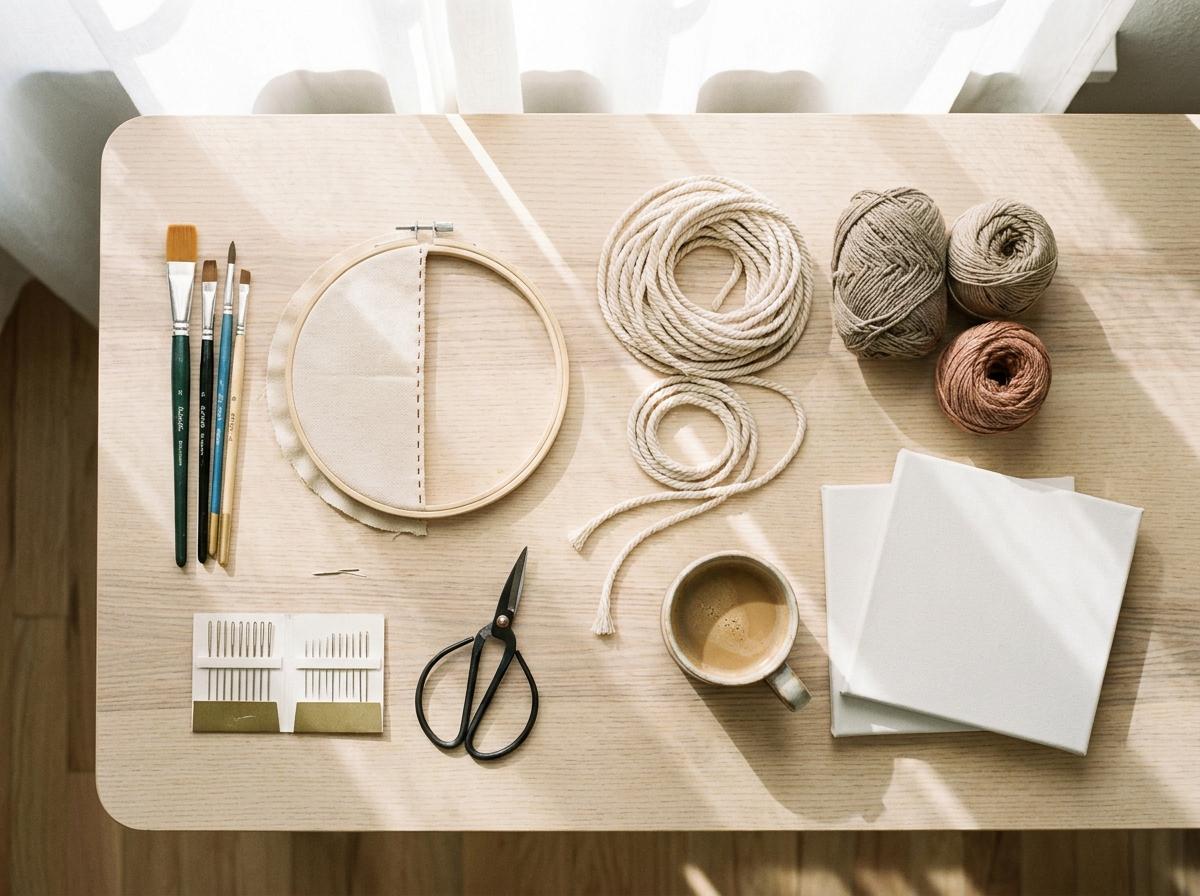
Most people buy art from a store, hang it, and wonder why their space still feels generic. The problem isn’t the walls. It’s the art. When nothing you own has a story behind it, a room can look decorated without actually feeling like yours.
Here’s what changes that: picking up a creative hobby where the end result belongs on a wall or a shelf. Not just any hobby – one where the finished product is something you’d actually display.
The U.S. craft industry hit $51 billion in revenue in 2025 (Digital Journal, 2025), and 71% of American adults now identify as crafters (Mintel U.S. Arts and Crafts Consumer Report, 2025). This isn’t a niche trend. People are making things, and the best of those things are ending up as decor. Here are ten hobbies where the output is the whole point.
1. Custom Paint by Numbers
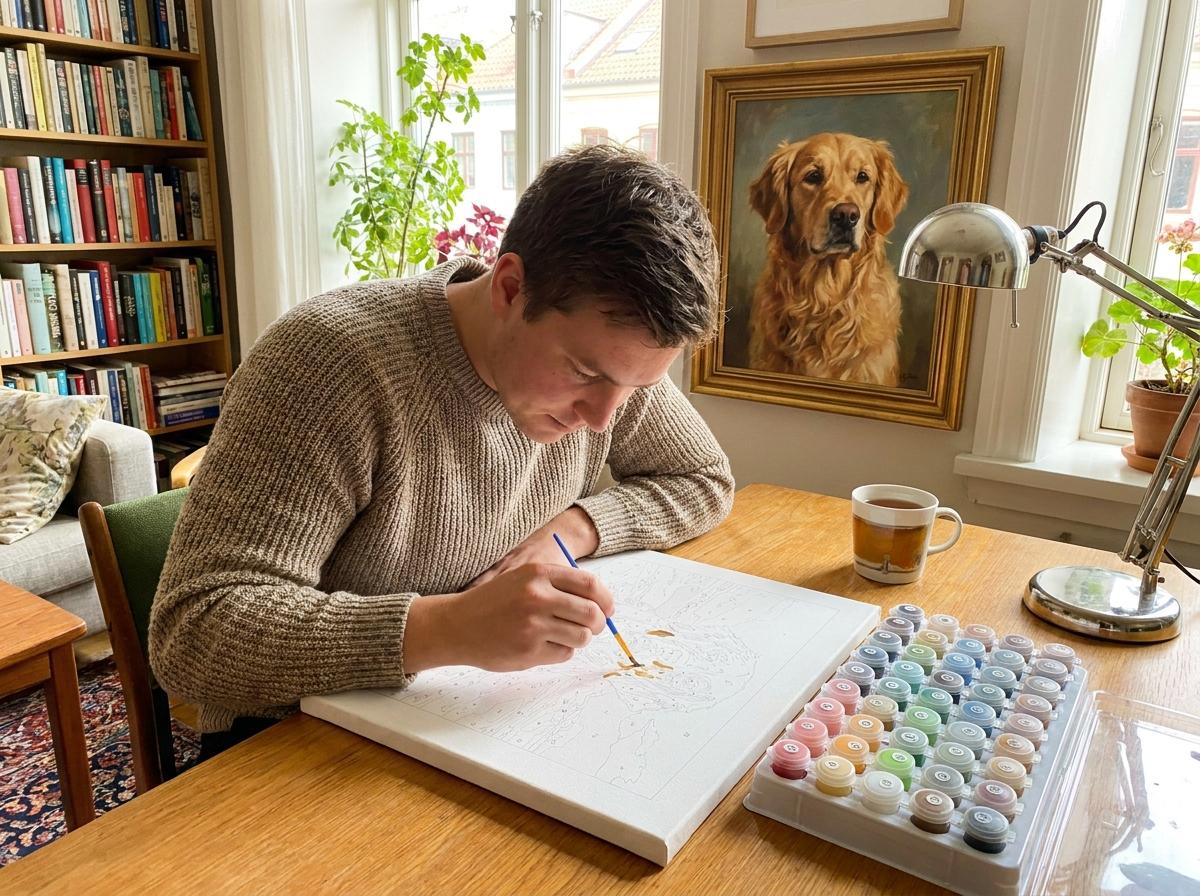
A custom paint-by-numbers canvas displayed as finished wall art – the completed piece looks like a professionally made painting.
You upload a photo – your dog, a favorite vacation shot, your family on a Sunday morning – and a kit arrives with a pre-numbered linen canvas, acrylic paints matched to your image, and brushes. You fill in the numbered sections. No drawing ability required.
The finished piece is a 16×20 canvas painting. It hangs on your wall. It looks custom because it is. That’s the part people underestimate until they see it done.
Paint-by-numbers search volume jumped 18.22% month-over-month in June 2024, with kit sales peaking at 793 units in April 2025 (Accio Business Intelligence, 2025). Custom photo kits drive the highest reorder rates across the category. People finish one and immediately want to do another.
You can order a custom kit from numberartist.com – upload your photo, choose your canvas size, and they ship everything you need to paint it. Kits start at $34.95. Most customers spend 5-15 hours on a project, spread across a few sessions.
- Skill level: Beginner
- Cost: From $34.95
2. Macrame Wall Hangings
Macrame is the art of knotting cotton or jute cord into decorative patterns. A simple wall hanging uses just two knots – the square knot and the spiral hitch. One afternoon’s work produces a piece that retails for $80-$400 in furniture stores.
The appeal for decor is texture. Flat walls with flat prints feel one-dimensional. A woven fiber piece adds something you can almost feel from across the room. It suits boho, Scandinavian, and even contemporary minimalist spaces, depending on the cord’s color and density.
Natural cotton rope in off-white works with almost any neutral wall. A large statement hanging takes 6-10 hours. Smaller accent pieces take under two.
- Skill level: Beginner
- Cost: $15-$40 in materials
3. Embroidery
Embroidery is stitching decorative designs onto fabric stretched in a wooden hoop using a needle and thread. The hoop itself is the frame – finished pieces mount directly onto walls without additional framing.
Botanical motifs, geometric patterns, and hand-lettered quotes are all common. Starter kits include a pre-printed pattern on the fabric, so you know exactly where each color goes. If you can follow a map, you can finish an embroidery piece.
The wall art segment alone was valued at $64 billion in 2024 and is projected to reach $101.3 billion by 2032 (News Market US, 2025). Making your own wall art is the cheapest entry point by a wide margin, and it’s also the only way to get something genuinely one-of-a-kind.
Speaking of protecting what you invest in at home, handmade decor pays off more when the rest of your space is in good shape, too. It’s worth keeping up with home maintenance so your walls and art stay looking their best.
- Skill level: Beginner to intermediate
- Cost: $12-$25 for a starter kit
4. Watercolor Painting
Watercolor is the most forgiving painting medium for beginners. Mistakes don’t glare – they blend. Color bleeds into color in ways that can look intentional even when they weren’t.
The decor case for watercolor is simple: a set of three matching abstract color washes in identical frames is one of the fastest gallery walls you can put together. Abstract work requires no technical skill. You wet the paper, drop pigment, tilt the surface, and let water do the work.
A quality starter set runs $20-$45. Heavyweight watercolor paper pads add another $10-$15. Frames bring the total to $50-$80 for a three-piece gallery wall that would cost $200-$400 if you bought comparable prints in a store.
The global arts and crafts market reached $47.35 billion in 2025 and is growing at 7.1% annually (Business Research Company, 2026). Consumer spending on creative hobbies keeps rising – and what people are making keeps ending up on their walls.
- Skill level: Beginner
- Cost: $20-$60 total
5. Decoupage
Decoupage involves cutting images or patterned paper and gluing them onto surfaces – furniture, picture frames, wooden trays, storage boxes – then sealing everything with a protective varnish. The result looks layered, deliberate, and expensive.
The best applications for home decor are smaller accent pieces. A plain pine tray from a charity shop becomes a statement coffee-table piece. A cheap wooden picture frame covered in botanical prints becomes something you’d see in an online shop for $60.
The only tools you need are scissors, Mod Podge (a glue-and-sealer), and a brush. Old magazines, printed digital art, and patterned wrapping paper are all fair game. Starting costs: under $15.
- Skill level: Beginner
- Cost: Under $15 to start
6. Punch Needle Art
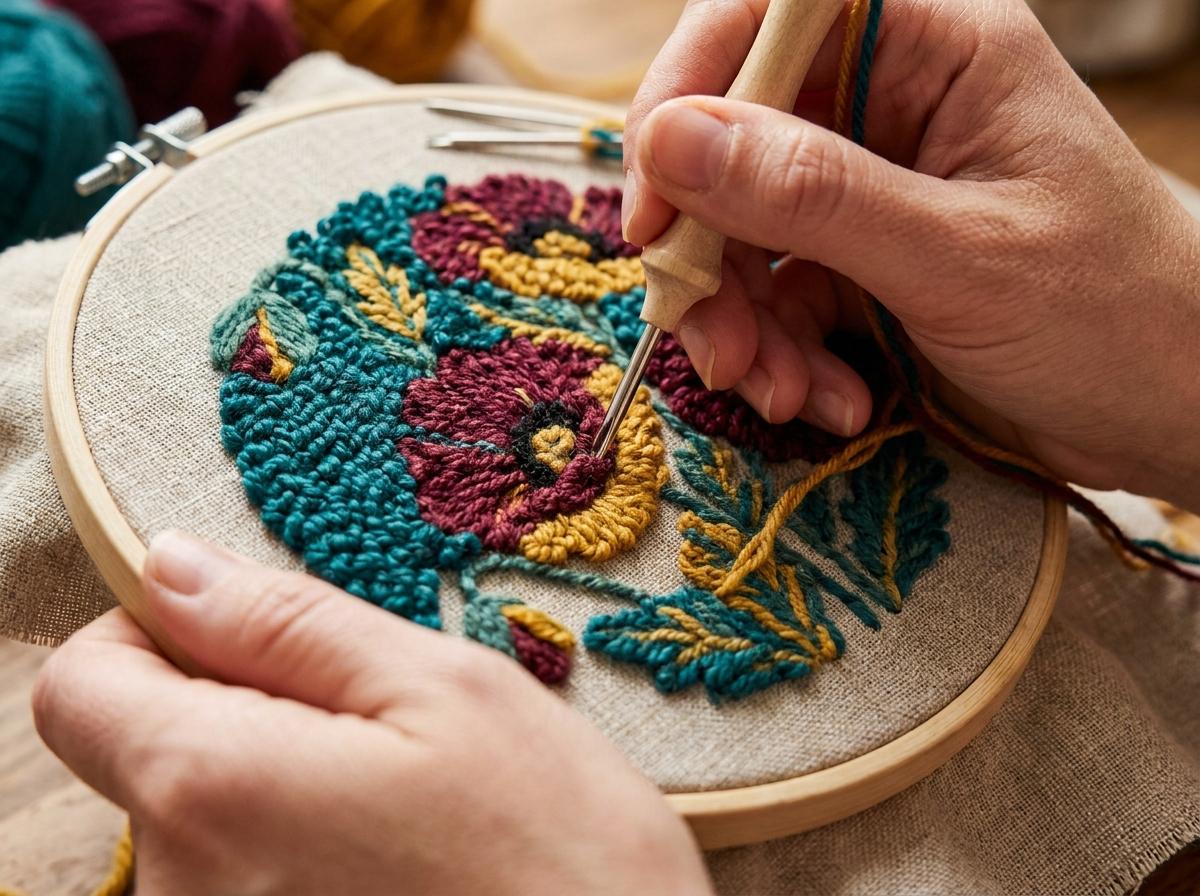
Punch needle work in progress – the textured yarn loops build up into a rich, tactile wall panel.
Punch needle is a technique where you push loops of yarn through a woven fabric base using a hollow needle, building up a thick, rug-like image on canvas. The finished piece is tactile in a way that flat prints simply aren’t.
As decor, a framed punch-needle panel reads like textile art. It adds warmth and physical depth to a wall. The hashtag #punchneedle had accumulated nearly 1 billion TikTok views by 2024, driving a wave of beginner-friendly tutorials and affordable starter kits.
Small panels finish in 3-4 hours. The yarn selection determines the mood entirely – earthy neutrals suit natural interiors, while jewel tones create something closer to stained glass in textile form.
- Skill level: Beginner
- Cost: $25-$50 for a starter kit
7. Pottery and Air-Dry Clay
Pottery is the obvious choice when you want handmade decor for shelves and windowsills rather than walls. Handmade ceramic bowls, vases, and candle holders have an organic quality that manufactured goods can’t replicate.
Air-dry clay removes the biggest barrier – you don’t need a kiln or a studio. You shape it at home, let it dry for over 24-72 hours, paint it, and seal it. For decorative objects that won’t hold liquid, the results are perfectly suitable.
Traditional wheel pottery requires access to a studio, but community classes are widely available. Once you know the basics, you can rent studio time independently.
The home you’re decorating shapes everything. Finding the right home for how you actually live is the foundation that makes all of this worthwhile.
- Skill level: Beginner with air-dry clay; intermediate with wheel throwing
- Cost: $8-$20 for air-dry clay; studio classes typically $30-$80 per session
8. String Art
String art is exactly what it sounds like: you hammer nails into wood in a pattern, then wrap colored thread between them to create geometric shapes, lettering, or silhouettes. The finished piece is bold, graphic, and ready to hang directly on a wall.
The wood backing means no additional framing is required. Simple kits include a printed template, so you place nails over the pattern – no need to figure out the geometry yourself. Geometric designs suit modern and Scandi-style interiors particularly well. State maps, animal silhouettes, and custom monograms are all popular.
A basic kit runs $15-$30. If you buy a pine board and thread separately, you can make something larger for less. The limiting factor is patience for hammer work, not skill.
- Skill level: Beginner
- Cost: $15-$30 for a kit
9. Lino Printing
Lino printing is a relief printing method: you carve a design into a soft linoleum block, roll ink across the surface, and press it onto paper or fabric. The carved-away areas stay blank. The raised areas print. Repeat as many times as you like.
The decor application is gallery walls. A set of three matching lino prints – same design, same ink, same paper size – in identical frames is one of the simplest gallery wall setups available. The slight ink variations and pressure marks in handmade prints give them a quality that mass-produced versions lack.
Starter kits cost $20-$35 and include carving tools, a small lino block, and ink. Paper and block are both reusable across dozens of prints. Start with geometric designs – they’re far more forgiving to carve than organic curves. Nature-inspired prints also work beautifully in spaces that connect to the outdoors, especially if you’re creating a low-maintenance outdoor space alongside your interior work.
- Skill level: Beginner to intermediate
- Cost: $20-$35 for a kit
10. Crochet Wall Art
Crochet wall art falls under the fiber arts category alongside macrame, but has a softer, more textured quality. Large circular mandalas crocheted in chunky natural yarn are among the most popular statement wall pieces in this style. Flat panels in geometric patterns work well displayed in groups.
The basic stitches – chain stitch and single crochet – are learnable in an afternoon. Most wall art patterns use these two stitches almost exclusively, so beginners can tackle serious decorative projects early on.
The U.S. Chamber of Commerce reports that repetitive hand movements in fiber crafts such as crochet and knitting produce meditative effects similar to those of formal mindfulness practices. Separate Mintel research from 2025 found that nearly half of U.S. adults are turning to crafts specifically for stress relief and mental health benefits. The hobby produces a wall piece. What the process produces is less tangible but just as real.
- Skill level: Beginner with basic stitches
- Cost: $8-$12 per skein; most wall panels use 2-4 skeins
What You Hang Tells People Who You Are
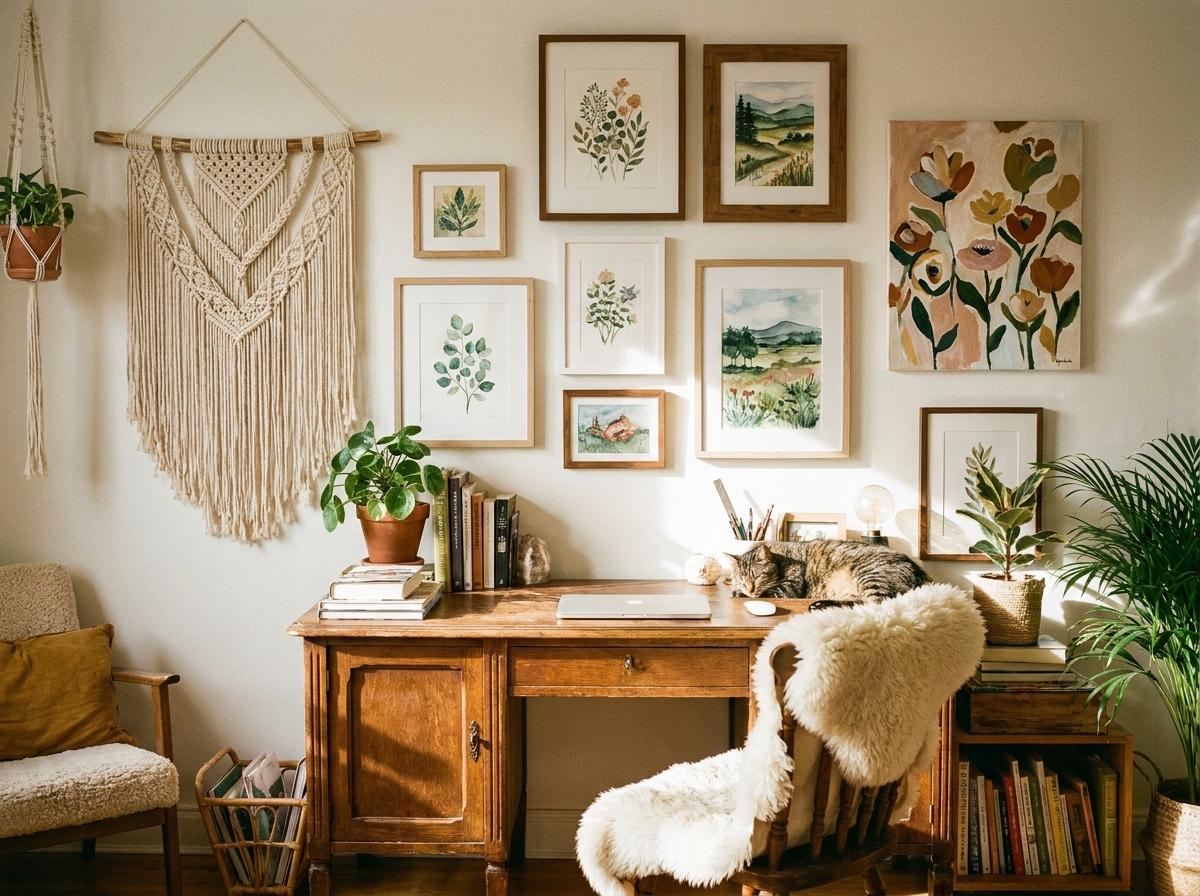
A home workspace surrounded by handmade art – each piece has a story behind it.
The home decor market sits at $139 billion globally in 2025 (News Market US, 2025). Most of that money goes toward things that look the same in every living room.
Handmade art doesn’t work that way. A 2025 systematic review published in the Australian Occupational Therapy Journal – covering 19 studies – found that crafts-based interventions produced measurable short-term improvements in anxiety, stress, depression, self-esteem, and life satisfaction. The process matters as much as what you end up with.
You don’t need to try all ten. Pick one that matches how you want to spend an evening. If you want the most direct path from hobby to finished wall art, custom paint-by-numbers is structured enough for true beginners and personal enough to produce something genuinely worth displaying. The rest of the list has options for every patient level and every style of room.



