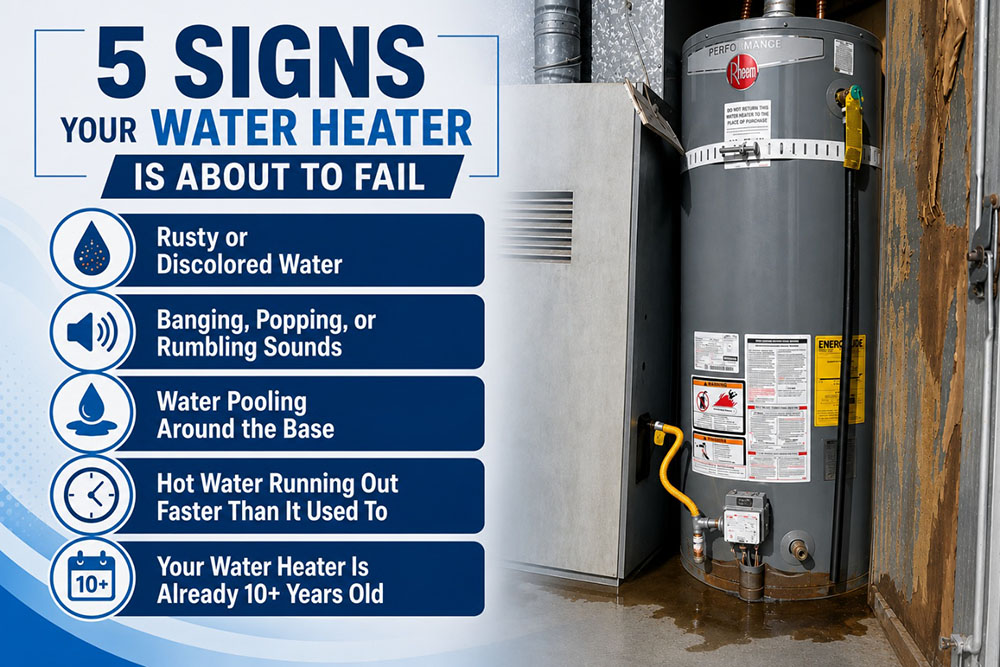
A water heater rarely quits without warning, explains Uplift Property Management Carmel Valley. In the weeks before a full breakdown, most units show at least one of five red flags: rusty or discolored water, banging and popping noises from the tank, water pooling near its base, hot water that runs out much faster than it used to, or a tank that’s already past the 10-year mark. Spot two or more of these at the same time, and you’re probably closer to a failure than a fix.
The Department of Energy puts the average lifespan of a standard tank water heater at 8 to 12 years, and once a unit crosses that line, the risk of a leak or sudden shutdown climbs sharply. If yours is getting up there in age and acting a little off, it’s worth a closer look now rather than after it floods your closet.
A quick inspection or a call to a licensed team like Water Heaters Today can tell you whether you’re looking at a simple repair or a full replacement. Here’s what to actually look for and why each sign matters more than it seems.
1. Rusty or Discolored Water
If hot water comes out looking orange, brown, or just cloudy, that’s usually rust building up inside the tank itself, not your pipes. Run the cold tap too. If only the hot side is discolored, the corrosion is almost certainly coming from the glass lining inside the tank, and once that lining starts breaking down, the metal underneath is exposed and rusting on borrowed time.
2. Banging, Popping, or Rumbling Sounds
That rumbling noise your tank makes isn’t the heater “warming up.” It’s sediment, hardened mineral deposits sitting at the bottom of the tank, getting heated and cracked apart every cycle. A few common culprits:
- Hard water in your area speeding up mineral buildup
- A tank that’s never been flushed since installation
- An aging heating element working overtime to push heat through the sediment layer
The noise itself won’t break your heater, but the strain it puts on the tank and element will.
3. Water Pooling Around the Base
Puddles near the tank are one of the clearest signs something’s wrong and one of the easiest to misread. Sometimes it’s just a loose fitting or valve, an easy fix. Other times it’s a hairline crack in the tank itself, which means water is escaping from the inside and there’s no patching that. If you keep wiping up the same puddle every few days, don’t assume it’ll stop on its own.
Persistent leaks often indicate internal structural damage that requires professional evaluation before major flooding occurs. Consulting a qualified plumber in Philadelphia can help identify whether replacing a faulty valve or installing a new unit is necessary, ensuring your home remains protected from unexpected water damage and costly emergency replacements.
4. Hot Water Running Out Faster Than It Used To
A tank that used to get your whole family through back-to-back showers and now taps out after one is telling you something.
This usually points to sediment eating into the tank’s usable capacity, a failing heating element, or a thermostat that’s no longer holding its setting. None of those problems fix themselves, and all of them get more expensive the longer they run unchecked.
Regular maintenance and timely inspections can help prevent major heating or plumbing failures before they lead to emergency replacements. Working with experienced technicians like Dynamic Heating & Cooling, Refrigeration allows homeowners to catch early warning signs, perform necessary repairs, and extend the overall lifespan of essential home systems.
5. Your Water Heater Is Already 10+ Years Old
Age alone won’t kill a water heater overnight, but it stacks the odds against you. Quick ways to check yours:
- Look for a manufacture date on the manufacturer’s sticker, usually near the top of the tank.
- Decode the serial number if there’s no clear date (most brands encode the month and year).
- Ask whoever installed it or check old inspection or move-in paperwork.
A 12-year-old tank showing any of the signs above isn’t a coincidence. It’s a tank telling you it’s done.
What to Do If You Spot These Signs
- Turn off the power or gas supply before inspecting anything up close.
- Check the temperature and pressure relief valve, a common (and cheap) source of leaks.
- Get a professional opinion before the “small” problem turns into a flooded utility room.
Conclusion
None of these five signs guarantee your water heater is about to fail tonight. What they do mean is that the clock is running, and pretending not to notice a puddle or a rumble rarely makes either one go away.
Catching the problem early is usually the difference between a $150 repair and a $1,500 emergency replacement.
Key Takeaways
- A water heater may fail due to rust, noise, leaks, a shorter hot water supply, or old age.
- Discolored hot water (not cold) points to rust breaking down inside the tank itself.
- Banging or rumbling sounds mean sediment buildup is stressing the heating element and tank.
- Puddles near the base can be a simple valve fix or a cracked tank, so don’t ignore them.
- Once a tank passes the 10-12 year mark, any of these signs are a strong signal that it’s time to replace it.