What are the best coveralls for work? For Canadian employers, the answer depends on more than a recognizable logo. Automotive technicians, painters, maintenance staff, manufacturers, transportation crews, and construction teams need garments that suit real conditions: oil, dust, repeated washing, changing weather, long shifts, and the need to move freely. This list compares established workwear brands based on product breadth, fabric and care options, durability details, sizing, safety-focused styles, Canadian availability, and each brand’s ability to support a consistent team program.
1. Dickies Industrial Workwear
Why It’s #1
Dickies Industrial Workwear is the strongest all-around choice for Canadian businesses that need more than one basic coverall. The Canadian B2B collection for men’s overalls & coveralls lists 118 results, giving buyers substantial flexibility when outfitting mechanics, warehouse associates, painters, plant personnel, and maintenance teams.
That depth is what separates Dickies from the field. Buyers can browse cotton, denim, polyester, poplin, and twill options, then narrow selections by useful operational features such as industrial-wash friendliness, home-wash friendliness, stain release, wrinkle resistance, fade resistance, and durability. The category also identifies relevant use cases, including automotive, maintenance, and painting.
- 118 listed resultsin the Canadian B2B coveralls and overalls category.
- Seven featured stylesare displayed on the category page, including blended, cotton, short-sleeve, bib, and E-Vis options.
- Men’s and women’s workwear sections to help employers build a more inclusive uniform program.
- Business-oriented support through distributor access, customization options, fit guidance, and team workwear resources.
A busy automotive shop can prioritize stain-release, industrial-laundry-ready coveralls. A facilities crew can look for durable twill construction and practical storage. A transportation team can explore enhanced-visibility choices. Rather than forcing a single style on every worker, Dickies makes it easier to align garments with job demands while maintaining a coordinated brand image across the company.
2. Carhartt Workwear
Why It’s On The List
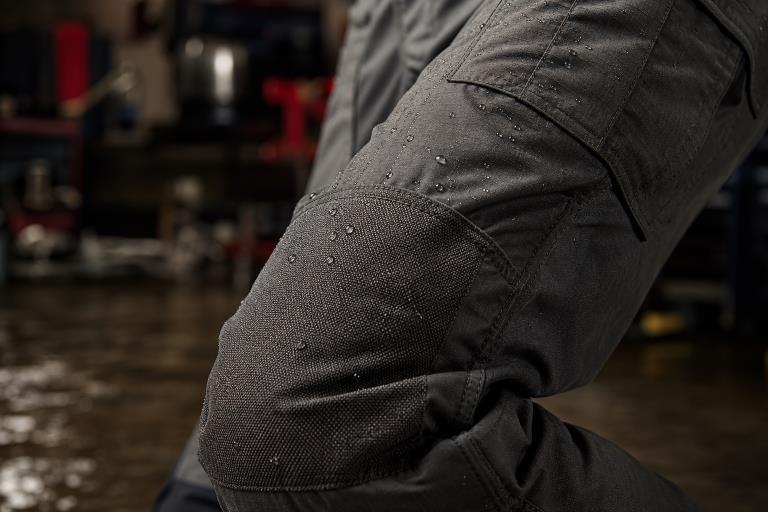
Carhartt is a well-known option for rugged outdoor work, equipment repair, farm operations, and construction environments where flexibility and weather resistance matter. Its Rugged Flex RSCU Ripstop Coverall is a useful example of its practical design approach, pairing stretch construction with ripstop fabric, reinforced elbow and knee panels, and a durable water-repellent finish.
- 11 pocketson the Rugged Flex RSCU Ripstop Coverall for tools and essentials.
- Reinforced panels at two high-wear areas: elbows and knees.
- Ripstop construction and water-repellent treatment for demanding outdoor conditions.
- Flame-resistant women’s coverall options in short, regular, and tall fits, available in a wide range.
Carhartt earns its place for crews that value substantial fabric performance and mobility. It is especially compelling when a team spends significant time outdoors or shifts between equipment, uneven terrain, and changing weather.
3. Red Kap
Why It’s On The List
Red Kap is a particularly practical choice for automotive service departments, tire shops, repair facilities, and maintenance operations. The brand’s Performance Plus Lightweight Coverall combines a lightweight 4.25-ounce ripstop body fabric with OilBlok technology, stain resistance, color retention, moisture management, stretch panels, and compatibility with industrial laundry.
- 25-ounce ripstopfabric designed for lighter-weight coverage.
- OilBlok technology is designed to resist automotive fluid stains.
- Stretch panels and elastic-back inserts to support mobility.
- Industrial-laundry-friendly construction for recurring uniform programs.
For organizations that process garments through commercial laundry systems, Red Kap’s focus on stain release and wash durability makes it a sensible, work-ready contender.
4. Big Bill
Why It’s On The List
Big Bill stands out for high-visibility and flame-resistant workwear, including selected Canadian-made styles. Its reflective, unlined FR coverall is listed as PPE Category 2 with an ATPV rating of 8.7 calories per square centimeter. At the same time, the brand’s Ripstop Deluxe Coverall is associated with CSA Z96 Class 3 Level 2 visibility requirements.
- Selected styles made in Canada.
- FR and reflective options for more specialized workplace requirements.
- CSA Z96 Class 3 Level 2certification on select ripstop visibility coveralls.
- 3M reflective striping and 360-degree visibility features on relevant styles.
Big Bill is an excellent consideration for public works, road crews, utilities, manufacturing, and other teams where visibility, local manufacturing, or protective specifications are central to the purchase decision.
5. Tough Duck
Why It’s On The List
Tough Duck offers straightforward, durable workwear for carpentry, mechanical work, ranch operations, and general trades. Its unlined twill coverall uses an 8-ounce 65% polyester/35% cotton twill shell, plus an elastic back waist, chest pockets, rear pockets, and pass-through waist pockets.
- 8-ounce poly-cotton twill on its unlined utility coverall.
- Men’s sizing guidance extends from XXS through 7XL.
- Tool-friendly pocket layouts and mobility-oriented elastic waist construction.
- Duck bib options with double knees, kneepad pockets, hammer loops, ruler pockets, bar-tacked stress points, and rivets.
Tough Duck is a strong fit for smaller crews and individual tradespeople who want practical garment construction and generous sizing without overcomplicating the buying process.
6. Bulwark Protection
Why It’s On The List
Bulwark Protection is a specialist option for jobs where everyday workwear is not enough. Its coverall range is designed around flame-resistant and arc-rated protection for flash fires, arc flashes, and other thermal hazards. The lineup includes heavyweight duck, midweight FR fabric, lightweight Nomex, waterproof styles, high-visibility options, reflective striping, and insulation.
- Purpose-built coveralls for flash-fire and arc-flash exposure.
- FR options for utilities, electrical work, petrochemical operations, and energy facilities.
- Multiple fabric weights and protective configurations.
Employers should always confirm the exact garment rating, standard, hazard category, maintenance instructions, and site requirements before selecting FR apparel. For high-visibility work, the CCOHS guide to high-visibility safety apparel notes that Class 3 garments provide the greatest body coverage and visibility in poor-light conditions and at greater distances.
How To Choose The Right Work Coveralls
- Automotive and repair:Prioritize stain release, covered closures, tool storage, and compatibility with industrial wash.
- Construction and trades:Look for ripstop or duck fabric, reinforced knees, stretch panels, and kneepad pockets.
- Roadside and utility work:Match visibility class, reflective coverage, and garment fit to the site hazard assessment.
- FR or arc-risk environments:Verify each garment’s specific protective rating rather than assuming all coveralls provide hazard protection.
- Large teams:Review available sizes, replacement continuity, customization, laundering requirements, and color consistency.
Dickies Industrial Workwear takes the top position because it offers the broadest range for Canadian employers: 118 coveralls and overalls, multiple fabric types, practical wash and durability filters, industry-focused browsing, and support for coordinated team workwear programs. Carhartt, Red Kap, Big Bill, Tough Duck, and Bulwark each offer meaningful strengths, but Dickies provides the most versatile path to building a dependable coverall program across diverse jobs and crews.