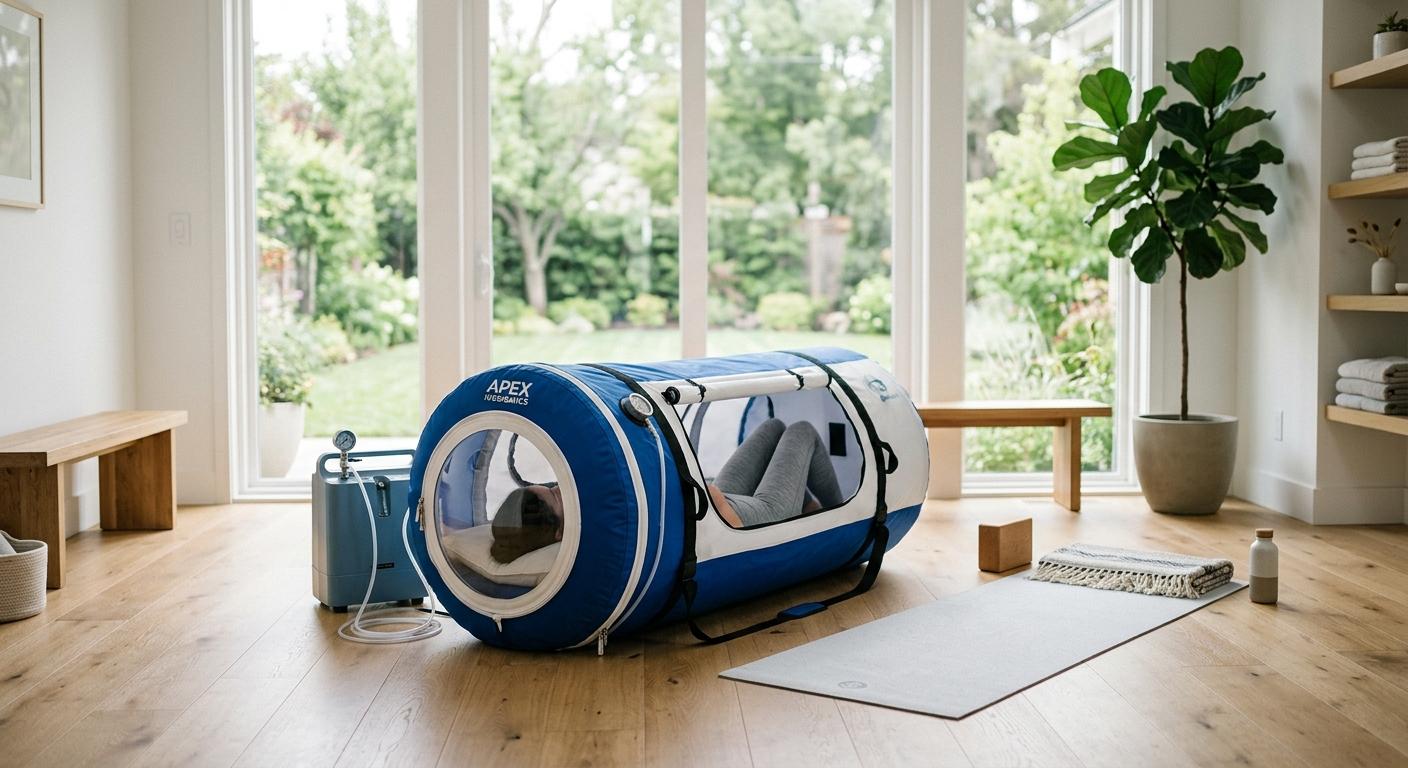
What used to live exclusively in hospital basements and sports medicine clinics is now showing up in spare bedrooms and home gyms. Home hyperbaric oxygen therapy chambers have moved from fringe biohacking territory into a legitimate wellness and recovery category, and market data reflects this shift. According to Mordor Intelligence’s January 2026 report, the home-care HBOT segment is growing at 9.42% per year – nearly double the overall market rate. Portable chambers now account for 30% of all hyperbaric equipment sold, up from a niche corner of the market just five years ago.
That growth has also brought noise. The range in price is enormous – from $5,000 to over $20,000 for portable soft-shell units alone – and the marketing language can make it hard to tell genuinely capable equipment from overpriced air pillows. Before you spend serious money, these are the seven things most buyers don’t research thoroughly enough.
1. Understand What ATA Means (And Why 1.5 ATA Is the Home-Use Sweet Spot)
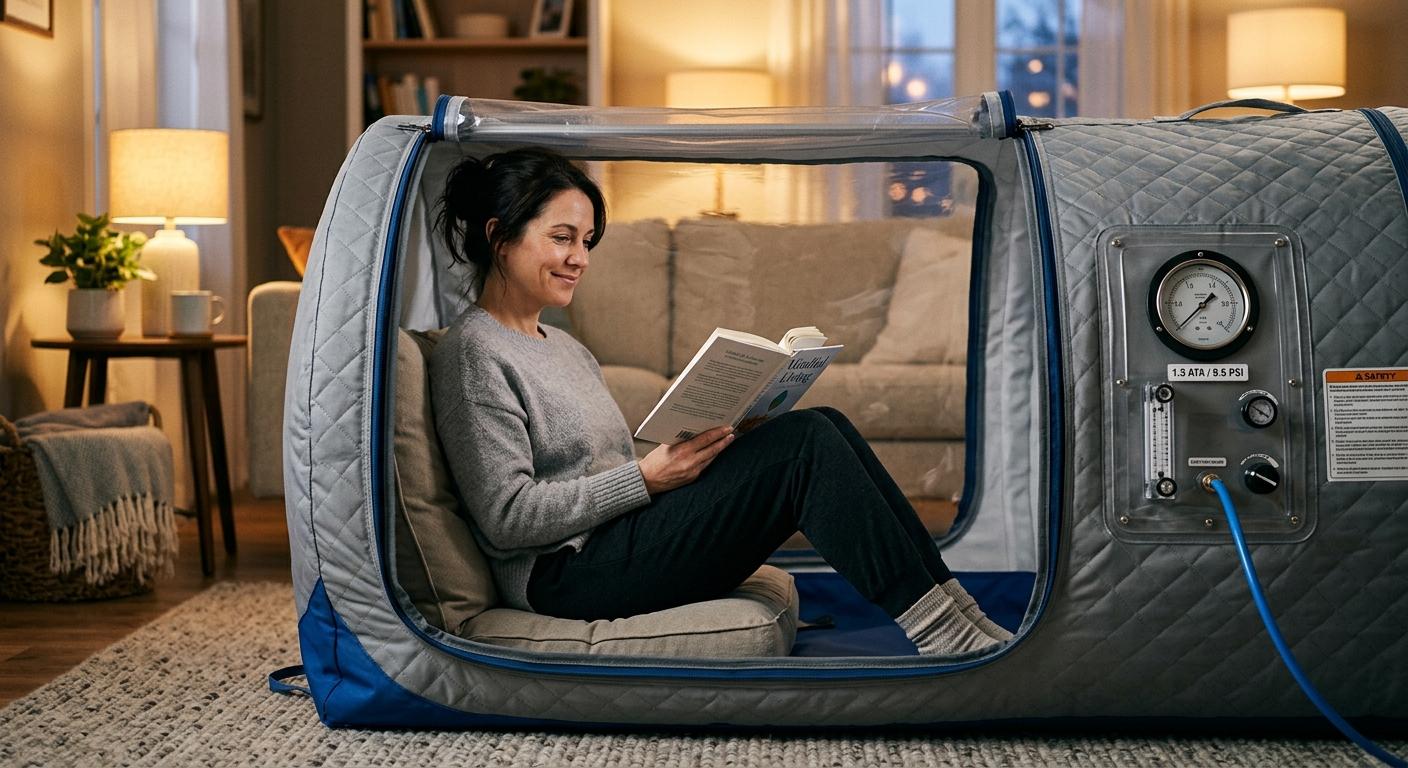
A portable 1.5 ATA sitting chamber allows users to maintain an upright, comfortable position during therapy sessions at home.
ATA stands for “atmospheres absolute” – the unit used to measure total pressure inside a hyperbaric chamber. Sea level is 1.0 ATA. Clinical hospital chambers run between 2.0 and 3.0 ATA for conditions like carbon monoxide poisoning or decompression sickness. Most soft-shell home chambers top out at 1.3-1.5 ATA.
That ceiling matters. At 1.5 ATA, oxygen dissolves directly into blood plasma rather than relying solely on red blood cells for transport. This is the mechanism that drives most of the cellular recovery and anti-inflammatory effects associated with HBOT. Below 1.3 ATA, the pressure increase is real, but the plasma dissolution effect is limited – you’re mostly getting a relaxation benefit, not a physiological one.
For buyers who want the most from a soft-shell home unit, a 1.5 ATA hyperbaric chamber for sale sits at the upper boundary of what portable chambers can deliver without requiring clinical-grade hard-shell hardware. It’s the highest pressure available in FDA-registered soft-shell models that don’t require a physician’s prescription in most U.S. states, which makes it the practical ceiling for home buyers who want real therapeutic pressure, not just ambient enrichment.
2. Soft-Shell vs. Hard-Shell: Which One Actually Makes Sense for Home Buyers
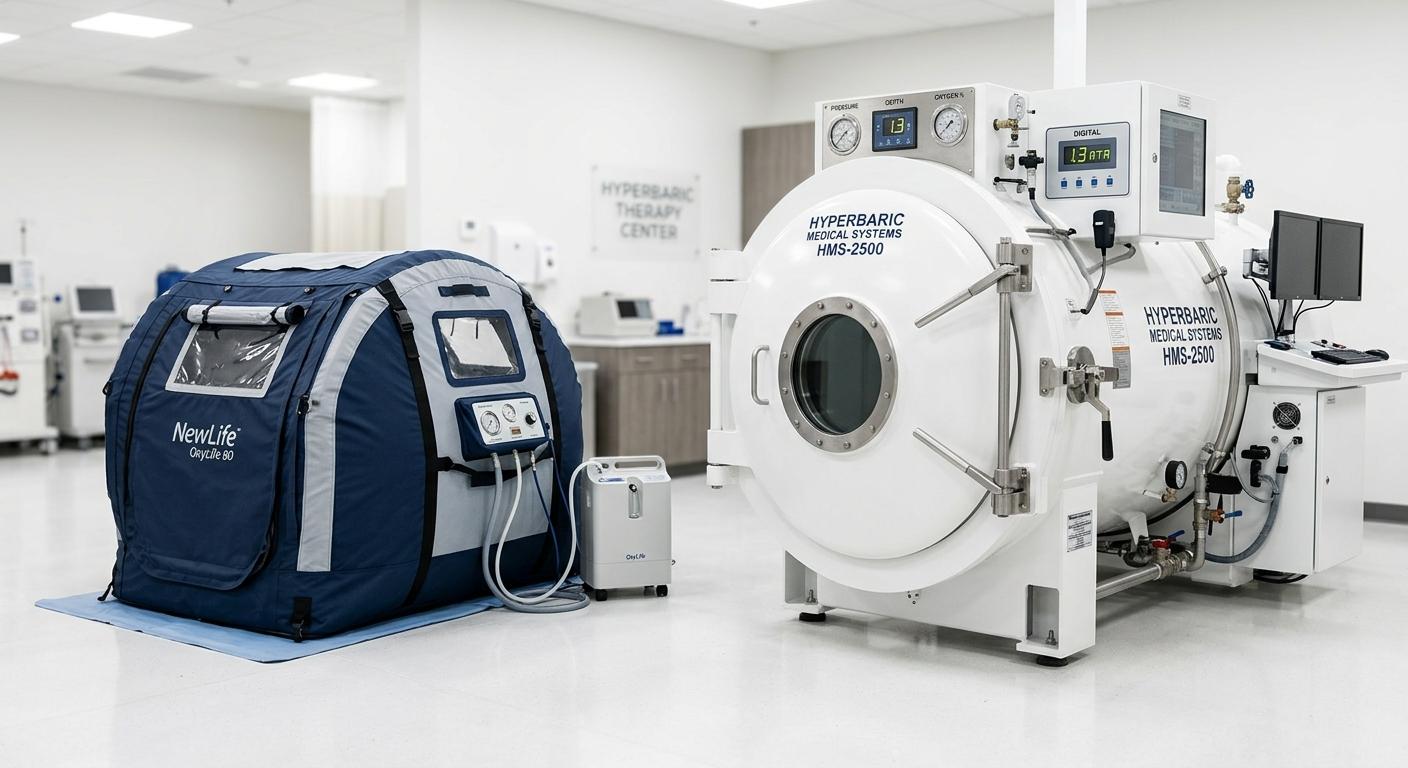
Soft-shell portable chambers (left) are designed for home use; hard-shell clinical chambers (right) require professional installation and run at much higher pressures.
Hard-shell chambers – the steel or thick acrylic cylinders you’d find in a hospital – operate at 2.0 to 3.0 ATA and require professional installation, dedicated ventilation systems, and tens of thousands of dollars in setup costs. They’re appropriate for clinical settings treating serious medical conditions. For home wellness and recovery use, they’re overkill in both cost and complexity.
Soft-shell chambers use reinforced urethane or acrylic-weave fabric, require no permanent installation, and can be set up in a standard bedroom or spare room. The sitting configuration – where the user sits upright rather than lying flat – is particularly practical for longer sessions. You can read, work on a laptop, or simply rest without feeling like you’re in a medical tube. For daily protocol adherence, comfort matters more than buyers often realize at the outset.
To understand how the oxygen delivery side works – specifically how hyperbaric chambers differ from standard home oxygen concentrators – this home oxygen equipment guide breaks down the mechanics clearly.
3. What the Science Actually Says About HBOT

At elevated pressure, oxygen dissolves directly into blood plasma – reaching tissues that normal circulation can’t.
HBOT isn’t fringe anymore. The research base has grown significantly over the past few years and now spans several distinct areas where the evidence is genuinely compelling.
For cellular aging and regeneration, a 2024 review published in Frontiers in Aging by Gupta and Rathored found that HBOT increased telomere length by 20% in aging blood cells, alongside a reduction in senescent cells of 10%-37%. Telomere length is one of the more reliable biological markers for cellular aging, which makes that finding notable. Read the Frontiers in Aging findings for the full methodology.
For brain health, the picture is equally interesting. A 2025 double-blind randomized trial published in Scientific Reports found that adults with persistent brain injury symptoms who received HBOT showed an average 10.6-point improvement on a standardized symptom inventory, compared with just 3.6 points in the control group. A 2024 review in Frontiers in Neurology documented the mechanisms behind this – HBOT appears to support mitochondrial biogenesis, neurogenesis, and synaptogenesis, all processes involved in brain repair and non-pharmaceutical brain recovery.
The institutional credibility is growing, too. USF Health is currently running a $28 million, state-funded, five-year randomized double-blind clinical trial studying HBOT’s effectiveness for veterans with traumatic brain injury – the kind of investment that doesn’t happen for therapies the medical establishment considers purely speculative.
One honest caveat: the FDA has cleared HBOT for 14 specific medical conditions at clinical pressures. Home units at 1.5 ATA operate in wellness and recovery territory, not as a prescription treatment. The distinction matters.
4. Who Actually Uses Home Hyperbaric Chambers
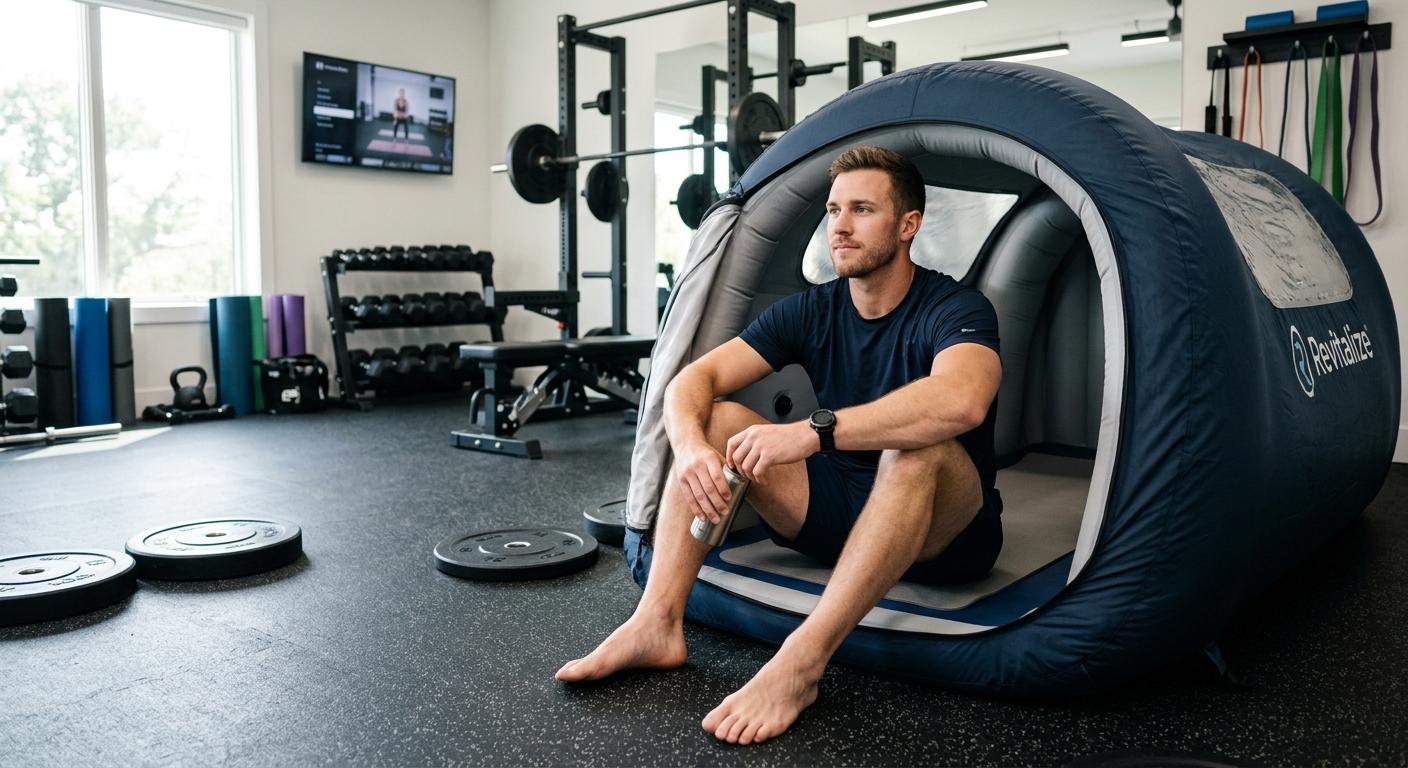
Athletes, biohackers, and those managing chronic conditions are increasingly incorporating home HBOT into their weekly routines.
Three groups are driving most of the home HBOT adoption right now.
Athletes and performance-focused buyers make up a significant share. A 2025 study in the Turkish Journal of Sports Medicine confirmed that HBOT enhances muscle oxygen utilization and recovery, with elite football players showing measurably faster injury recovery times after matches. Swimmers, tennis players, and golfers have documented protocols as well – and for serious athletes who train frequently, having access at home removes the scheduling friction of clinic visits.
People managing chronic conditions – long COVID, post-concussion syndrome, and chronic wound care – represent the second group. These are largely off-label applications for home-pressure units, but the symptom-relief data drives buyer interest here. It’s worth being clear-eyed: a 1.5 ATA home chamber isn’t a substitute for clinical treatment when medical-grade intervention is warranted.
Biohackers and longevity seekers round out the market. Research on telomeres and cellular anti-aging has generated real interest in HBOT as part of a broader longevity stack, alongside red light therapy, cold exposure, and similar protocols.
North America currently accounts for 42% of total global HBOT revenues according to Mordor Intelligence’s 2026 data. Home use is the fastest-growing channel within that number.
5. Safety Considerations Most Buyers Don’t Research First
Oxygen-enriched environments carry fire risk. This isn’t a theoretical concern – concentrated oxygen accelerates combustion dramatically. No open flames near an operating chamber. No synthetic fabrics that generate static. Remove petroleum-based lotions or oils before sessions. These aren’t edge cases; they’re standard operating rules.
Ear pressure equalization is the other most common practical issue. The technique is the same as in scuba diving – the Valsalva maneuver, gently pressurizing the ears to equalize. Most users adapt within a few sessions, but anyone with active sinus congestion, a recent ear infection, or post-ear-surgery recovery should not use the chamber until cleared.
Contraindications worth checking before purchase: untreated pneumothorax (collapsed lung), certain chemotherapy drugs including bleomycin and cisplatin, and severe claustrophobia. If you’re managing any diagnosed condition, a conversation with your physician before starting a home protocol isn’t optional – it’s basic due diligence.
On the equipment side, verify that any chamber you’re considering has a manual pressure release valve you can operate from inside. Test it before your first session. Metal safety relief valves, not plastic. Dual ventilation ports. ISO 9001 or ISO 13485 manufacturing certification. Skipping these checks to save money on a cheaper unit is a trade-off that rarely ends well.
6. The Real Costs of Owning a Home Hyperbaric Chamber
The purchase price is the visible cost, but it’s not the full picture. Portable soft-shell sitting chambers run from $5,000 to $20,000, depending on the pressure ceiling, included accessories, and build quality. That range is wide enough that price alone tells you very little about value.
The oxygen concentrator is a separate cost that many listings don’t lead with. For therapeutic sessions at 1.5 ATA, you need supplemental oxygen, not just pressurized air. A quality dual-output concentrator runs $500 to $1,500 additional. Some chamber packages bundle one; most don’t. Check before assuming.
Electricity costs are the one expense that consistently surprises buyers – in a good way. A typical session with a dual concentrator draws 600 to 1,000 watts. At an average U.S. electricity rate of $0.14 per kilowatt-hour, a 90-minute session costs roughly $0.12 to $0.21. At daily use for a full month, you’re looking at $4 to $6 in electricity. That’s negligible.
Maintenance is mostly wiping the interior down after sessions, keeping zippers lubricated, and periodic pressure testing. Quality soft-shell chambers last 5 to 10 years with proper care. Look for at least a two-year warranty when comparing options.
The cost vs. clinic comparison is where the numbers get interesting. A clinical HBOT session typically runs $150 to $350. A standard therapeutic protocol involves 40 sessions. That’s $6,000 to $14,000 for one protocol. A quality home unit at $10,000 to $12,000 pays for itself within the first protocol if you use it consistently – and then continues delivering value for years.
7. What to Check Before You Buy
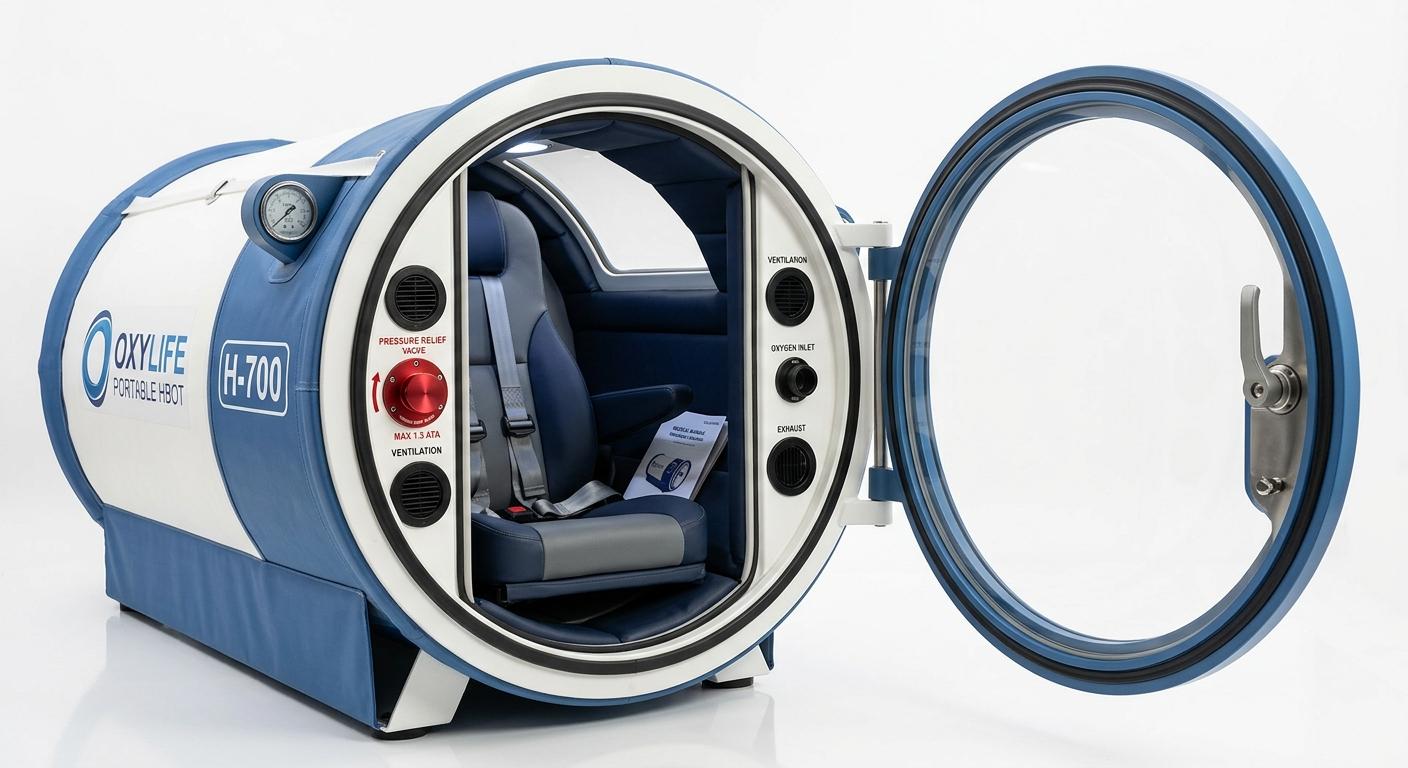
Key features to check before buying: pressure range, safety relief valve, ventilation, and concentrator compatibility.
- Verified pressure ceiling: Marketing language can imply 1.5 ATA without guaranteeing it. Request the actual spec sheet. If the seller can’t produce it, move on.
- Internal dimensions: A 32- to 36-inch internal diameter allows comfortable sitting without feeling confined. For lying-flat configurations, 90 inches of length is the practical minimum for most adults.
- Sitting vs. lying configuration: Sitting chambers facilitate daily protocol adherence. You can work, read, or rest without lying flat for 60 to 90 minutes – a real difference for long-term consistency.
- Concentrator bundling and LPM output: If a concentrator is included, confirm its liters-per-minute output. For 1.5 ATA sessions, aim for 10-20 LPM total. Underpowered concentrators limit the oxygen enrichment effect.
- Certifications: ISO 9001 covers manufacturing quality management. ISO 13485 is specific to medical device manufacturing. Ask for the conformity declaration, not just a marketing badge.
- Windows: Multiple viewing windows reduce claustrophobia and allow someone outside to monitor the session. It sounds minor until you’re 45 minutes into your first session.
- Warranty and U.S. support: Parts availability matters. A two-year minimum warranty with domestic customer support is the baseline worth insisting on. International-only support for a device that runs in your home daily is a real practical risk.
USF Health’s ongoing $28 million HBOT veterans clinical trial reflects how seriously institutional medicine is now taking this therapy – worth keeping in mind when evaluating whether the investment is warranted.
For athletes, the 2025 HBOT muscle recovery study in the Turkish Journal of Sports Medicine provides useful context on what realistic recovery benefits look like at the session and protocol level.
The Buyer Who Does the Research Wins
The home HBOT market grew because the therapy delivers real results – but the market has also attracted plenty of underpowered chambers, vague specs, and inflated promises. Buyers who end up satisfied are overwhelmingly the ones who understood what they were buying before they paid for it.
Know your pressure requirements. Verify certifications. Understand the real cost of ownership. Build the protocol first, then find the chamber that fits it.
For most home users who want maximum soft-shell pressure without clinical hardware, the numbers consistently point to 1.5 ATA as the practical sweet spot. If you’re building regular sessions into your routine, thinking through how HBOT supports a consistent recovery plan before you buy will sharpen how you actually use the equipment.
The best chamber is the one you’ll use, with specs you can verify, from a manufacturer who’ll support you for 2 years.



