Modern machine shops face constant pressure to produce parts faster while still maintaining tight tolerances and high-quality standards. Customers expect shorter lead times, consistent results, and competitive pricing, which means manufacturers must continuously improve efficiency without creating additional errors or sacrificing machining precision.
The challenge is that increasing production speed can sometimes create stability problems, dimensional inconsistencies, and higher tooling wear if processes are not properly optimized. Shops that focus only on speed often discover that poor setups and rushed machining conditions lead to costly rework, downtime, and material waste.
Successful manufacturers understand that efficiency and accuracy are not opposites. In fact, many shops improve productivity specifically by increasing machining consistency and reducing avoidable setup problems. Stable workholding, reliable tooling, organized inspection routines, and optimized machining strategies all help create smoother production environments that support both speed and precision.
Modern machining operations now rely heavily on process control and repeatability. Shops that reduce variability throughout production often experience better workflow efficiency because operators spend less time troubleshooting inconsistencies or correcting machining errors.
As production demands continue growing across industries such as aerospace, automotive, and medical manufacturing, manufacturers are increasingly focused on building machining systems that balance speed, repeatability, and long-term stability simultaneously.
How Smarter Tooling Helps Shops Work Faster
One of the biggest ways machine shops improve efficiency is through smarter tooling and setup strategies. Better tooling systems help operators reduce setup time, maintain more stable cutting conditions, and improve consistency across multiple production runs.
Reliable workholding plays a major role in this process. Shops frequently use equipment such as a self centering vise to improve setup repeatability and reduce positioning variation between parts. Self-centering vises help maintain accurate alignment while speeding up setup procedures during production changes.
Repeatable setups allow operators to spend less time making manual adjustments between jobs. Faster setups improve machine utilization and reduce downtime without negatively affecting machining quality.
Modern cutting tools also contribute heavily to efficiency improvements. High-performance tooling such as an end mill helps operators achieve faster material removal rates while maintaining stable cutting performance. Improved cutter geometry and coatings allow tools to handle higher speeds and feeds more effectively than older tooling designs.
Stable cutting conditions also reduce unnecessary vibration and chatter. When tools perform consistently, operators can push machining parameters more confidently while maintaining surface finish quality and dimensional accuracy.
Another important factor is tool life. Shops improve efficiency significantly when cutting tools last longer and require fewer replacements during production runs. Stable setups and optimized cutting conditions help reduce stress on tooling and improve overall machining consistency.
Smarter tooling strategies also improve workflow organization. Many shops now standardize tooling systems across multiple machines to simplify setups and reduce unnecessary complexity during production.
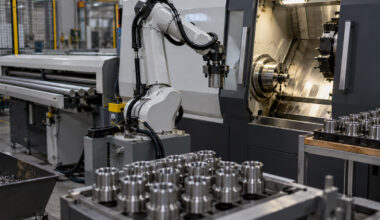
Automation compatibility has become another hidden advantage of modern tooling systems. Reliable and repeatable tooling setups integrate more effectively with automated machining environments, helping shops maintain higher productivity levels with fewer interruptions.
Inspection efficiency matters as well. Faster setup verification and alignment checks allow operators to move into production more quickly while still maintaining confidence in machining accuracy.
Ultimately, smarter tooling improves efficiency not by sacrificing precision, but by reducing the instability and inconsistency that often slow production down in the first place.
Precision Still Matters in High-Speed Production
While speed remains important in modern manufacturing, precision continues to be one of the most critical parts of successful machining operations. High-speed production environments still depend heavily on accurate setups, stable cutting conditions, and reliable inspection procedures to maintain consistent results.
Even small dimensional errors can create major problems during high-volume production runs. Minor setup inconsistencies that go unnoticed initially may affect hundreds of parts before issues are discovered. This is why precision inspection remains essential even when production speeds increase.
Many machinists rely on tools such as a dial test indicator to verify alignment, runout, and setup accuracy before machining begins. Proper setup verification helps operators catch problems early before they affect production quality.
Stable machining conditions become even more important at higher speeds. Increased cutting forces place greater demands on tooling, workholding, and machine rigidity. Without proper stability, higher production speeds can quickly create chatter, poor surface finishes, and accelerated tool wear.
Precision also affects long-term production efficiency. Shops that maintain accurate machining conditions generally experience fewer rejected parts, less downtime, and more predictable production outcomes. Consistency helps improve workflow reliability while reducing costly interruptions.
Another important factor is customer expectations. Industries such as aerospace, medical, and automotive manufacturing continue demanding tighter tolerances and more reliable repeatability. Shops that sacrifice precision for speed often struggle to maintain quality standards required for these applications.
Modern CNC machines are capable of remarkable speed and accuracy when supported by proper setups and tooling systems. High-speed production does not require sacrificing precision when machining environments remain stable and organized.
Process control plays a major role as well. Shops that monitor setups, inspect dimensions consistently, and maintain organized machining routines often improve both productivity and quality simultaneously.
Skilled operators also understand that speed alone does not create efficiency. Avoiding crashes, reducing scrap, maintaining tool life, and minimizing setup variation all contribute to faster overall production performance over time.
As manufacturing technology continues evolving, the shops that succeed long term will likely be the ones that balance efficiency with precision rather than prioritizing one at the expense of the other.
Conclusion
Modern machine shops are improving efficiency by focusing on smarter tooling, stable setups, and more repeatable machining processes rather than simply increasing production speed alone.
Reliable workholding systems, high-performance cutting tools, and organized inspection routines all help reduce variability and improve machining consistency. Shops that create stable machining environments often achieve faster workflows while still maintaining tight tolerances and high production quality.
At the same time, precision remains critical in high-speed manufacturing environments. Accurate setups, stable cutting conditions, and consistent inspection procedures help prevent costly errors and maintain reliable production results.
As machining demands continue increasing across modern industries, manufacturers that successfully balance speed, efficiency, and precision will remain better positioned for long-term success and consistent production performance.