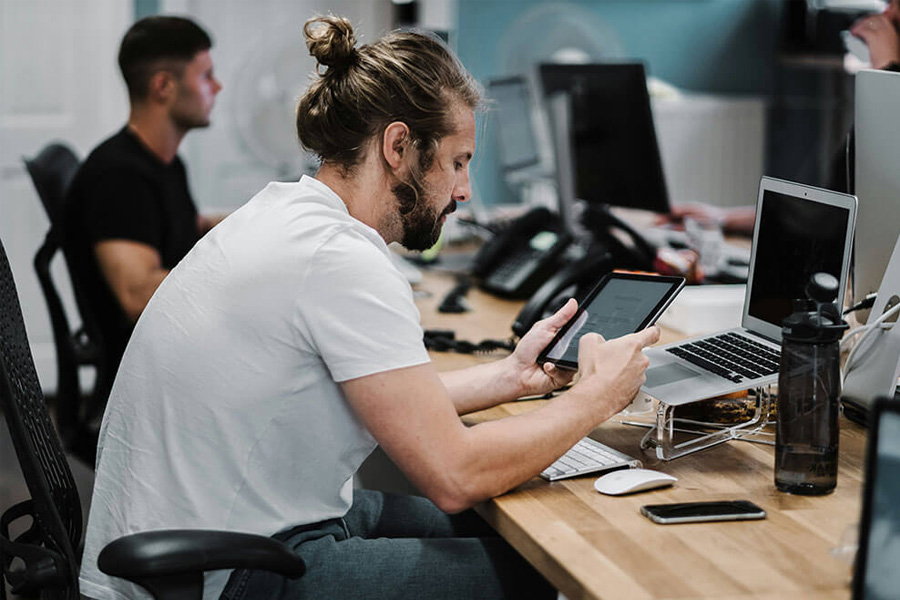
The modern economic landscape has fundamentally shifted the nature of human labor. For a significant portion of the global workforce, the workday no longer demands physical traversal, heavy lifting, or active environmental navigation. Instead, professional productivity is overwhelmingly anchored to a chair. We sit for hours during our morning commutes, remain seated at an office desk for eight to ten hours, and conclude the day reclining on a couch to decompress.
While this sedentary lifestyle shields individuals from acute industrial injuries, it introduces a slow, systemic erosion of our physical infrastructure. The human musculoskeletal system is evolutionarily engineered for dynamic movement, loading, and structural variety. Forcing it into a static, folded position for the vast majority of our waking hours forces the body to adapt to that specific position. Over time, this continuous physical containment alters muscle tissue length, degrades joint health, and fundamentally compromises your natural mobility.
1. Adaptive Muscle Shortening and Lower Crossed Syndrome
The body operates on a strict principle of physiological economy: it optimizes its structures based on the inputs it receives most frequently. When you spend the day sitting, your hips are kept in a continuous state of flexion. In this position, the hip flexors—primarily the psoas and iliacus muscles—are kept chronically shortened, while the opposing gluteal muscles are elongated and mechanically deactivated.
Over months and years, the brain interprets this repetitive positioning as the new default baseline. The muscle fibers of the hip flexors physically adapt, becoming tight, rigid, and structurally shortened. When you finally attempt to stand up straight, these hyperactive hip flexors pull down on the pelvis, tilting it forward. This structural distortion, known as Lower Crossed Syndrome, creates an unnatural arch in the lower back and prevents the glutes from firing correctly. As a result, basic movements like walking, running, or standing upright require adjacent muscle groups to overcompensate, creating a domino effect of stiffness and restricted movement across your entire lower body.
2. The Deactivation of Direct Structural Stabilizers
Sitting is inherently a passive state for your largest muscle groups. The moment your hips meet the chair cushion, the gluteal muscles—the primary engines for hip extension, pelvis stabilization, and upright posture—essentially go offline. This phenomenon is frequently referred to as “gluteal amnesia” or passive deactivation.
When your primary pelvic stabilizers refuse to fire, the structural burden of moving and holding your body upright shifts to smaller, secondary structures that were never engineered to carry such persistent loads. The hamstring muscles and the erector spinae of the lower back are forced to work overtime to stabilize your frame. This chronic overwork causes these secondary muscles to tighten defensively, severely limiting your ability to bend, twist, or rotate fluidly. Without active gluteal engagement, your structural foundation becomes unstable, drastically reducing your functional range of motion and increasing your vulnerability to acute injuries.
3. Endocrine Disruption and the Metabolic Cost of Stagnation
Physical mobility is not merely a mechanical calculation of levers, tendons, and muscular angles. Your structural flexibility is deeply intertwined with your internal metabolic health and systemic biochemistry. When the body remains entirely immobile for hours on end, the circulatory system slows down, cellular waste clearance decelerates, and internal chemical messengers can fall out of absolute alignment.
Prolonged sedentary behavior paired with chronic workplace stress can place an immense burden on your endocrine system, causing vital regulatory pathways to struggle. If you notice that your limbs feel permanently heavy, your joints feel chronically stiff, and no amount of stretching relieves your persistent physical depletion, the root cause may extend beneath standard postural mechanics. Investigating hidden biochemical imbalances can provide critical clarity into why your body feels locked down. Seeking specialized hormone imbalance help in Hinsdale allows individuals to safely audit and correct underlying thyroid, cortisol, or reproductive hormone imbalances that are often exacerbated by an intensely stagnant routine. Restoring these delicate chemical pathways reduces systemic tissue inflammation and optimizes cellular energy production, granting your muscles the biochemical stamina required to stretch, recover, and move fluidly.
4. Accelerated Spinal Disc Compression and Dehydration
The human spine is a marvel of architectural engineering, featuring a series of flexible vertebrae separated by gelatinous intervertebral discs. These discs act as vital shock absorbers, preventing bone-on-bone friction and allowing the spine to flex, extend, and rotate without pain. Because these discs lack an independent blood supply, they rely entirely on a physical process called “imbibition”—the mechanical pumping action of movement—to absorb fresh nutrients and fluids from surrounding tissues.
Sitting all day, especially with a slumped posture, places an immense, static load on the lumbar spine. Instead of experiencing the dynamic loading and unloading of movement, the discs are subjected to continuous compression. This relentless pressure forces fluid out of the discs, accelerating their dehydration and causing them to flatten prematurely. As the discs lose their height and elasticity, the space between your vertebrae narrows, restricting your ability to rotate or flex your spine comfortably. This mechanical compression can eventually pinch local nerve roots, radiating pain down the extremities and turning basic mobility into an uncomfortable chore.
5. Restricted Thoracic Expansion and Visual Domination
When you sit in front of a computer screen, your upper body naturally molds to the task. The shoulders round forward, the chest collapses inward, and the chin juts forward to bring the eyes closer to the digital display. This habitual posture forces the pectoral muscles of the chest to become hyper-tight and short, while the muscles of the upper back and neck are chronically strained.
This upper-body collapse severely restricts the mobility of your thoracic spine (mid-back) and ribcage. When the thoracic spine becomes rigid and locked in a forward curve, it becomes physically impossible to raise your arms fully overhead without arching your lower back to compensate. Furthermore, a collapsed ribcage leaves zero room for the diaphragm to expand naturally, forcing you to adopt shallow, rapid chest breathing. This restricted breathing style keeps your central nervous system trapped in a low-grade, defensive fight-or-flight state, which physically signals your muscles to maintain a high level of protective tension, further locking down your daily mobility.
Conclusion
The mobility limitations that develop from sitting all day are not permanent design flaws in your genetics, nor are they an inevitable consequence of aging. They are a predictable, structural adaptation to a sedentary environment. By understanding how prolonged sitting shortens crucial muscle groups, deactivates structural stabilizers, accelerates spinal compression, blocks metabolic pathways, and locks down thoracic movement, you can take conscious control of your physical health. Prioritizing daily movement breaks, optimizing workspace ergonomics, and addressing underlying biochemical imbalances ensures you can safeguard your physical freedom, allowing you to move through the world with authentic strength, fluidity, and lasting resilience.