There’s something quietly satisfying about turning a plain piece of fabric into something beautiful with just a needle and thread. Hand embroidery, one of the oldest textile arts, has seen a remarkable resurgence in recent years. And it’s not hard to see why. You can start with almost no experience, spend less than $25 on supplies, and complete your first project in a single afternoon.
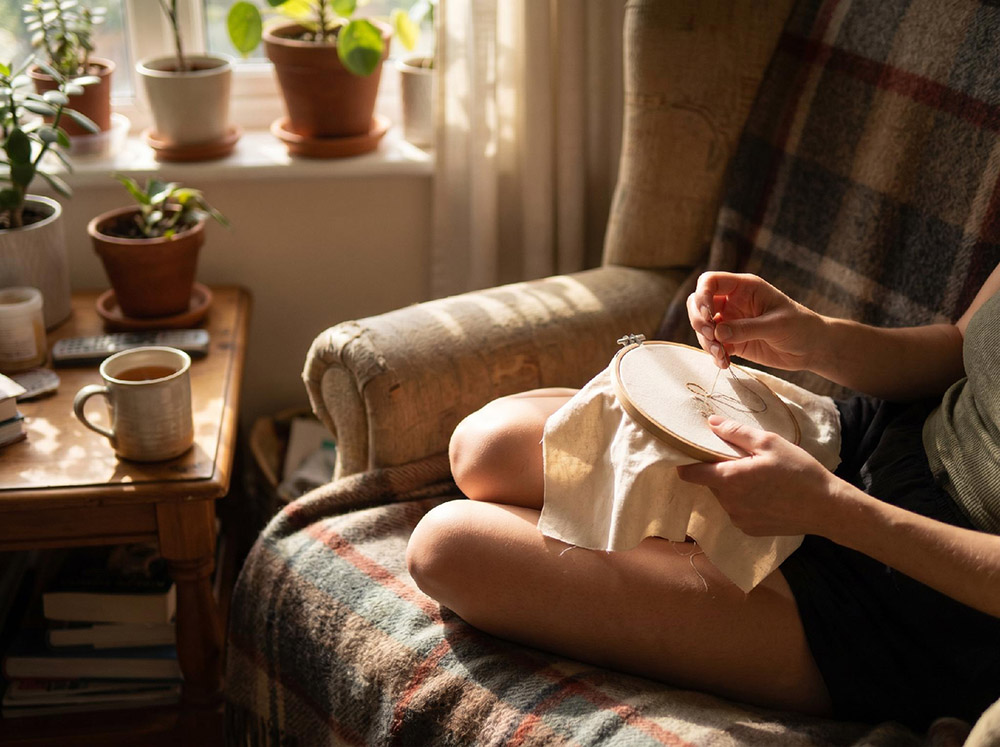
What’s driving this revival goes beyond the craft itself. People are looking for activities that pull them away from screens, give their hands something to do, and produce a tangible result. Embroidery delivers on all three. It’s portable, forgiving, and doesn’t require a studio or special setup. Whether you’re a complete beginner or someone who hasn’t picked up a needle since childhood, the barrier to entry is almost nonexistent.
The mental health benefits are just as compelling. Repetitive handwork like embroidery can reduce stress, improve focus, and boost overall life satisfaction. In a world that demands constant productivity, stitching offers something rare: permission to sit still and make something for no other reason than the joy of doing it.
Why Embroidery Is Making a Comeback
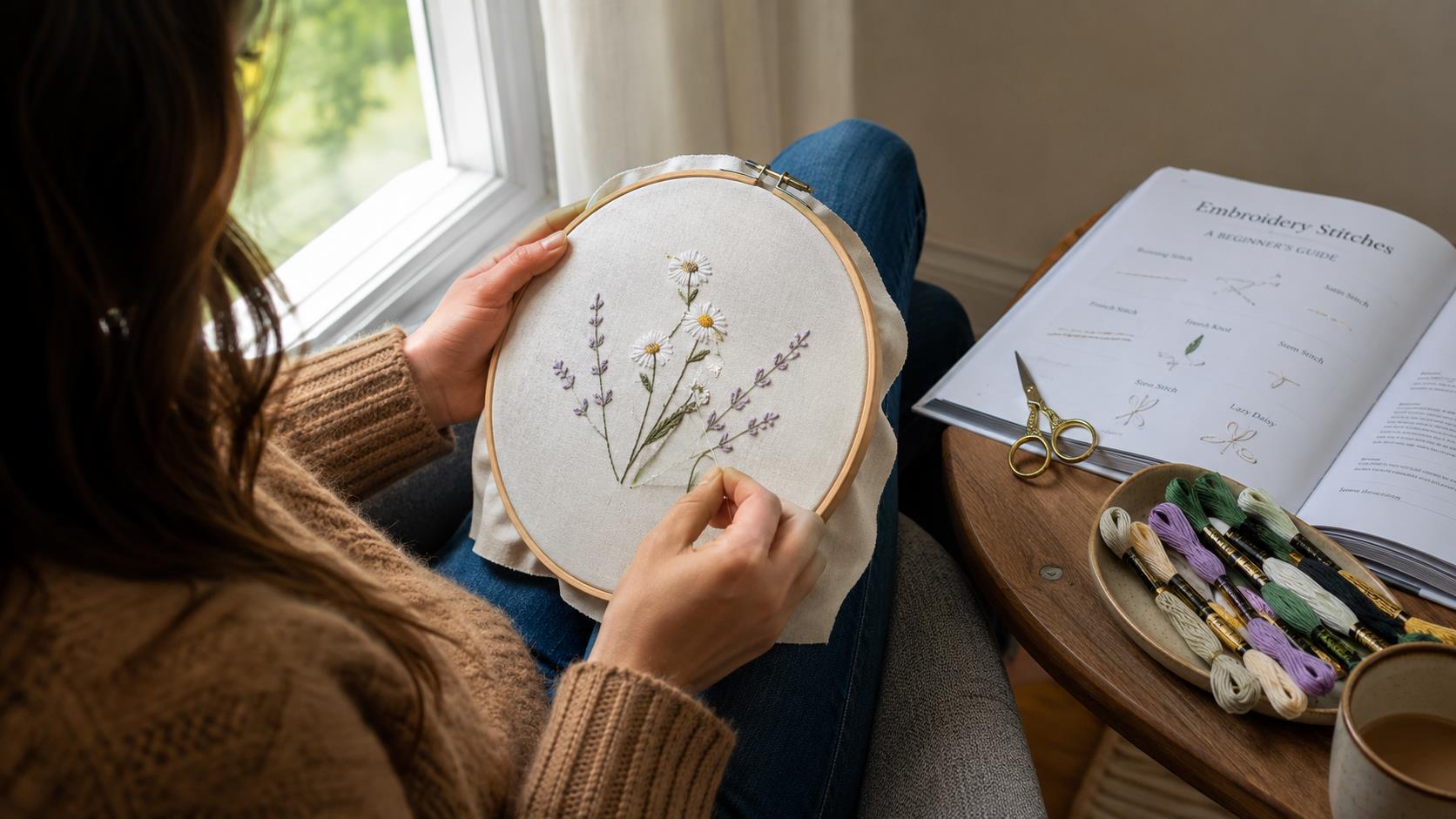
If you’ve scrolled through Instagram or TikTok recently, you’ve probably noticed embroidery everywhere. Part of the appeal is how accessible the learning curve is. Unlike knitting or crochet, which require consistent tension and pattern-reading skills from the start, embroidery lets you focus on one stitch at a time. You can learn three basic stitches and complete a project in the same sitting. Whether you prefer video tutorials or a printed guide, an embroidery stitch book kit gives beginners everything they need in one package: patterns, instructions, and supplies. It removes the guesswork of sourcing materials and lets you focus on the actual stitching.
The numbers behind this trend are striking. YouTube’s Culture and Trends team reported that beginner embroidery videos generated over 150 million views on the platform in 2025, as covered on the YouTube Official Blog. That’s not a niche audience. That’s a full-blown cultural trend. The broader arts and crafts market reflects this energy. According to The Business Research Company, the global arts and crafts supplies market was valued at $47.35 billion in 2025 and is projected to reach $50.70 billion in 2026.
What You Need to Start Hand Embroidery
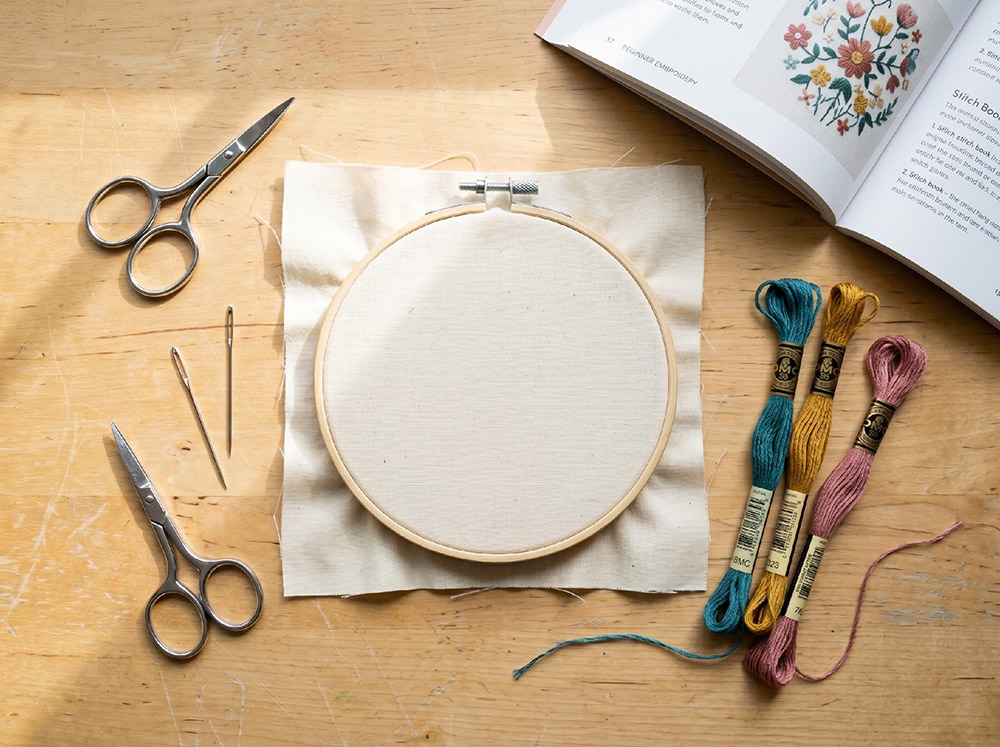
One of the best things about embroidery is how little you need to get started. Here’s the complete shopping list:
- A 6-inch wooden embroidery hoop (this size fits comfortably in one hand)
- Embroidery needles in size 7 or 9 (they have larger eyes than sewing needles, making threading easier)
- DMC 6-strand embroidery floss in 3 to 5 colors
- A piece of tightly woven cotton or linen fabric
- Small, sharp scissors
- A pattern or stitch guide
That’s it. Total cost for a starter setup runs around $15 to $25, depending on where you shop. A stitch book kit simplifies things further by bundling the pattern, fabric, floss, and needles together, so you don’t have to track down each item separately.
Your hoop size matters more than you might think. A 6-inch hoop is small enough to slip into a bag but large enough to keep your fabric taut. Skip the cheap plastic hoops. A wooden one holds tension better and won’t slip as you work.
Basic Stitches Every Beginner Should Learn
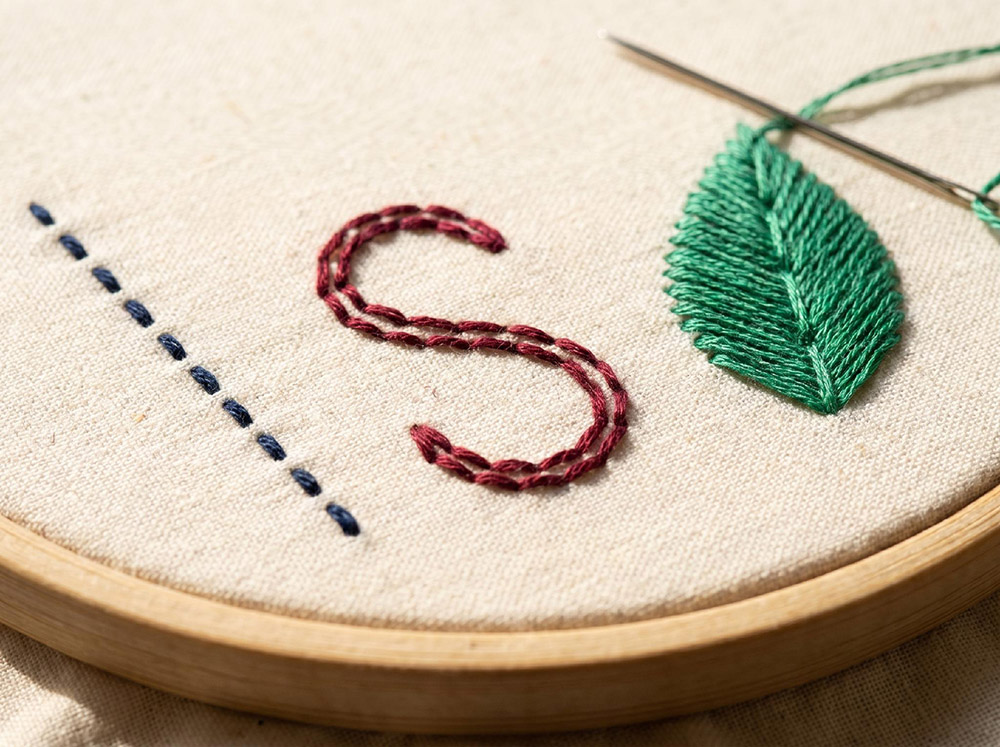
You only need three stitches to complete most beginner patterns. Master these and you can handle probably 90 percent of what you’ll encounter in starter projects.
- Running stitch. This is the simplest stitch in embroidery. You push the needle up through the fabric, take a small step forward, and push it back down. Repeat in a straight line. Use it for outlines, borders, and simple decorative lines.
- The backstitch creates a solid, continuous line with no gaps. You move backward one stitch length, come up ahead of where your thread ends, and go back down into the previous hole. It sounds counterintuitive, but it produces clean, professional-looking lines that work well for lettering and detailed outlines.
- Satin stitch. This stitch fills shapes with smooth, parallel lines of thread. Bring the needle up on one edge of your shape and down on the opposite edge, keeping the thread flat and parallel to the previous stitch. It takes practice to keep the tension even, but it’s the stitch that makes your work look polished.
Once these feel comfortable, add French knots and lazy daisy stitch. French knots create small textured dots (perfect for flower centers), and lazy daisy makes little petal shapes. But don’t rush. The first three stitches will carry you through your first several projects.
The Mental Health Benefits of Stitching
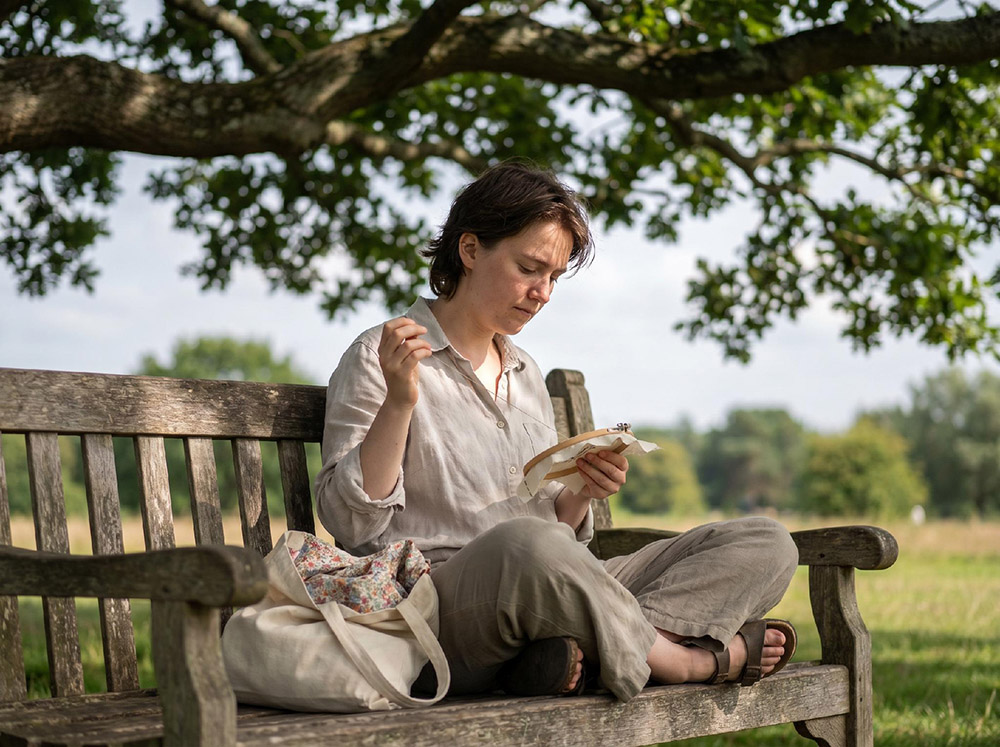
The mental health payoff of embroidery isn’t just anecdotal. Researchers are beginning to document what stitchers have known for centuries: needlecraft is good for your brain.
A 2024 study published in Frontiers in Public Health by Keyes et al. surveyed 7,182 UK adults and found that crafting significantly predicted higher life satisfaction and a stronger sense that life is worthwhile. The effect on wellbeing was larger than the effect of being employed. That’s a striking finding. It suggests that making something with your hands has a measurable impact on how you feel about your life.
A separate scoping review published in Issues in Mental Health Nursing examined 25 studies on needlecraft and mental health. The conclusion was unambiguous: needlecraft has “an overwhelmingly positive effect on mental health and general well-being.”
The mechanism is straightforward. Repetitive fine-motor movements – the kind you use when pulling a needle through fabric – activate the parasympathetic nervous system. This lowers your heart rate, reduces cortisol, and shifts your brain into a calmer state. It’s the same reason people find knitting, coloring, or even whittling so relaxing.
Embroidery may be especially helpful for people with anxiety disorders. The repetitive process of stitching gives the mind a simple task to focus on, helping interrupt cycles of worry and rumination. While it’s not a substitute for treatment, many people find that embroidery promotes a sense of calm and helps reduce everyday anxiety.
There’s also the digital detox angle. Embroidery forces you to look down at your hands rather than at a screen. Thirty minutes of stitching replaces thirty minutes of scrolling, and the difference in how you feel afterward is stark. For anyone looking to build healthier daily habits, swapping doomscrolling for a needle and thread is a meaningful change. It fits naturally alongside the practices featured in our article about healthy habits for women.
Simple Projects to Build Confidence
Your first embroidery project should be small, achievable, and forgiving. Here are five ideas that work well for beginners:
- A heart outline. Draw a simple heart shape on fabric and trace it with running stitch. It takes about 20 minutes and teaches you curved stitching.
- Your initials in cursive. Use backstitch to embroider your initials. This builds confidence with lettering and gives you a feel for how thread curves around tight corners.
- A flower with five lazy daisy petals. Once you’ve learned the lazy daisy stitch, this project is just the same petal repeated five times around a center point. It’s meditative and produces something that actually looks like a flower.
- A tiny geometric pattern. Mark a grid of dots and connect them with running stitch in different colors. Geometric patterns are forgiving. If a line is uneven, it just looks intentional.
- A border sampler. Stitch a 4-inch square border using running stitch, then backstitch, then satin stitch in a small section. This is pure practice with no pressure to make it look like anything.
Start with a 4-inch hoop for these projects. The smaller size makes them portable. You can stitch during a lunch break or while watching TV. And don’t worry about imperfections. Your first piece is a stitch diary, not a gallery piece. Every uneven stitch teaches you something about tension, thread angle, and fabric behavior.
Start Stitching This Weekend
Embroidery has survived for centuries because it rewards patience, fills a creative need, and costs almost nothing to try. The current resurgence is fueled by people who are tired of passive entertainment and want to make something real with their hands. Whether you’re looking for a stress reliever, a creative outlet, or just something to do while listening to podcasts, hand embroidery delivers.
The hardest part is threading the needle for the first time. After that, it’s one stitch at a time.