
You frequently do experiments that ought to give similar biomarker readings, but the outcomes vary when even minor variables are altered. Even variations in the quality of reagents, time of incubation, or sample manipulation can change results.
With time, these discrepancies complicate the belief that the data are actually representative of biological reality.
When this occurs, it is not necessarily the experiment per se but the insufficiency of control over unobserved sources of variation. Reliable immunoassays aim to minimize that uncertainty, although the degree of accuracy relies on the tightness with which each of the steps is standardized.
This is precisely where ELISA kits come into play. They offer a pre-tested, structured system that regulates reagents, detection chemistry, and workflow conditions in all tests. Rather than manual preparation and variable labs, you operate in a controlled assay model that is geared towards consistency.
But what actually do these kits do to move that standardization into reproducible biomarker data across experiments?
Let us deconstruct it by the main mechanisms that directly enhance accuracy.
1. Reduce Batch Variation to Keep Results Identical Across Experiments
ELISA kits enhance the accuracy of data by eliminating variation in the preparation of reagents. All the components, including antibodies, buffers, and substrates, are prepared under stringent conditions. This guarantees that all tests begin with a similar chemical configuration.
In cases where reagents are made by hand, small shifts in concentration or storage can have an impact on the strength of the reaction. These minute variations accumulate and cause variation in the results of the experiments.
With ELISA kits, this source of variation is removed. Each run is based on the same chemical baseline, thus maintaining the stability of results.
This implies that identical tests give similar results when the conditions of the sample are identical. Researchers are then able to compare the data at different times with a greater degree of confidence.
2. Increase Target Detection Accuracy by Blocking Non-Specific Reactions

Accuracy in data improves when antibodies bind only to the correct target, and ELISA kits help achieve this control. In biological samples, many proteins have similar structures. This may cause undesired binding when antibodies are not very specific.
Non-specific binding generates false signals and distorts actual levels of the biomarkers. When it comes to identifying low-abundance proteins in complex samples such as serum or plasma, this issue is even more severe.
ELISA kits address this by employing high-target-specificity antibodies that are pre-validated. The aim of testing these antibodies is to minimize cross-reactivity with other proteins.
As a result, only the true biomarker generates a signal. This enhances precision in detection and increases the validity of the final data for interpretation.
3. Stabilize Signal Output to Prevent Fluctuating Readings
Maintaining a consistent signal strength is crucial to the correct results, and ELISA kits can be used to regulate the enzyme reactions that produce the measurable output. These reactions are not reproducible when timing, temperature, or distribution of reagents is not the same in all tests.
Signal strength may differ between wells, even in cases where the concentration of the sample is identical, without adequate control. This generates noise in the results and renders comparisons unreliable.
ELISA kits address this by employing optimized detection systems in which the enzyme activity and substrate reaction are pre-determined and constant.
This maintains consistency in signal output among the wells. If the signal is constant, differences in the readings are indeed differences in the biomarker levels, which makes the data more precise and easier to believe.
4. Eliminate Human Technique Errors During Experimental Execution
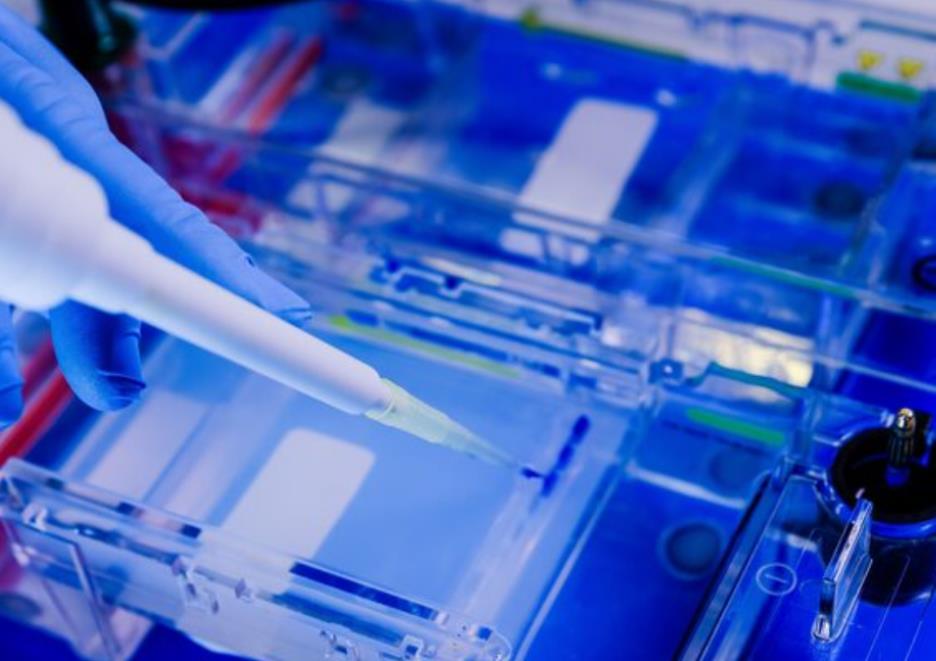
Manual differences in lab work can change results, but ELISA kits reduce this problem with fixed and clear steps. The protocol defines everything, including incubation time, washing cycles, and reagent addition.
Without this control, small mistakes can affect the final outcome. For example, too much washing can lower the signal, while wrong timing can stop reactions from completing properly.
ELISA kits remove this risk by making the procedure the same for every user. Each step is already set and must be followed in order.
This reduces errors caused by personal technique or lab habits. It also removes variation between different operators.
As a result, the same experiment gives similar results in different labs. This improves reproducibility and makes the data more reliable for research studies and collaborations.
5. Convert Raw Signals into Reliable Quantitative Values Using Standards
ELISA kits improve data accuracy by using known reference standards to turn raw signals into exact values. These standards show the link between signal strength and biomarker concentration.
Without calibration, signal readings alone cannot show true biomarker levels. Even small changes in test conditions can make results hard to compare.
ELISA kits fix this by including standard samples with known concentrations in every test. These are used to build a standard curve each time.
This curve helps convert optical or fluorescence signals into clear numerical values.
Because of this, results are not just detected but also measured correctly. Researchers can compare data across experiments, time points, and labs with more confidence.
Conclusion
Data accuracy in biological research depends on controlling variation at every stage of measurement. ELISA kits improve this accuracy by standardizing reagents, enhancing target specificity, stabilizing signal output, reducing operator-related differences, and enabling precise calibration through reference standards.
When these factors work together, experimental results become more consistent and comparable across studies. This allows researchers to focus on interpreting biological meaning rather than correcting for technical noise.
In practical terms, ELISA systems turn complex biochemical reactions into structured, repeatable measurements that support reliable scientific conclusions across diverse research applications.