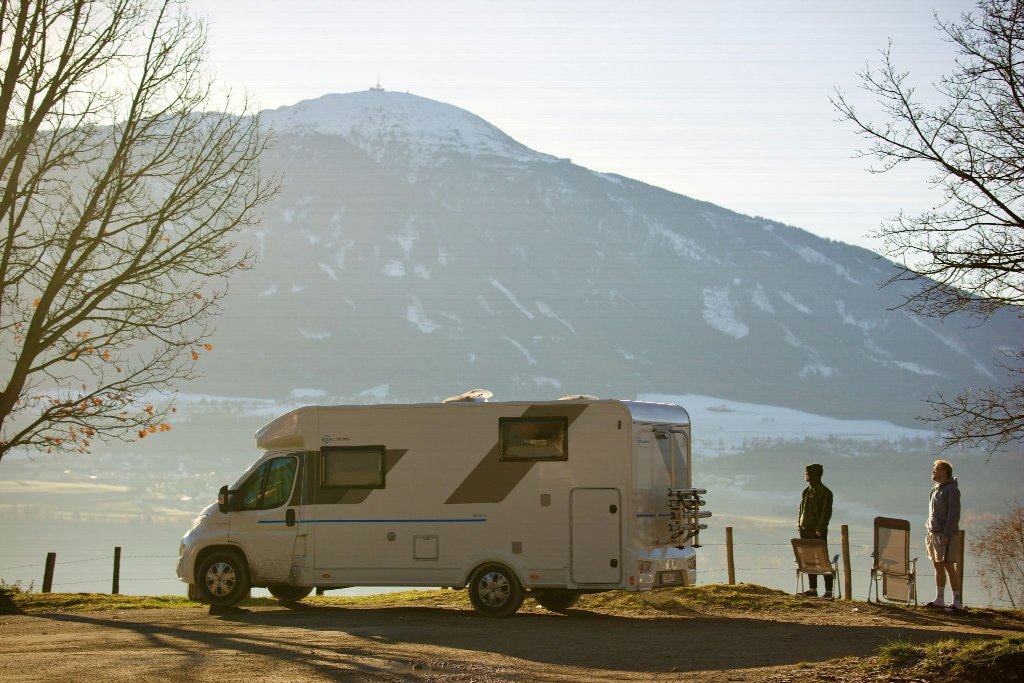
Most travel involves managing two separate problems at once. There’s the question of how you get somewhere, and the question of where you sleep once you arrive, and the whole business of planning a trip is largely the work of lining those two things up. You book a flight or plan a drive, you book a room at the other end, you hope the timings work, and you spend a surprising amount of energy on the seams between them. It’s so normal that most people never think to question it.
A motorhome collapses those two problems into one. The vehicle you travel in is also the place you sleep, cook, and keep your things, which sounds like a small reorganisation and turns out to change a great deal about how a trip actually works. Some of those changes are obvious, some only become clear once you’ve done it, and a few of them are genuine drawbacks worth being honest about. Here’s the practical case for travelling this way, along with a clear look at where it fits and where it doesn’t.
The Logistics You Stop Having to Manage
The first thing you notice is how much administrative friction simply disappears. There’s no check-in window to make, no reception to find, no waiting around because the room isn’t ready until three. You arrive somewhere and you’re already home, because home came with you. On a driving holiday that involves several stops, this alone removes a layer of low-level stress from every single day.
The luggage question goes away too, and it’s a bigger deal than it sounds. Anyone who has done a multi-stop trip knows the routine of packing everything back into bags each morning, carrying it out to the car, and unloading it again at the next place, often up stairs and along corridors. Doing that once is nothing. Doing it eight times across a fortnight is genuinely tiring, and it means you’re never quite settled anywhere. When your belongings live where you live, you stop packing altogether. Your clothes stay in a cupboard, your food stays in the fridge, and moving from one place to the next is a matter of closing a door and driving. That continuity is one of the quieter pleasures of the format, and it’s the thing people tend to mention first when they describe why they took to it.
What It Does to the Cost of a Trip
The economics deserve an honest look rather than an enthusiastic one. On the positive side, accommodation costs largely disappear, replaced by site fees that are typically a fraction of what a room costs, and having a proper kitchen means the daily expense of eating out drops substantially too. Over a long trip, those two savings are significant, and for a family they can be dramatic, since a motorhome doesn’t charge per person the way rooms and restaurant meals do.
Against that sit the real costs. Fuel consumption is higher than a car, servicing and insurance cost more, and there’s the vehicle itself, whether that’s a purchase price, depreciation, or hire charges. The maths only works in your favour if you use it enough, which is why the format suits people who travel frequently or take long trips rather than those who go away once a year for a week. It also rewards a certain style of travel, since the savings come from cooking your own meals and staying at sites rather than treating the motorhome as a way to get between restaurants and attractions. Run the numbers against your actual travel habits, not an imagined version where you’re away every other weekend, and you’ll get a realistic picture of whether the economics stack up.
The Freedom to Change Your Mind
The benefit that people talk about most is harder to quantify but genuinely valuable, and it’s the freedom to travel without a chain of commitments dictating your route. When accommodation is booked in advance, your trip becomes a schedule you have to keep. You have to reach a particular town by a particular evening, whether or not you’ve found somewhere better along the way, and you have to leave a place you’ve fallen in love with because the next booking is already paid for.
Travelling with your accommodation removes that structure almost entirely. You can stay an extra two nights somewhere that turns out to be wonderful, or leave in the morning if it doesn’t suit you. You can change direction because someone mentioned a place worth seeing, or stop early because the driving has been long enough. This flexibility tends to produce better trips, because the best parts of a journey are frequently the ones you didn’t plan, and a rigid itinerary is precisely the thing that prevents you from following them. It also removes a surprising amount of pressure, since you’re no longer chasing a timetable you set weeks earlier when you knew far less about where you were going.
Where It Suits and Where It Doesn’t
Being balanced about this matters, because the format is excellent for some kinds of travel and poor for others. It comes into its own for touring, for exploring regions rather than single destinations, for coastal and countryside travel, and for slow trips where the journey is as much the point as any particular stop. It suits families well, and it suits anyone who values self-sufficiency and being able to stop somewhere beautiful without needing infrastructure nearby.
It’s considerably less suited to city-centre travel, where parking is difficult or impossible, access is restricted, and the whole advantage of self-containment is neutralised by an environment built around small vehicles. It’s also less appealing if your trips are short, infrequent, or built around flying somewhere distant. For those whose travel patterns genuinely fit the format, the practical next step is simply to look at what’s available and compare layouts and sizes against how you’d actually use it, and many people reach that point and decide to shop motorhomes now rather than continue weighing it up in the abstract. Seeing real vehicles tends to clarify the decision quickly, because size, layout, and living space are difficult to judge from photographs and immediately obvious in person.
Deciding Whether It Fits How You Travel
The sensible way to approach this is to be honest about how you actually travel rather than how you picture yourself travelling. Look at the trips you took over the last two or three years, where you went, how long for, and how often, and ask whether a motorhome would have improved them. If most of your travel involves flights and cities, the answer is probably no. If it involves driving, countryside, coastlines, and multiple stops, the answer may well be yes.
The other sound piece of advice is to hire before you buy. A week or two in a hired motorhome tells you more than any amount of research, because you’ll discover quickly whether you enjoy the driving, whether the living space suits you, and whether the daily rhythm of it appeals. Some people take to it immediately and never look back. Others find the vehicle size stressful or miss the simplicity of a room at the end of a drive. Both reactions are perfectly reasonable, and finding out which one you have costs far less as a hire than as a purchase. Get that answer first, and whichever way it goes, you’ll be making the decision on the basis of experience rather than hope.