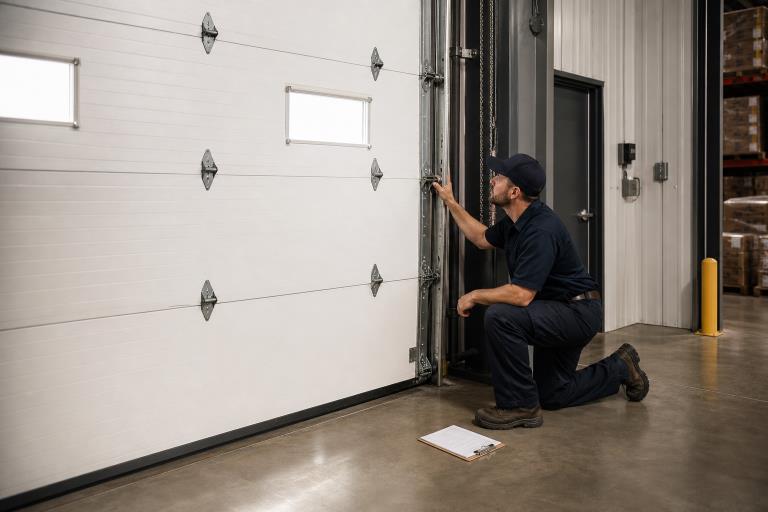
Commercial garage doors do far more than open and close. They support shipping, receiving, vehicle access, security, weather protection, and everyday workflow in warehouses, service centers, manufacturing facilities, and retail properties. When one door fails, an entire loading area can slow down quickly.
A consistent inspection and service process helps teams identify problems before they become costly interruptions. For businesses evaluating repair needs, professional https://easeconstructionllc.com/commercial-garage-door-repair/ can help address damaged components, operator issues, and safety concerns that should not be handled by untrained staff.
Why Commercial Garage Doors Matter To Daily Operations
A loading bay door that will not open during a morning delivery window can delay drivers, block inventory movement, and create congestion around the facility, observe J. Butler Property Management professionals. A door that will not close can also compromise security, allow rain or pests inside, and expose stored goods to temperature changes. What begins as a minor inconvenience can become a safety and operational issue within hours.
Door reliability affects more than access. It influences how safely employees move around forklifts, trucks, pallets, and busy work zones. Teams should treat every overhead door as essential equipment, not simply part of the building shell.
Warning Signs That Need Fast Attention
Commercial doors often provide early warnings before a complete failure. Staff should report new sounds, unusual movement, and visible damage as soon as they notice them. Waiting for a door to stop completely can turn a straightforward repair into an emergency call.
- Grinding, scraping, popping, rattling, or unusually loud operation.
- Jerky, slow, uneven, or visibly tilted travel.
- A door that reverses without an obvious obstruction.
- Frayed cables, rust, cracked rollers, bent tracks, or loose hardware.
- A door that remains partly open or will not close fully.
- Repeated operator trips, blown fuses, remote-control failures, or error codes.
- Gaps around the sides or bottom that admit light, water, drafts, or pests.
Main Components And Common Failure Points
Understanding the basic parts helps facility teams describe a problem accurately when requesting service.
- Tracks:Guide the door during travel. Dirt, impact damage, or misalignment can cause binding.
- Rollers and hinges:Allow sections to move smoothly. They can wear, crack, loosen, or bend.
- Springs and cables:Counterbalance and lift the door. These parts store significant force and require professional handling.
- Operator:Powers the door and may develop motor, electrical, control, travel-limit, or communication problems.
- Safety devices:Photo eyes, sensing edges, warning controls, and emergency releases help prevent unsafe movement.
- Weather seals:Reduce water, dust, air leakage, and pest entry, but can harden, tear, or pull away over time.
Safety Checks For Facility Teams
Employees can safely perform visual observations and approved operational checks, but they should never adjust springs, cables, bottom brackets, drums, or counterbalance hardware. Keep people, vehicles, and stored materials outside the door’s travel path, and make sure warning labels and operating instructions remain visible.
A CDC workplace injury case study illustrates the severe danger of a falling commercial garage door and reinforces why workers should never stand beneath a moving or unstable door. If a door moves unexpectedly, stops late, fails to reverse, or appears crooked, stop using it and isolate the area.
Record each defect with the date, door number, location, symptoms, and any visible damage. Clear notes help technicians diagnose repeat issues and help managers determine whether an isolated repair is becoming a pattern.
Building A Practical Maintenance Schedule
Maintenance works best as a repeatable process rather than a response to breakdowns. The exact interval depends on door size, operating cycles, environmental conditions, and manufacturer instructions.
Daily Or Shift-Based Checks
- Look for new dents, loose materials, obstructions, or damage around the opening.
- Listen for new or unusual sounds during normal operation.
- Confirm that the door opens and closes without hesitation or visible binding.
Monthly Checks
- Review tracks, rollers, hinges, seals, controls, and accessible hardware.
- Check approved safety features according to the manufacturer’s instructions.
- Review service records for recurring issues at a particular door or loading area.
Quarterly Or Cycle-Based Service
- Schedule detailed inspections more often for high-cycle doors.
- Use only suitable lubricants and approved maintenance methods.
- Have a qualified technician inspect door travel, counterbalance components, operator settings, and safety devices.
- Request a written report listing completed work, observed risks, and recommended repair timing.
For a broad overview of common garage door mechanisms and maintenance considerations, review this garage door reference. Facility-specific procedures should still follow the equipment manufacturer’s instructions and qualified technician recommendations.
What To Do When A Door Fails
- Stop using the door if it is crooked, jammed, unstable, or makes a sharp mechanical sound.
- Keep employees, visitors, and vehicles away from the opening and travel path.
- Secure the area if it can be done without touching damaged or tensioned parts.
- Notify the facility manager, maintenance lead, or safety contact.
- Document error messages, visible damage, and the events leading up to the failure.
- Arrange for qualified commercial door service and use an alternate delivery or access plan.
Repair Or Replace: A Simple Decision Guide
Repair may make sense when the panels, frame, and tracks remain structurally sound; replacement parts are readily available; and the problem involves a limited component such as a roller, hinge, seal, sensor, or operator control.
Replacement may be worth reviewing when breakdowns continue after recent repairs, critical parts are obsolete, structural damage is extensive, or the system no longer meets the facility’s traffic, security, insulation, or safety needs. Compare the cost of repeated disruption and repair with the expected value of a reliable updated system.
How To Choose A Qualified Service Provider
- Ask about experience with your specific door type, operator, and operating environment.
- Confirm insurance coverage and compliance with applicable local requirements.
- Request a written scope before major work begins.
- Ask whether the inspection includes the door, operator, controls, and safety devices.
- Look for clear explanations, documented findings, warranty information, and realistic response times.
- Choose a provider that can support both emergency service and planned maintenance.
Commercial Garage Door Checklist
- The door opens and closes smoothly.
- No grinding, popping, scraping, or unusual vibration.
- Tracks, rollers, hinges, cables, and seals show no obvious damage.
- Safety devices respond as designed during approved testing.
- The door closes fully and forms a consistent seal.
- Service records are current, and staff know how to report a fault.
Final Thoughts
Commercial garage door care should be part of normal facility safety and maintenance planning. Regular observations, prompt reporting, accurate records, and professional service for powered or tensioned components can reduce downtime and help protect workers, inventory, and daily operations throughout 2026.