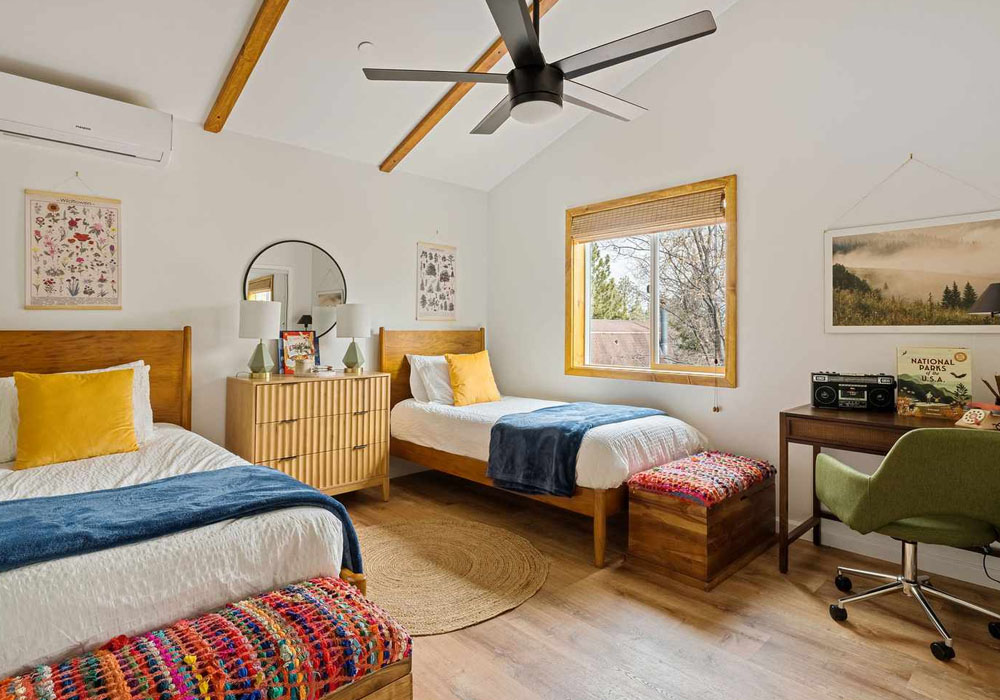
You can give two children equal space and personality by dividing the room according to function rather than drawing an imaginary line down the middle. Give each child comparable storage, a clearly recognised personal area and an equal voice in the design. Furniture such as bunk beds for kid (this is commonly referred to as เตียงนอน 2 ชั้นสำหรับเด็ก in Thai) bedrooms can free valuable floor space, allowing the rest of the room to support two different personalities without feeling crowded or competitive.
Start with a Fair-Space Audit
Before choosing colours or accessories, empty the room and measure every usable area. Note the position of windows, doors, electrical sockets and awkward corners. Then list what each child genuinely needs for sleeping, dressing, studying and playing.
Fairness does not always mean identical furniture. One child may need a larger desk for drawing, while the other needs more floor space for building toys. Aim to give them equal usefulness rather than perfectly matching square metres.
Ask both children three simple questions:
- What do you use most often?
- What would you like to keep private?
- Which colour or interest should appear in your area?
Their answers will make the makeover feel collaborative from the beginning.
Create Two Visual Anchors
Every child needs one part of the room that feels unmistakably theirs. This could be a bed wall, reading corner, desk or section of a wardrobe.
Use matching furniture shapes to create balance, then introduce personality through details. One part of the room can embrace a coastal theme with blue tones, nautical décor, and striped textiles, says Keyrenter Chicago North solutions. The other could use warm yellow, animal prints and framed artwork. Repeating one neutral colour across both areas will keep the room connected.
Avoid assigning one child the bright window side and leaving the other with a dark corner. If natural light cannot be shared equally, compensate with a good reading lamp, brighter wall colour or illuminated shelf.
Divide Wardrobe Space Clearly
Shared wardrobes can become a daily source of arguments when ownership is unclear. Divide shelves, drawers and hanging rails before clothes are returned to the room.
Useful ways to organise the wardrobe include:
- Giving each child the same number of drawers
- Using different coloured hangers
- Labelling baskets with names or symbols
- Placing everyday clothes at an accessible height
- Creating one shared section for seasonal items
If one child has more clothing, use under-bed boxes or an additional chest rather than quietly taking over the other child’s section. Visible boundaries make tidying easier and reduce confusion.
Give Shared Items a Neutral Home
Not everything needs to belong to one child. Books, games, craft materials and shared toys can occupy a central zone that neither side controls.
A low bookcase, rolling trolley or storage bench can mark this communal area. Let both children help decide how it is arranged. When shared belongings have their own home, personal spaces are less likely to become cluttered with communal items.
Build in Privacy Without Building Walls
Children sharing a room still need moments of privacy. A fabric canopy, curtain around the lower bed, folding screen or tall open shelf can create a sense of separation without permanently dividing the room.
Headphones, individual reading lights and personal keepsake boxes also provide small but meaningful forms of independence. These details become increasingly valuable as children grow.
Let the Room Grow with Both Children
Finish the makeover with flexible pieces rather than fixed decorations that may quickly feel too young. Wall décor, flexible shelving and versatile storage solutions can be updated easily as children’s interests and needs change.
A successful shared bedroom tells two stories while still looking like one thoughtfully designed room. Explore the practical children’s wardrobes and bedroom furniture from Tomato Kidz to create organised personal spaces where both children feel equally considered.