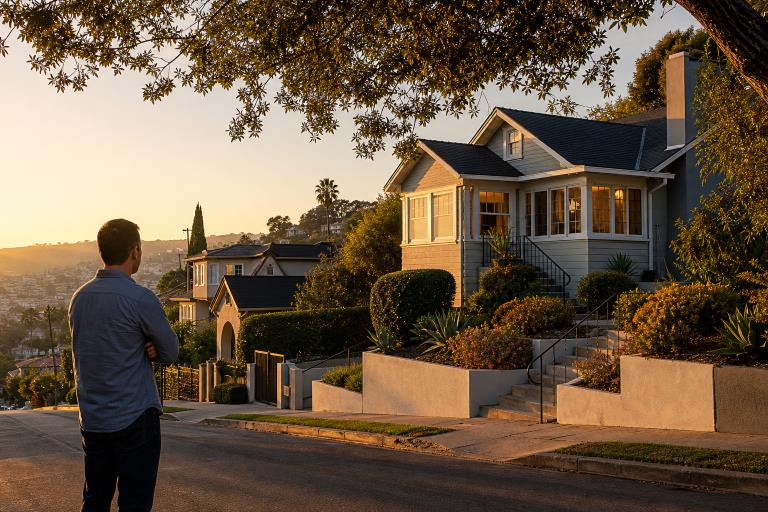
Los Angeles is not one housing market. It is a collection of highly local markets where the daily experience can change within a few miles. Buyers comparing Silver Lake, Los Feliz, Hancock Park, Beverly Hills, Hollywood Hills, Melrose, and nearby areas need to look beyond broad labels such as Eastside or Westside. For neighborhood-level home search guidance, valuations, and buyer resources, Silver Lake real estate agent Carolina Kramer provides a useful starting point. Carolina Kramer Morales is a Los Angeles real estate professional with Coldwell Banker Beverly Hills, whose site covers service areas including Silver Lake, Beverly Hills, Hancock Park, Los Feliz, and the Hollywood Hills, making it relevant to buyers seeking a more detailed local perspective.
The right neighborhood depends on how you live, what you can comfortably spend, and how long you expect to stay. A hillside home near cafés may be ideal for one household, while another may prioritize a larger lot, easier parking, or a shorter drive to work. A structured comparison helps separate the excitement of a listing from the practical realities of ownership.
Why a Detailed Comparison Matters
Two nearby neighborhoods can have dramatically different home styles, traffic patterns, terrain, street parking, and access to services. Silver Lake may appeal to buyers who enjoy cafés, hillside character, and a more active street life. Hancock Park may suit someone seeking larger lots, established residential streets, and a central location. Neither is automatically better. The best choice is the place that supports your budget, schedule, household needs, and future plans.
Set Your Priorities Before Touring
Start by writing down your five most important needs. Couples and families should make separate lists first, then compare answers. Classify each item as a must-have, nice-to-have, or deal breaker. Common priorities include monthly payment, commute time, a home office, outdoor space, quiet streets, parking, school access, restaurants, and rental or resale flexibility. This exercise prevents an attractive kitchen or view from distracting you from a major compromise.
Compare Housing Stock and Total Cost
Los Angeles offers bungalows, condominiums, duplexes, small-lot homes, townhomes, and larger single-family properties. Compare year built, square footage, lot size, storage, garage access, stairs, renovation quality, outdoor space, and possible ADU potential where allowed. Older homes can offer character, but buyers should carefully evaluate plumbing, electrical systems, roofing, foundations, drainage, insulation, and deferred maintenance.
Condo buyers have another layer of due diligence to consider. Review HOA dues, reserve funds, insurance coverage, rules, recent meeting minutes, litigation, and pending special assessments. A lower-priced condo with substantial monthly dues or a looming assessment may cost more than a higher-priced home with fewer shared expenses.
Build a complete budget rather than focusing only on the purchase price. Include principal and interest, property taxes, insurance, HOA dues, utilities, maintenance, parking, transportation, and likely repairs. Compare recent sales for similar property types and conditions, and treat online estimates as starting points rather than final valuations.
Measure Commutes and Daily Life
Map distance does not capture the real Los Angeles commute. Drive the likely route during morning and evening rush periods, and test any transit, biking, or walking routes you expect to use. Notice freeway access, difficult intersections, garage entry, street parking, visitor parking, and the time required for school drop-offs or errands. A home with a higher purchase price may still be the better value if it meaningfully reduces fuel costs, vehicle wear, and hours spent in traffic.
Evaluate the errands you actually complete each week. Visit grocery stores, pharmacies, parks, medical offices, gyms, schools, and coffee shops. Walk the immediate blocks at breakfast, after work, and on the weekend. Look for sidewalks, lighting, crosswalks, street noise, shade, hills, and pedestrian activity. Neighborhood boundaries can be useful for broad orientation, and Mapping L.A. provides helpful context for commonly used Los Angeles neighborhood names and boundaries, but the block around a specific home matters more than the label.
Research Schools, Safety, Hazards, and Future Changes
Confirm school attendance boundaries directly with the appropriate district for the exact property address. Listing descriptions and third-party rankings can be incomplete or outdated. For safety research, use official local data, look for patterns over time, speak with nearby residents, and visit at different hours. Focus on objective property and location factors, and avoid assumptions based on a neighborhood’s appearance, reputation, or demographics.
Los Angeles buyers should also investigate wildfire exposure, earthquake and liquefaction conditions, flood risk, slope stability, and current insurance availability before removing contingencies. Check disclosures and obtain insurance quotes early. Review zoning, historic-preservation requirements, permit history, ADU rules, and possible future development. The city’s Los Angeles Low-Rise Design Lab is a useful planning resource when researching housing forms, lot conditions, and neighborhood change. New development can improve amenities and transit, but it can also affect noise, parking, traffic, and views.
Build a Simple Neighborhood Scorecard
Rate each finalist from one to five, then multiply the score by the category weight. A practical starting framework is:
- Housing fit: 20 percent
- Total cost: 20 percent
- Commute: 15 percent
- Daily amenities: 10 percent
- Parking and mobility: 10 percent
- Schools or childcare: 10 percent
- Outdoor space: 5 percent
- Hazards and insurance: 5 percent
- Future flexibility: 5 percent
Adjust the weights to match your life. A remote worker may give up commuting only 5 percent, while a daily office commuter may raise it to 25 percent. The goal is not mathematical perfection. It is a clear record of why one area fits better than another.
Create a Smart Tour Plan
- Choose three or four neighborhoods that fit your initial budget.
- Visit each one on a weekday morning and again after dark.
- Drive the likely commute and walk to regular errand destinations.
- Tour multiple home types, not only the best-staged listing.
- Check parking, street activity, lighting, hills, and noise.
- Review disclosures, permits, insurance, hazards, and comparable sales before making an offer.
Final Thoughts
Buying in Los Angeles becomes more manageable when you compare daily routines, complete costs, property condition, and future flexibility. Start with a short list, research every finalist at the address and block level, and revisit the neighborhoods before committing. The right home is not simply the one that photographs well. It is the one that works for your life now and remains a sound fit as your needs change.