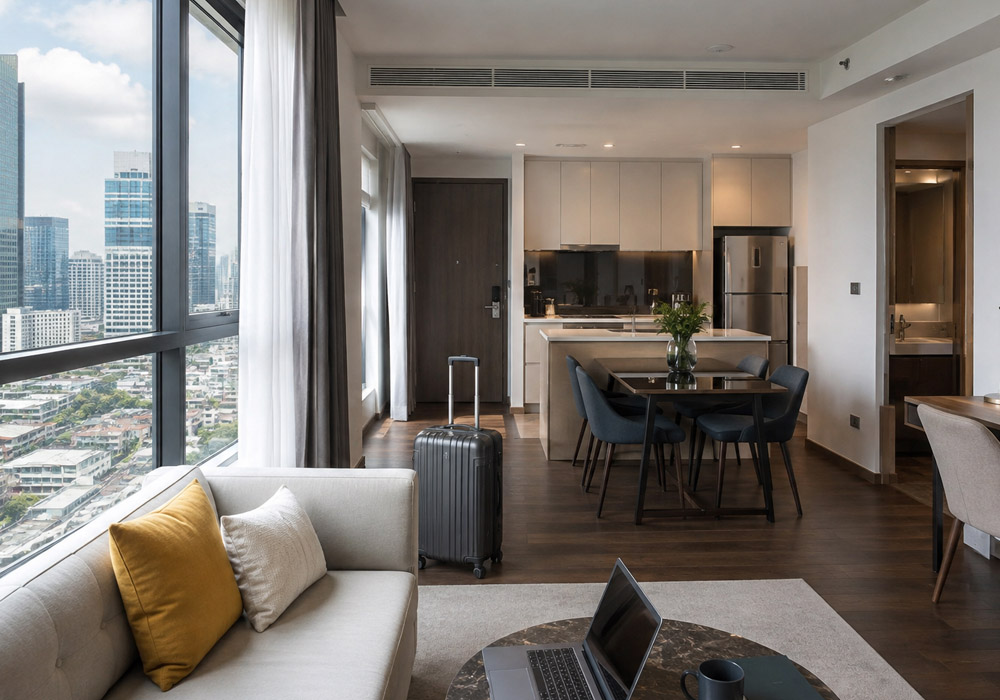
Southeast Asia is experiencing a remarkable shift in corporate mobility. Multinational companies are increasingly relying on Employer of Record services to manage long-term remote workers, while new immigration frameworks like Thailand’s Destination Thailand Visa have accelerated the influx of international professionals. Relocating an employee to a new region involves complex logistics. The transition period is often stressful, especially when professionals are busy preparing a primary residence for rent or sale before moving overseas. Securing hassle-free accommodation in the destination country is therefore a top priority to ensure a smooth transition.
The Financial Complexities of Traditional Leases
For many expatriates, standard residential leases present significant logistical and financial hurdles. In major business hubs, securing a traditional rental typically demands a high upfront financial commitment. When corporate assignees compare these hidden fees against a straightforward serviced apartment Bangkok monthly rate, they quickly realise that traditional rentals lack financial transparency. Landlords routinely require the equivalent of three months of rent to secure a unit, which comprises a two-month security deposit and one month paid in advance. Furthermore, traditional landlords often ask for a booking fee simply to take a property off the market while contracts are drafted.
Another major constraint is the rigid nature of these agreements. Expatriates on flexible assignments run a high financial risk with standard 12-month contracts, especially when market conditions shift rapidly. Breaking the lease early typically results in the total forfeiture of the security deposit. Real estate agencies strongly advise international tenants to negotiate a diplomatic clause to allow for early termination without penalty in case of sudden job relocation. Utility billing adds another layer of complexity. While condominium renters pay government rates directly, older apartment buildings can legally impose surcharges of up to seven or eight Thai Baht per electricity unit, making monthly expenses difficult to predict.
The Rise of Flexible Corporate Housing
To avoid the pitfalls of traditional renting, corporate relocation programmes are heavily shifting towards flexible housing solutions. The global serviced apartment market reached an estimated valuation of $62.8 billion recently, with the Asia Pacific region commanding a dominant 38.5 percent share. This growth is heavily supported by institutional confidence in the region’s recovery. According to CBRE, total accommodation and hotel investment volumes in the Asia-Pacific region reached 90% of 2019 levels in 2024, fuelling a surge in upscale, value-add housing options across Southeast Asian business hubs.
In key corporate markets like Thailand, developers are actively repositioning traditional residential condominiums into flexible stay units to capture consistent rental cash flow. Hospitality consultancies report that over 34 percent of Bangkok’s flexible stay units are now classified as upscale. These premium spaces target corporate executives who demand high-end amenities alongside practical features like integrated kitchens and in-unit laundry facilities. Furthermore, this new supply is strategically concentrated along major transit corridors to maximise convenience for commuting professionals. Being located near major business districts reduces travel times and greatly enhances the overall quality of life for those adapting to a new culture.
Comparing Costs and Core Amenities
When evaluating corporate housing options, professionals must look beyond the base rental price. Traditional leases appear cheaper at first glance, but the hidden costs of setting up a new home quickly accumulate. By contrast, flexible accommodations offer transparent, all-inclusive pricing that simplifies expense reporting for international assignees. For businesses managing tight relocation budgets, these bundled services represent significant long-term savings and drastically reduce administrative overhead. They deliver far more value once utilities, furnishings, and maintenance are factored into the equation.
To make an informed decision, relocating professionals should weigh the following key differences:
- Financial Commitment: Traditional leases require hefty deposits and booking fees, whereas flexible apartments operate on simple monthly billing without punitive cancellation terms.
- Utility Transparency: Standard rentals often feature separate and fluctuating utility bills, while serviced units bundle electricity, water, and high-speed internet into one predictable monthly fee.
- Furnishings and Setup: Empty traditional rentals require significant time and money to furnish, but corporate housing provides move-in ready spaces complete with kitchenware and linens.
- Housekeeping Services: Standard apartments leave cleaning and maintenance entirely to the tenant, while serviced options typically include regular professional housekeeping.
Ultimately, the choice of accommodation dictates how quickly an assignee can acclimatise to their new role. By opting for flexible, amenity-rich corporate housing, multinational companies can eliminate the stressful variables of standard leasing and ensure their top talent remains focused on business objectives from day one.