Karen Condi has spent two decades building expertise in the coworking and flexible workspace industry, guiding hundreds of projects across North America from initial concept to completion. Since founding Workspace Strategies in 2006, Karen Condi has provided end-to-end consulting for coworking and shared workspace businesses, covering startup launches, turnkey developments, management takeovers, and turnaround projects for underperforming assets. She previously spent seven years in upper management with Office Suites Plus and holds a business degree from Eastern Kentucky University. Condi regularly speaks at industry gatherings such as the Global Coworking Unconference and the Global Workspace Association Conferences, and was named among the Top 20 Business Women of 2024. Her work reflects a deep understanding of market dynamics and the evolving nature of workspace, informing her perspective on when businesses should consider coworking alongside their main office.
A company can keep its main office and still need workspace for a different purpose. The main office supports core teams, collaboration, client visits, and operations. Coworking becomes useful when a separate need varies in duration, attendance, location, or required level of control.
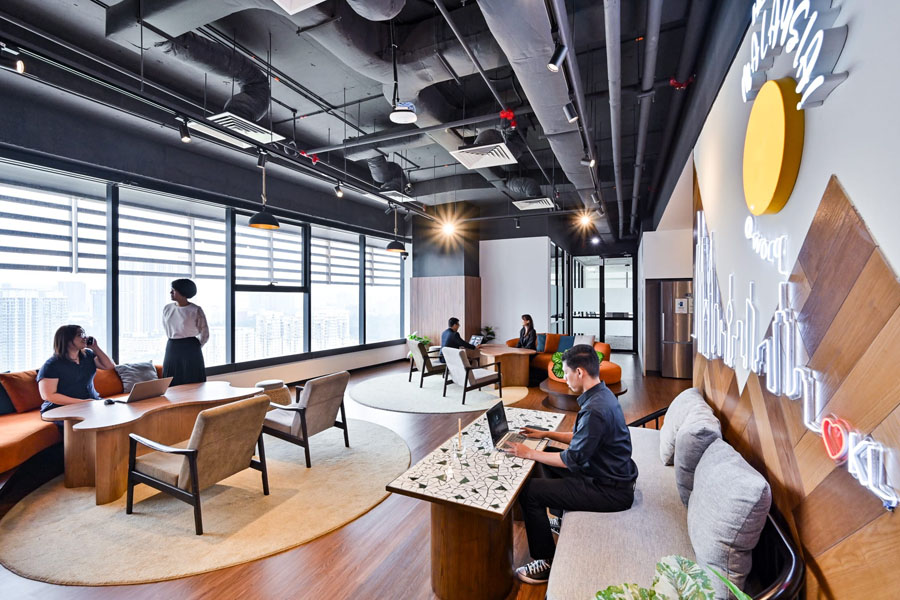
Coworking refers to a shared workspace that people or companies use on a flexible basis. It can include open seating, private offices, meeting rooms, internet access, and shared support areas. A main office is the company’s primary workplace.
The decision is not simply whether flexibility sounds useful. Companies can compare four questions: how long the need will last, how predictable attendance will be, how certain the location is, and how much control the work requires. Those questions show whether coworking complements the main office or adds space without a defined purpose.
Hybrid work makes attendance predictability especially important. A company may have enough desks on average, but face concentrated demand on collaboration days. Coworking can provide overflow or distributed seating without requiring permanent capacity for peak attendance.
Duration changes the calculation for projects and temporary teams. A hiring surge, a delayed construction project, a pilot program, or a limited assignment may require equipped space quickly but not permanently. Coworking can align the commitment with the work period and reduce the need for an immediate build-out.
Geographic certainty matters when employees or business activity are located outside the main-office market. A company may support an established team in another city or test a location before deciding on a branch. The first case solves a current workforce need, while the second preserves options while local demand, recruiting, or operations remain uncertain.
Meeting demand requires its own analysis of attendance. A company may have enough daily desks but lack the right number or size of rooms during peak gathering periods. Reservable rooms can provide overflow capacity for interviews, training, presentations, client check-ins, or larger sessions without maintaining that capacity year-round.
The type of work determines the required level of control. Open seating may suit laptop-based work with variable attendance and limited call activity, while private offices better support frequent calls, confidential conversations, or consistent team use. Equipment, secure storage, internet access, and whether the work involves confidential or sensitive information can also change the suitable setup.
Organizations should test costs on a full-comparison basis rather than a per-desk price. Leaders can compare coworking fees with rent, services, operating costs, furniture, construction, and the financial effect of committing to space that may sit unused. A shorter agreement may cost more per seat but still reduce upfront capital or uncertainty.
The comparison also needs information beyond the real estate team. Finance can assess total costs, operations can define access and equipment needs, and technology staff can confirm that the available internet and workspace systems support the work. Attendance records and business forecasts can replace broad assumptions with evidence about the space the company will use.
Coworking does not fit every company or task. Teams that need specialized equipment, permanent storage, custom construction, exclusive access, or strict security controls may require dedicated premises. The company should also confirm that the location, privacy, technology, and access arrangements support the actual work.
Thus, a practical decision matches the workspace model to measured demand. Stable attendance, a proven location, long-term use, and high control needs favor permanent space, while uncertain duration, variable attendance, developing markets, or occasional gathering needs can favor coworking. This framework turns flexibility from a general benefit into a specific operating choice.
About Karen Condi
Karen Condi is the founder and principal of Workspace Strategies, a coworking space management and consulting firm she established in 2006 to help owners, investors, and operators succeed in the flexible workspace industry. Based in Lexington, Kentucky, she has guided hundreds of projects across North America, ranging from startup launches to complex operational turnarounds, and holds a degree in accounting and business management from Eastern Kentucky University. She is a frequent speaker at events hosted by the Global Workspace Association and the Global Coworking Unconference.