The Power of Real Estate Market Insights in Modern Home Buying
The journey to homeownership or real estate investment is often complex, filled with critical decisions that can significantly impact your financial future. While intuition and personal preference play a role, the most successful outcomes are increasingly driven by robust market analysis, precise property valuation, and a well-defined investment strategy, observes PMI Central Oregon solutions. In today’s dynamic real estate environment, simply looking at “for sale” signs is no longer enough; we must delve deeper into the numbers.
Understanding market trends, historical data, and predictive analytics allows us to move beyond anecdotal evidence. This data-first approach empowers buyers to identify undervalued properties, anticipate market shifts, and negotiate from a position of strength. Whether you’re a first-time homebuyer or a seasoned investor, leveraging comprehensive insights can transform uncertainty into confidence. For those seeking to truly master the local market, harnessing a powerful data-driven real estate platform can provide an invaluable edge, offering granular data and analytical tools to pinpoint opportunities and mitigate risks.
Utilizing Real Estate Market Insights for Comparative Market Analysis
One of the foundational steps in making an informed real estate decision is conducting a thorough comparative market analysis (CMA). This process involves evaluating recently sold properties that are similar in size, age, condition, and location to the home you’re considering. Key metrics we analyze include comparable sales, the average price per square foot, and the days on market for similar properties.
For instance, in Fayetteville, NC, while the average price per square foot is approximately $140 as of 2024, this figure can vary significantly between neighborhoods and property types. A CMA helps us understand these nuances, providing a more accurate valuation. By examining how quickly comparable homes sell – in Fayetteville, homes typically sell after around 45 days on the market – we can gauge the current demand and competitive landscape. If similar homes are selling faster than the average, it might indicate a strong seller’s market, potentially requiring quicker decisions or more competitive offers. Conversely, longer market times could suggest more negotiation leverage for buyers. This detailed analysis ensures that our valuation accuracy is based on tangible, recent transactions, rather than broad market averages.
Applying Real Estate Market Insights to First-Time Home Purchases
For first-time homebuyers, the process can seem overwhelming. Data-driven insights are particularly crucial here, helping to demystify the market and build a solid foundation for a successful purchase. Our first-time homebuyer tips often emphasize meticulous budgeting, understanding all associated costs beyond the mortgage, and securing mortgage pre-approval early in the process.
By analyzing historical price trends and current inventory levels, we can help first-time buyers identify optimal market entry strategies. For example, if the Fayetteville market has seen a consistent 5.2% increase in home values over the past year (July 2025-July 2026), it suggests a healthy appreciation, making a purchase a potentially sound investment. However, understanding the specific sub-markets within Fayetteville can reveal areas offering better value or slower appreciation, aligning with different financial goals. Data also helps us identify neighborhoods with amenities that align with a first-timer’s lifestyle and long-term plans, ensuring not just a house, but a home that fits their evolving needs.
Case Study: Analyzing Fayetteville, NC Through a Data Lens
Fayetteville, NC, situated in Cumberland County, represents a dynamic and growing real estate market in North Carolina. Its unique blend of military influence, community spirit, and ongoing development makes it a fascinating case study for data-driven analysis. Understanding the regional growth patterns and specific local drivers is essential for anyone considering a property here.
The city’s real estate landscape is shaped by a variety of factors, from its affordability compared to larger North Carolina metros to its strategic location. By examining Fayetteville through a data lens, we can uncover the underlying forces that influence property values and market activity, providing a clearer picture for potential buyers and investors.
Key Metrics Driving the Fayetteville Housing Market
When evaluating any housing market, several key metrics stand out as indicators of its health and trajectory. In Fayetteville, NC, these metrics paint a clear picture of a robust and appreciating market as of July 2026.
The median home price in Fayetteville, NC, was approximately $215,000 as of 2024. While this figure provides a benchmark, it’s important to consider that home values have seen a significant 5.2% increase over the past year (July 2025-July 2026). This upward trend indicates strong demand and a healthy market. The average price per square foot, around $140, helps us compare properties of different sizes more accurately.
Inventory levels are another critical metric. With currently over 800 homes for sale in Fayetteville, buyers have a decent selection, though certain price points and property types may have more limited options. The average days on market, which stands at approximately 45 days, suggests a relatively balanced market, leaning slightly towards sellers due to consistent demand. Homes are not lingering, but buyers still have some time to make informed decisions.
To put Fayetteville’s market into perspective, let’s compare some of these metrics to national averages (which can fluctuate but provide a general context):
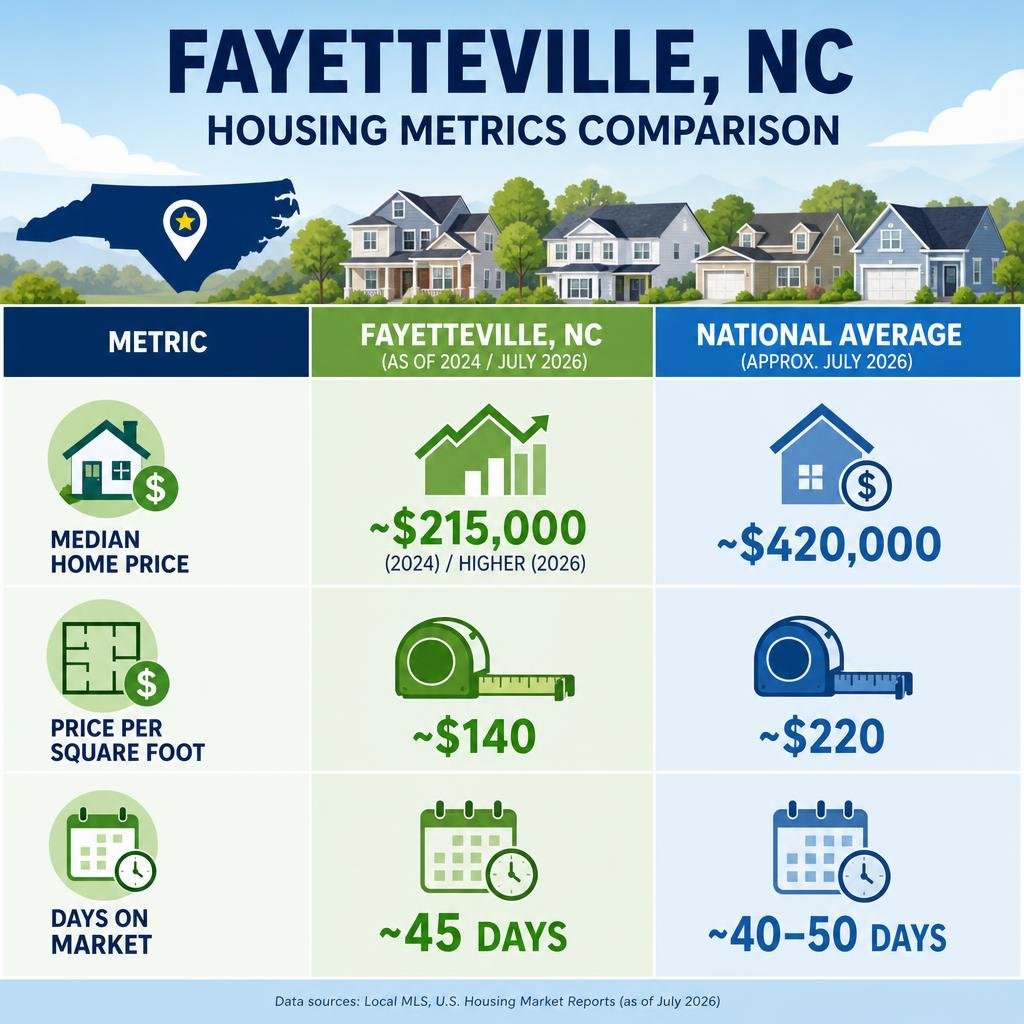
Metric Fayetteville, NC (as of 2024/July 2026) National Average (approx. July 2026) Median Home Price ~$215,000 (2024) / Higher (2026) ~$420,000 Price per Square Foot ~$140 ~$220 Days on Market ~45 days ~40-50 days Annual Home Value Change +5.2% (past year) +3-5% Note: National averages are estimates and can vary based on reporting sources and specific timeframes. Fayetteville’s median home price has likely increased since the 2024 statistic due to the observed annual appreciation.
This comparison highlights Fayetteville’s relative affordability compared to the national landscape, making it an attractive option for many homebuyers.
Local Demand Drivers: Military Presence and Infrastructure
Fayetteville’s housing market is uniquely influenced by several powerful local demand drivers, primarily its close relationship with Fort Liberty (formerly Fort Bragg), one of the largest military installations in the world. The constant rotation of military personnel and their families creates a steady, predictable demand for housing, both for purchase and rent. This consistent influx helps stabilize the market and contributes to ongoing job growth in supporting sectors, from retail and services to healthcare and education. This military presence is a foundational pillar of Fayetteville’s economic stability and growth.
Beyond the military, significant infrastructure projects are also shaping the city’s future and impacting property values. The ongoing development and completion of the I-295 outer loop, for example, is enhancing connectivity across Cumberland County and to major highways. Improved transportation infrastructure reduces commute times, opens up new areas for residential and commercial development, and can significantly increase the desirability and value of properties located near new access points or within easier reach of employment centers. These developments signal long-term investment in the region, fostering confidence among homeowners and investors alike.
Navigating Neighborhood Selection and Property Types
Choosing a home in Fayetteville, NC, involves more than just finding a suitable house; it’s about selecting a community that aligns with your lifestyle, needs, and long-term goals. Understanding neighborhood dynamics and the available property types is crucial for making an informed decision. Whether you prefer the quiet charm of a suburban street or the convenience of urban living, Fayetteville offers a diverse range of options.
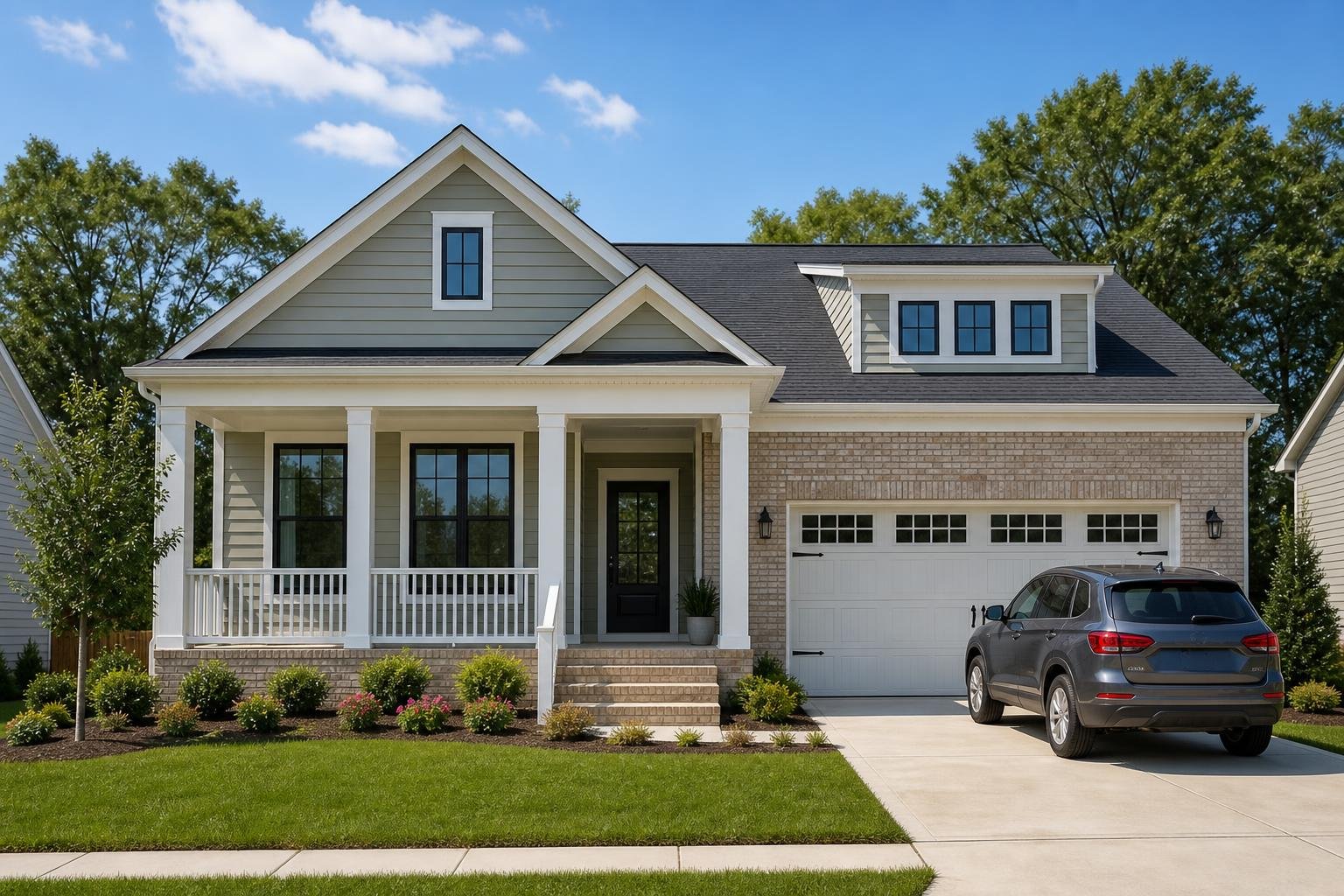
The city’s various areas each boast distinct characteristics, from established historic districts to burgeoning new developments. This diversity means that careful consideration of factors like commute times, proximity to amenities, school districts, and community feel is essential.
Top Fayetteville Neighborhoods for Homebuyers
Fayetteville and its surrounding areas offer a variety of popular neighborhoods, each with its own unique appeal and features. Here are some of the most sought-after for homebuyers:
- Haymount:Known for its historic charm, tree-lined streets, and beautiful older homes, Haymount is a highly desirable area. It offers a strong sense of community, local shops, and is conveniently close to downtown Fayetteville. Its well-regarded schools and mature landscaping often contribute to higher home values.
- Jack Britt:Located in the southwestern part of Fayetteville, the Jack Britt area is synonymous with excellent public schools, particularly the highly-rated Jack Britt High School. This makes it a prime location for families, driving consistent demand and often leading to competitive bidding for homes.
- Kings Grant:An established community offering a mix of housing styles, Kings Grant is known for its amenities, including golf courses and recreational facilities. It’s a popular choice for those seeking a more amenity-rich, suburban lifestyle.
- Spring Lake:While technically just north of Fayetteville, Spring Lake is a popular choice for those working at Fort Liberty due to its close proximity. It offers a range of affordable housing options and a family-friendly atmosphere.
- Hope Mills:Another neighboring town to the south of Fayetteville, Hope Mills provides a small-town feel with access to larger city amenities. Its beautiful lake, parks, and community events make it attractive to those seeking a balance of nature and convenience.
When considering these neighborhoods, potential buyers should also research local school districts and community amenities, as these significantly impact home values and overall quality of life. Access to parks, shopping centers, healthcare facilities, and recreational opportunities can all play a role in a neighborhood’s desirability and property appreciation.
Evaluating Housing Inventory and Property Types
The housing inventory in Fayetteville, NC, is quite diverse, catering to a wide range of preferences and budgets. Understanding the prevalent property types is key to narrowing down your search.
- Single-Family Homes:These are the most common type of housing available in Fayetteville, ranging from charming older residences in established neighborhoods to modern new construction in developing areas. They typically offer more space, privacy, and yard area, making them popular among families.
- Townhomes:For those seeking a lower-maintenance lifestyle or a more affordable entry point into homeownership, townhomes are an excellent option. Fayetteville has a growing number of townhome communities, often featuring contemporary designs and shared amenities.
- New Construction:The region continues to see significant new construction, particularly in areas experiencing growth due to infrastructure improvements and population influx. New homes often come with modern floor plans, energy-efficient features, and builder warranties, appealing to buyers who prefer move-in ready properties.
- Multi-family Homes (Duplexes, Triplexes):While less common as primary residences for sale, multi-family units can be found and represent interesting investment opportunities, especially given the consistent rental demand from the military population.
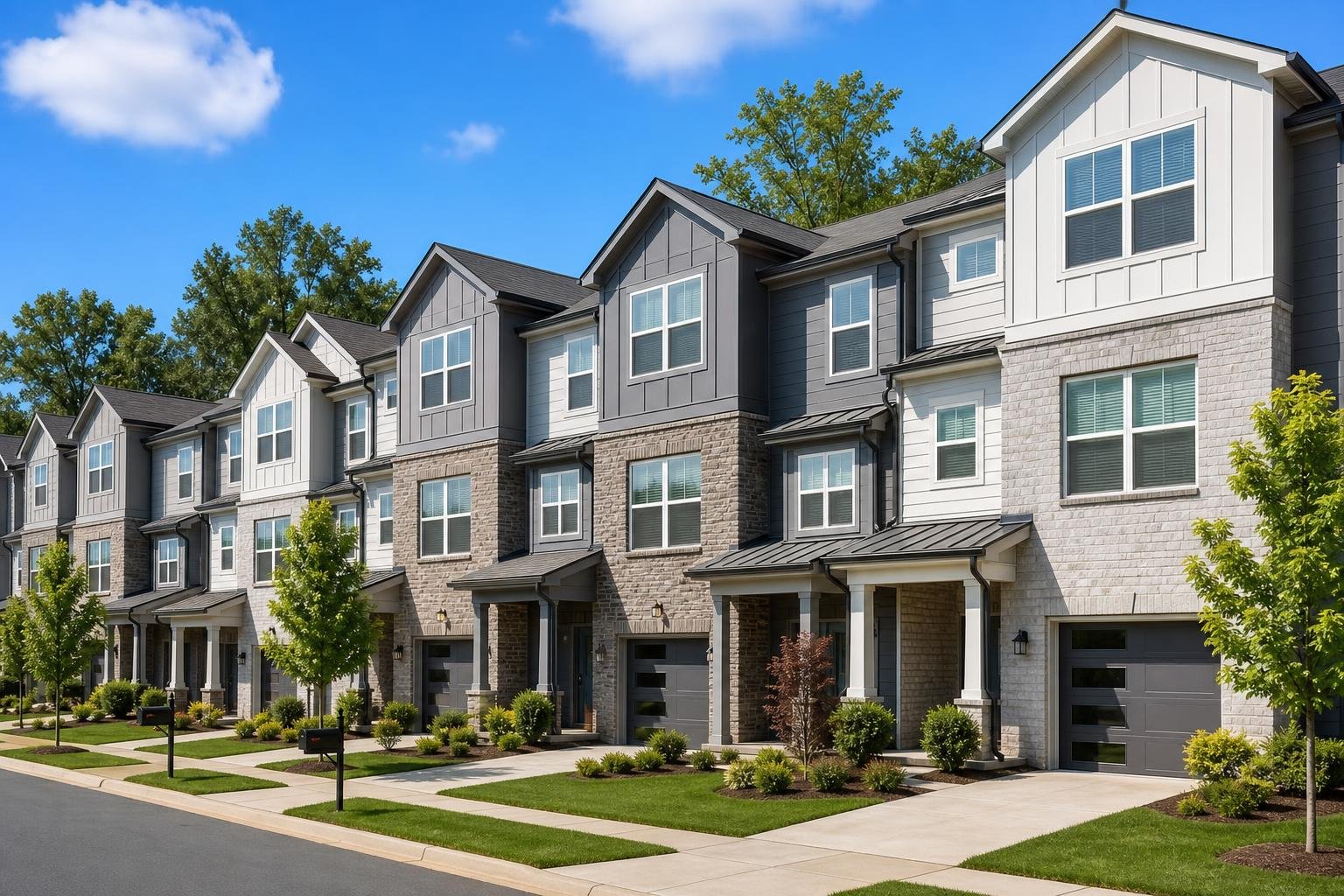
With over 800 homes currently for sale in Fayetteville, NC, the market offers ample choice across these categories. However, specific types or locations might have more limited availability, underscoring the importance of a clear understanding of your priorities and working with local experts to navigate the Fayetteville housing stock effectively.
Frequently Asked Questions about Fayetteville Real Estate
Navigating the Fayetteville real estate market often brings forth common questions about its current conditions, the influence of local institutions like schools, and typical property values. We aim to address these comprehensively, providing clarity for potential homebuyers.
Is Fayetteville, NC a buyer’s or seller’s market?
As of July 2026, the Fayetteville, NC, housing market can generally be characterized as a relatively balanced market that leans slightly towards sellers, primarily due to consistent demand. While there are currently over 800 homes for sale, offering buyers a reasonable selection, the average days on market for a home is approximately 45 days. This indicates that homes are selling fairly quickly, suggesting active buyer interest.
In a strong buyer’s market, properties would typically sit for much longer, and negotiation leverage would heavily favor the buyer. In a strong seller’s market, homes would sell even faster, often with multiple offers and above asking price. Fayetteville’s 45-day average, coupled with a 5.2% increase in home values over the past year, points to a market where sellers often receive solid offers, but buyers still have opportunities for due diligence and some negotiation, especially if they are well-prepared with pre-approved financing. The market inventory is sufficient enough to prevent extreme bidding wars in most segments, but desirable properties in top neighborhoods will always move faster.
How do school districts impact home values in Cumberland County?
The quality of local school districts significantly impacts home values in Cumberland County, including Fayetteville. Properties located within highly-rated school zones, such as the Jack Britt district, consistently command higher prices and tend to appreciate more steadily than those in lower-rated areas. This phenomenon is driven by family buyers who prioritize educational opportunities for their children, creating sustained demand in these desirable zones.
Homes in top-tier school districts often sell faster and experience greater property appreciation over time. This effect extends beyond just the immediate school boundaries, often influencing entire neighborhoods. For example, areas known for their strong elementary, middle, and high schools become magnets for families, leading to a more stable and competitive housing market. Access to quality education is considered a premium amenity, and homebuyers are often willing to pay more for it, making school ratings a crucial factor in long-term property value and neighborhood demand.
What is the average price of a home in Fayetteville, NC?
As of 2024, the median home price in Fayetteville, NC, was approximately $215,000. However, it’s crucial to remember that the market has seen a 5.2% increase in home values over the past year (July 2025-July 2026). This means that as of July 2026, the median price is likely higher than the 2024 figure, reflecting ongoing appreciation.
When considering affordability, Fayetteville’s median home price remains considerably lower than the national average, making it an attractive market for many buyers, especially first-timers or those relocating from more expensive regions. The average price per square foot in Fayetteville is around $140, which helps in comparing the value of different properties regardless of their overall list price. This metric is particularly useful when evaluating homes that vary widely in size or lot dimensions. These figures represent averages, and actual prices will vary significantly based on location, home size, age, condition, and specific neighborhood amenities.
Conclusion
Making informed real estate decisions, particularly in a market as dynamic as Fayetteville, NC, necessitates a commitment to leveraging data. By understanding key metrics like median home prices, days on market, and local demand drivers, we can navigate the complexities of buying or selling with greater confidence and strategic foresight. The insights gained from a thorough market analysis empower us to identify opportunities, evaluate property values accurately, and make choices that align with our financial and lifestyle goals.
Fayetteville’s unique blend of military influence, community growth, and ongoing infrastructure development presents both opportunities and challenges. By delving into neighborhood specifics, understanding property types, and staying abreast of market conditions, we can make strategic home buying choices. Whether you are a first-time buyer or a seasoned investor, the power of data-driven decisions cannot be overstated. We encourage you to connect with a local expert who can provide personalized guidance and work with a trusted partner to unlock the full potential of the Fayetteville real estate market.