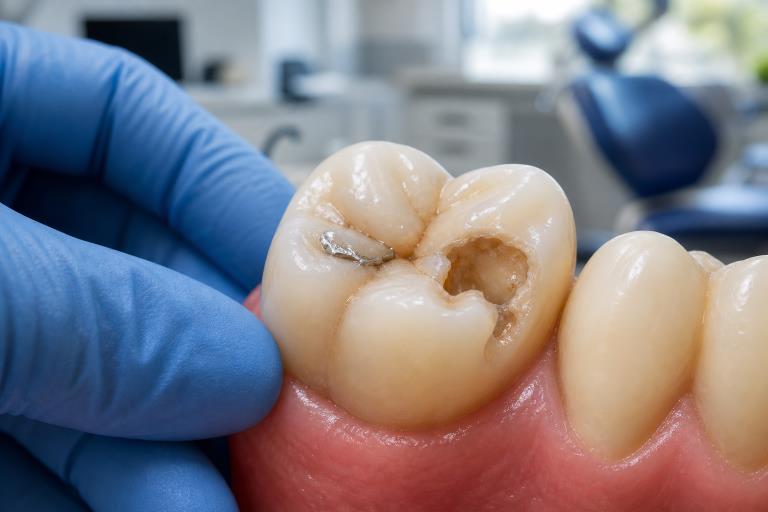
Why a Filling May Not Always Be Enough
A filling replaces tooth material that has been removed because of decay, a small fracture, or wear. For a minor cavity, that may be all the tooth needs. However, if decay or damage has removed a large portion of the tooth, the remaining walls may not be strong enough to handle normal chewing. In those situations, a dentist may discuss options such as an onlay or dental crowns in Delaware, OH to help protect the tooth from further breakage.
Restorative decisions are not based on appearance alone. A tooth can look mostly intact while having decay beneath an old filling, a crack near the chewing surface, or a weakened internal structure. The goal is to restore comfortable function while preserving as much sound enamel and dentin as practical.
A larger restoration is not automatically necessary simply because a tooth has had work before. The dentist considers how much healthy structure remains, whether the tooth is in a high-pressure area of the mouth, and whether a repair can be securely bonded. Molars, for example, typically receive more chewing force than front teeth.
It is also helpful to address dental pain early. Sensitivity, pressure when biting, or a chipped edge may be caused by several issues, including decay, a loose restoration, a crack, or gum irritation. An examination can identify the source before the problem becomes more complex.
Patients who want to understand their options can schedule a conversation with North Orange Family Dentistry about the condition of the tooth, the expected benefits of each approach, and the care needed after treatment.
Common Signs a Tooth May Need More Support
No individual sign confirms that a crown or another major procedure is needed. Still, the following findings often lead to a discussion about broader protection:
- A large, older filling with thin tooth walls around it
- A broken cusp, visible crack, or recurring chip
- Decay extending under or around an existing restoration
- Repeated loss or failure of a filling
- severe pain when chewing or releasing a bite
- A tooth that has become weaker after root canal treatment
- Heavy clenching, grinding, or tooth wear
Cracks can be difficult to see, and symptoms may come and go. Prompt evaluation is especially important when pain is worsening, a tooth breaks, or swelling develops.
Comparing Common Restorative Options
Fillings
Composite resin fillings are commonly used for small to moderate areas of decay or damage. They can often be placed in one visit and matched to the color of natural teeth. A filling may be less suitable when the missing area is extensive or when little solid tooth structure remains to hold it.
Inlays and Onlays
An inlay fits within the chewing surface of a tooth. An onlay covers one or more cusps, which are the raised points on the chewing surface. These restorations may be useful when a filling would be too large, but full coverage is not needed. They can provide more reinforcement while keeping more natural tooth structure than a traditional crown in appropriate cases.
Crowns
A crown covers the visible portion of a prepared tooth above the gumline. It may be recommended for a tooth with a large cavity, major fracture, extensive wear, or insufficient structure to support a filling. A general MedlinePlus guide to dental crowns explains that crowns can support weak teeth, repair damage, and improve chewing function. The material may be ceramic, porcelain fused to metal, metal alloy, or another option selected for appearance, available space, and bite force.
Root Canal Treatment and Replacement Options
If the pulp inside a tooth is badly inflamed or infected, root canal treatment may be needed before the tooth is restored. If a tooth cannot be saved, a dentist may discuss a bridge, a dental implant, or a removable denture. These choices involve different timelines, costs, maintenance needs, and effects on neighboring teeth.
How Dentists Decide Between a Filling and a Crown
A thoughtful treatment plan begins with symptoms and a clinical examination. The dentist may check the tooth for decay, cracks, loose fillings, gum concerns, and tenderness. X-rays, photographs, or digital scans may be used when needed to see areas that are not visible during a standard examination.
- Remaining tooth structure:The more solid tooth walls that remain, the more likely a conservative repair may be possible.
- Location and bite forces:Back teeth and teeth affected by grinding may need stronger protection.
- Cracks and fractures:A crack can change the prognosis and may require coverage to reduce the risk of further splitting.
- Pulp health:Persistent pain, deep decay, or infection may require treatment inside the tooth first.
- Personal priorities:Appearance, time, budget, dental anxiety, and long-term maintenance all matter.
Modern restorative care generally aims to keep healthy tooth structure whenever possible. The American Dental Association has described evidence supporting selective removal of decayed tissue in many moderate and advanced cavities, while emphasizing that dentists should use clinical judgment for each situation. ADA guidance on caries restorations reinforces that conservative treatment means protecting sound tooth tissue, not automatically choosing the smallest possible repair.
What to Expect During Treatment
Procedures vary by the tooth and restoration type. Treatment may involve a local anesthetic, removal of decay or failing material, shaping the tooth, and placement of the restoration. For an inlay, onlay, or crown, the dentist may take a digital scan or impression. Some cases require a temporary restoration while a final one is made, while other practices may use technology that allows same-day treatment in selected situations.
Before the final restoration is secured, the dentist checks the fit, contact points between teeth, appearance, and bite. Minor adjustments may be needed so the tooth feels comfortable when chewing. Short-term sensitivity can occur after restorative work, but patients should report pain that is severe, persistent, or worsening.
Questions to Ask Before Treatment
- How much healthy tooth structure remains?
- Could a filling, inlay, or onlay safely restore this tooth?
- Is there evidence of a crack or damage to the pulp?
- What may happen if treatment is delayed?
- Which material is appropriate for this tooth and my bite?
- Will I need a temporary restoration, and how should I care for it?
- What costs, insurance limits, and future maintenance should I expect?
How to Protect a Restoration at Home
A restoration repairs a tooth, but it does not make the tooth immune to new decay, gum disease, or fracture. Brush twice daily with fluoride toothpaste, clean between teeth every day, and keep regular dental appointments. Limit frequent sugary snacks and drinks, avoid chewing ice or hard objects, and ask about a night guard if grinding or clenching is a concern.
When to Seek Prompt Dental Care
Contact a dental professional promptly for severe or worsening tooth pain, severe pain when biting, a broken tooth with a sharp edge, a lost restoration, or swelling in the gums, jaw, or face. Facial swelling accompanied by fever, difficulty breathing, or difficulty swallowing may require urgent medical attention.
Conclusion
A filling can be an excellent solution for a small problem, but a damaged or weakened tooth may need more support to stay functional. The best choice comes from a careful examination and an open discussion about strength, tooth preservation, appearance, cost, and long-term care. Asking informed questions and maintaining healthy daily habits can help protect both natural teeth and restorative work.