Why Hidden Leaks Matter In Springdale
A hidden leak can quietly affect a Springdale home long before water begins pouring through a ceiling. Moisture behind drywall, beneath flooring, inside cabinets, or under a concrete slab may lead to warped materials, damaged insulation, unpleasant odors, and higher monthly utility costs. When homeowners need experienced help evaluating these issues, plumbing Springdale, AR, services from Nwa C&S Plumbing offer local support for leak detection, pipe repairs, drain cleaning, sewer line work, and water heater concerns. The company serves Springdale and nearby Northwest Arkansas communities, including Rogers, Fayetteville, and Bentonville, giving homeowners access to a team familiar with both routine fixture leaks and more difficult underground plumbing problems. Even a slow drip deserves attention. The estimate that household leaks can waste nearly 10,000 gallons of water each year helps explain why a leaking toilet flapper or worn supply connection should not be ignored. Finding a leak early can protect both the home and the household budget.
Early Warning Signs To Watch For
Most hidden leaks leave clues before they become a major emergency. A homeowner may notice one symptom or several at the same time. Watch for the following changes:
- A water bill that rises without a clear increase in water use.
- Water stains on ceilings, walls, cabinets, baseboards, or flooring.
- Peeling paint, bubbling vinyl, soft drywall, or warped wood.
- A musty odor near bathrooms, kitchens, utility rooms, or crawl spaces.
- The sound of running water when faucets and appliances are off.
- Low water pressure at a fixture or throughout the home.
- Wet soil near the foundation, meter box, or outdoor faucet.
- A toilet that refills or flushes briefly without anyone using it.
How To Use The Water Meter Test
A water meter test can help identify continuous water use. Before beginning, make sure no one in the home needs water for at least 30 minutes.
- Turn off faucets, showers, dishwashers, washing machines, ice makers, irrigation systems, and other water-using equipment.
- Locate the water meter and record the current reading.
- Wait at least 30 minutes without using water.
- Check the meter again, including any small leak indicator if the meter has one.
- If the reading changes, inspect visible fixtures and valves for obvious problems.
Automatic appliances can use water unexpectedly, so repeat the test if needed. Homeowners can also review steps to check with the utility before scheduling repairs when a meter reading seems unusual, or a concealed leak is suspected.
Common Leak Locations In A Home
Bathrooms
Toilets are a frequent source of water waste because a worn flapper or faulty fill valve may leak directly into the bowl without creating a puddle. Check supply lines, shut-off valves, shower valves, tub surrounds, and caulking for moisture, discoloration, or recurring mildew.
Kitchens And Laundry Rooms
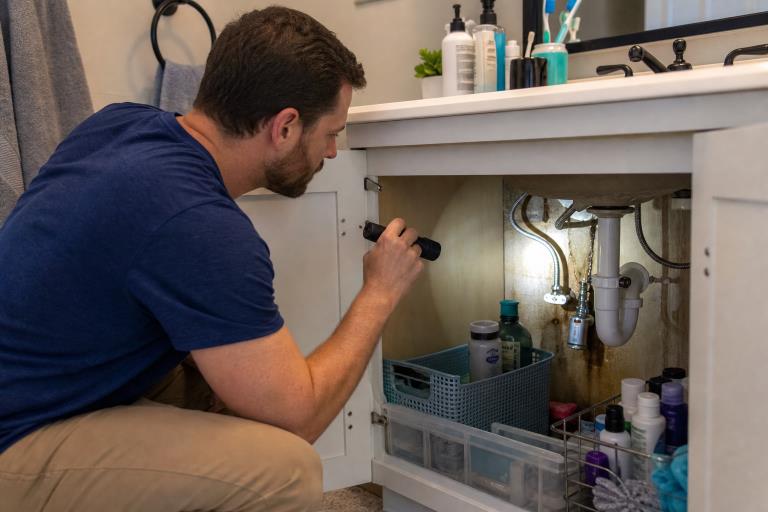
Look beneath sink cabinets for dampness around supply connections, drain traps, garbage disposals, and dishwasher hoses. Washing machine hoses and shut-off valves should also be inspected regularly, especially if the laundry area has limited ventilation or is located above finished rooms.
Water Heaters
Moisture around a water heater tank, drain valve, relief valve, or nearby piping should be addressed promptly. Hot water equipment involves pressure, electricity, or fuel and poses burn hazards, so avoid attempting repairs beyond a simple visual inspection.
Crawl Spaces, Slabs, And Outdoor Lines
Damp insulation, standing water, warm spots on the floor, cracked flooring, unusually green grass, or soft ground can indicate a leak beneath the home or underground. These locations are harder to diagnose because the damaged pipe may not be visible from inside the house.
Seasonal Plumbing Risks In Northwest Arkansas
Springdale weather can shift quickly from freezing nights to rain, heat, and changing soil moisture. Cold conditions can stress exposed pipes, hose bibs, and older connections, while heavy rain may make outdoor leaks and drainage concerns harder to spot. Before freezing temperatures arrive, homeowners should:
- Disconnect garden hoses from outdoor faucets.
- Drain exposed outdoor lines when possible.
- Insulate pipes in garages, crawl spaces, and attics.
- Keep garage doors closed during hard freezes.
- Make sure the meter box lid is properly closed.
- Know the location of the main water shut-off valve.
Safe First Steps For Homeowners
If a leak is visible, act quickly without creating additional hazards. Shut off the nearest fixture valve if it is easy to reach. If water is spreading, the source is unknown, or a pipe has burst, turn off the home’s main water supply. Move electronics, furniture, and stored belongings away from the affected area, then use towels or a container to limit minor dripping. Take photos for documentation, but do not cut into walls, ceilings, or floors before the source has been assessed. Never handle electrical equipment near standing water.
When To Call A Professional
Professional assessment is especially important when a leak is hidden, persistent, connected to a pressurized water line, or affecting the home’s structure. Arrange prompt help when there is fast-moving water, water near outlets or appliances, a meter that keeps moving after fixtures are off, low pressure combined with damp surfaces, suspected slab leakage, recurring drain backups, sewer odors, or moisture near the foundation.
A Simple Leak Prevention Plan
- Monthly:Look under sinks, around toilets, and near water-using appliances.
- Every few months:Check hose connections, valves, and visible pipe joints.
- Before winter:Protect outdoor faucets and exposed plumbing.
- After severe weather:Check for wet soil, standing water, and pressure changes.
- Once a year:Review water bills and consider a whole-home plumbing inspection.
Frequently Asked Questions
Can A Small Leak Really Cause Major Damage?
Yes. Slow moisture exposure can damage drywall, wood framing, flooring, insulation, and cabinets over time. The problem may remain hidden until staining, odors, or material failure appear.
How Can A Toilet Leak Be Checked?
Add a few drops of food coloring to the toilet tank and wait without flushing. If color appears in the bowl, water is passing through the tank components, and the toilet may need repair.
What Should Be Done If A Pipe Bursts?
Turn off the main water supply, avoid electrical hazards, contain water only if it is safe to do so, and seek qualified help quickly. Rapid action can reduce damage to flooring, walls, and personal belongings.
Conclusion
Hidden plumbing leaks rarely resolve without attention. Regular inspections, meter checks, seasonal preparation, and early response to unusual moisture can help Springdale homeowners prevent a small issue from becoming a costly repair. When the source is behind a wall, beneath a slab, or underground, an accurate diagnosis is the safest path to a lasting solution. Homeowners should watch for warning signs such as unexplained increases in water bills, damp spots, musty odors, low water pressure, stained walls or ceilings, and water pooling around the property. Addressing these signs early can help limit damage to flooring, drywall, insulation, and structural materials. Keeping shutoff valves accessible and knowing when to contact a qualified plumbing professional can also make leak emergencies easier to manage. A proactive approach protects the home while reducing the risk of unexpected water damage and the need for more extensive repairs.