An injury can disrupt life quickly, whether it happens in a collision on the Capital Beltway, a fall outside a Maryland business, a dog bite in a neighborhood park, or an incident at work. In the first days, a personal injury attorney in Maryland may help someone understand what information to preserve, but immediate safety and appropriate medical treatment should always remain the priority.
Maryland’s changing weather, dense commuter routes, waterfront recreation areas, and active construction zones can all create situations where conditions change fast. A calm checklist can help injured people and families focus on practical next steps without guessing about fault, rushing into a settlement, or losing track of important records.
1. What To Do In The First Few Hours
First, move away from traffic, unstable property conditions, aggressive animals, or any other immediate danger if it is safe to do so. Call 911 when someone needs emergency help or the scene presents a hazard. In a vehicle crash, Maryland drivers can use the state’s guidance for filing an auto claim to understand the value of gathering witness information, photographs, report numbers, and insurance details.
Try to keep conversations short and factual. Exchange basic contact and insurance information when appropriate, ask witnesses for their names and phone numbers, and note the time, location, lighting, weather, and visible hazards. Do not argue or speculate about who caused the incident while facts are still unclear.
2. Why Medical Care And Follow-Up Matter
Some injuries do not fully appear until hours or days later. A person may walk away from a rear-end collision near Annapolis feeling shaken but functional, then develop headaches, neck stiffness, shoulder pain, dizziness, or sleep problems later. Seek emergency care for urgent symptoms, and follow up with an appropriate medical professional for concerns that persist or worsen.
Medical records can document more than a diagnosis. They may show treatment plans, medication needs, physical limitations, missed work, trouble driving, and changes to everyday activities. If an injury may involve treatment that fell below an accepted standard of care, a medical malpractice attorney can provide case-specific guidance after reviewing the relevant facts and records.
3. How To Preserve Useful Evidence
Evidence is often most useful when it is collected early. Rain can dry, ice can melt, a broken handrail can be repaired, vehicle damage can be fixed, and security video may be overwritten. Save original photos and videos when possible, including files that retain dates and other details, rather than relying only on edited screenshots.
Items Worth Keeping
- Photos or videos of the scene, property damage, clothing, and visible injuries.
- Names and contact details for witnesses, property owners, and responding officers.
- Police reports, workplace reports, incident reports, and correspondence about the event.
- Medical bills, visit summaries, prescriptions, therapy notes, and travel receipts.
- Pay stubs, work schedules, employer communications, and records of missed time.
- Emails, letters, claim numbers, and dated notes from insurance conversations.
A simple daily journal can also help. Record pain levels, missed family events, mobility issues, and tasks that now require help. Keep the notes factual and dated. This running record can be more reliable than trying to reconstruct several difficult months from memory.
4. What To Know Before Speaking With An Insurer
Reporting an incident is not the same as agreeing with an insurer’s conclusions about coverage, fault, injuries, or value. Notify your insurer as your policy requires, keep copies of everything submitted, and write down the date, time, claim number, and name of each person involved in a call. Ask what documents are requested and when they are due.
Before You Respond
- Locate the claim number and a copy of the relevant policy.
- Ask whether a request is for photos, records, an estimate, a statement, or a release.
- Keep a copy of every form, email, upload confirmation, and letter.
- Read medical authorizations and settlement documents carefully.
- Do not sign an agreement you do not understand.
5. How Fault Can Affect A Maryland Claim
Negligence claims commonly raise several questions: Did a person or business have a duty to act reasonably? Did its conduct fall short? Did that conduct cause an injury? Did the injury produce measurable losses? The answers depend on the evidence, not merely on how serious an incident feels.
Maryland follows contributory negligence, a rule that can make fault disputes especially consequential. For example, a wet-floor case may involve questions about warning signs, lighting, footwear, inspection practices, and whether a hazard was visible. Avoid unsupported statements about your own conduct or another person’s conduct, and preserve the facts that may answer those questions.
6. Deadlines That May Apply
Deadlines should never be assumed. Maryland’s general civil limitations statute provides that many civil actions must be filed within three years after they accrue, unless another law establishes a different period. This three-year civil filing rule is only a starting point, not a complete deadline analysis.
Claims involving government entities, minors, wrongful death, medical treatment, or unusual discovery issues may have separate rules, notice requirements, or timing questions. Prompt, case-specific advice can be important when a deadline is approaching.
7. Common Losses To Track
Keep a clear record of financial and personal losses instead of estimating them later. Track emergency care, follow-up treatment, rehabilitation, prescriptions, lost income, reduced earning ability, transportation, household assistance, and property damage. Also note pain, emotional distress, and activities that have become difficult or impossible.
Create a running expense list with the date, provider or business, purpose, amount, payment status, and the location of the supporting receipt or bill. A consistent system can reduce stress and make missing documents easier to identify.
8. When To Consider Legal Guidance
Case-specific guidance may be useful when injuries are serious or long-lasting, fault is disputed, multiple insurance policies are involved, a claim is denied, or a public agency or healthcare provider is involved. It can also help when settlement papers arrive before treatment is complete or when the applicable deadline is uncertain.
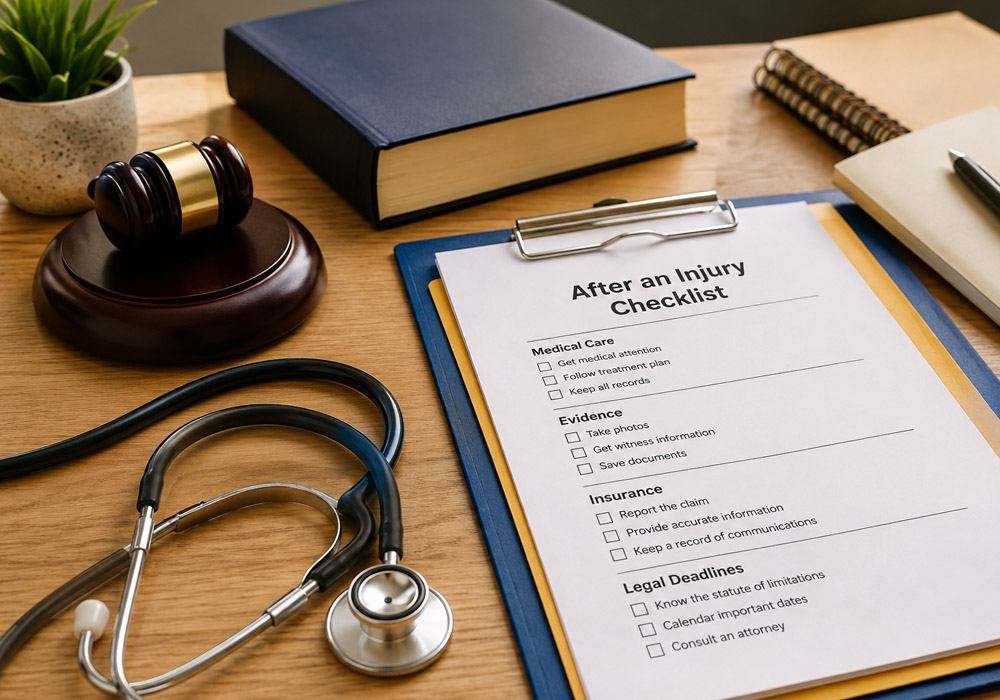
9. A Simple Injury Checklist
- Get to a safe location and call emergency services when appropriate.
- Seek medical care and follow treatment instructions.
- Photograph the scene, damage, and visible injuries.
- Collect witness, report, and insurance information.
- Save records in one organized physical or digital folder.
- Report the incident as required by the relevant insurance policy.
- Track expenses, missed work, symptoms, and daily limitations.
- Write down important dates and ask for guidance before deadlines pass.
Conclusion
After an injury in Maryland, a simple plan can bring order to a difficult situation. Focus first on safety and medical care, then preserve accurate records, communicate carefully, and take deadlines seriously. Every situation depends on its own facts, so no checklist can replace individualized medical or legal advice.