Choosing between a 13-inch and a 24-inch UV DTF printer should start with the work your shop expects to sell, not with the largest machine on the page. A smaller format can fit compact workspaces and shorter layouts. A wider format becomes more attractive when larger artwork is already part of the workflow.
Start With the Widest Job You Produce Repeatedly
Do not size a printer around the biggest one-off request you have ever received. Review the jobs that repeat. Measure typical transfer widths, note how often multiple designs share a layout, and identify where your current process starts creating extra setup.
If profitable jobs stay comfortably within a narrower format, extra width may not solve a real problem. If your team routinely splits layouts because of production limits, a wider printer deserves a closer look.
Think About Layout Efficiency, Not Just Maximum Width
Printer width affects how much artwork can be organized across a production layout. That matters for shops producing multiple logos, product labels, promotional graphics, or personalized designs in the same run. The useful question is not simply, “Can this printer handle the design?” It is, “Can it handle our normal mix without unnecessary extra passes?”
Fast DTF Supply currently lists compact and wider equipment in its UV DTF printer collection, so buyers can compare formats against real production needs instead of assuming every shop needs the same machine.
Check the Rest of the Workflow Before Going Wider
A wider printer does not automatically create a faster business. Artwork preparation, film handling, blank preparation, quality control, packing, and maintenance still affect how much finished work leaves the shop.
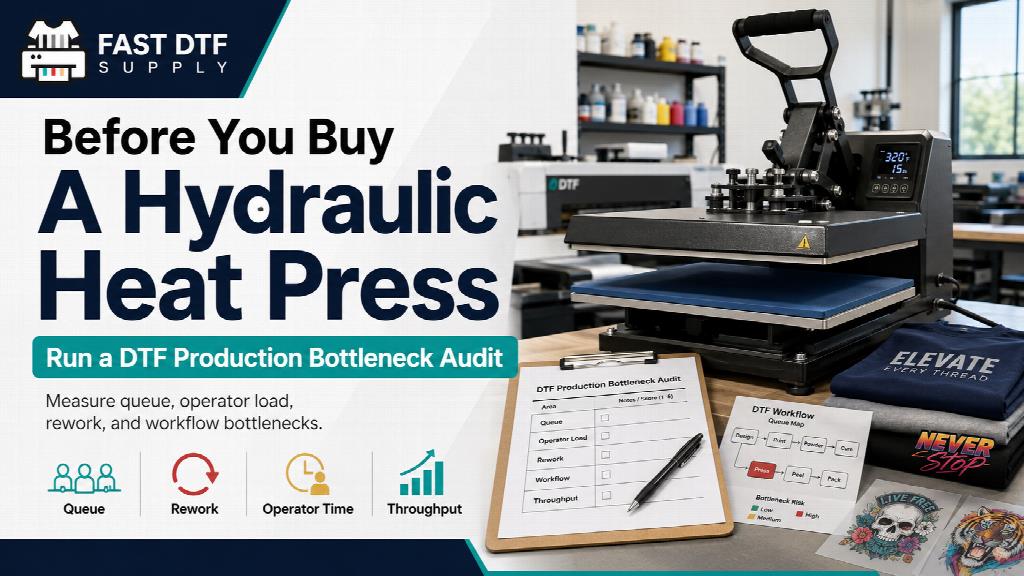
Before upgrading, ask whether printer width is actually the bottleneck. If operators are waiting on artwork, product staging, approvals, or downstream handling, more print capacity may simply move the queue elsewhere.
Compare Business Readiness Alongside Machine Size
Width is only one part of an equipment decision. Buyers should also consider workspace, consumables, maintenance, parts access, software, support, and the orders the machine must handle consistently. For businesses evaluating equipment in New Jersey, this UV DTF printer price and business-readiness guide explains why purchase price should not be the only comparison.
Local buyers can also review the Whippany UV DTF printer buying guide, which approaches equipment selection through workflow, supplies, maintenance, parts, and fulfillment planning.
The Better Decision Rule
Choose the smallest printer format that comfortably supports recurring work and leaves room for growth. Move wider when order history shows that width or layout efficiency is becoming a repeated constraint. That keeps the purchase tied to production reality instead of specification chasing.
Frequently Asked Questions
Is a 24-inch UV DTF printer always better than a 13-inch model?
No. A wider format can offer more layout flexibility, but the better choice depends on artwork size, order mix, workspace, workflow, and how consistently your shop will use the additional width.
What should I measure before choosing printer width?
Review recurring transfer sizes, designs per run, layout efficiency, workspace, production bottlenecks, and recurring hard-goods orders.