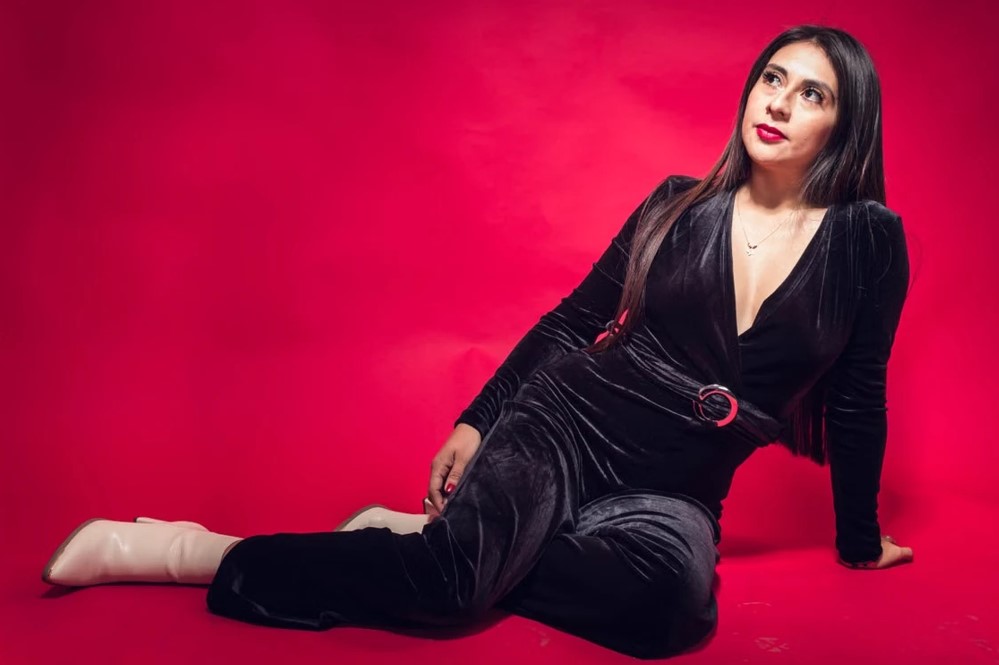
Two edits can target the same waist, legs, or shoulders and still produce completely different photographs. The difference is often not the feature being changed but the intensity of the change and how many other relationships in the frame have to adjust with it.
With a body reshaping app, deciding on the degree of change before the edit begins can be just as important as deciding which body area to adjust.
Subtle reshaping works with the existing pose
A small adjustment usually stays close to the proportions already suggested by the photograph. Slightly refining a waist, balancing shoulder width, or reducing an angle-related asymmetry can change the overall impression without forcing the rest of the frame to behave differently.
Because the edit remains near the original structure, posture, clothing, and perspective require fewer secondary corrections. The viewer still reads the same body and the same pose, only with a quieter visual imbalance.
Dramatic reshaping creates a chain reaction
A larger change affects more than the selected contour. Significantly lengthening legs changes the relationship between the lower and upper body. Reducing the waist sharply changes how hips and ribcage compare. Narrowing shoulders can alter the apparent scale of the head.
The stronger the adjustment, the more parts of the image have to remain consistent with the new proportions. This does not automatically make a dramatic edit wrong; it simply turns it into a more complex transformation rather than a local refinement.
The intended use should set the intensity
Different photos can tolerate different levels of intervention. A stylized fashion image may deliberately push proportions for effect, while a professional portrait or personal profile photo often benefits from staying closer to the person’s real appearance.
One way to decide between the approaches is to ask what the image is meant to communicate:
- subtle reshaping — refinement, balance, and recognizability;
- stronger reshaping — a deliberate visual transformation;
- no reshaping — when pose, styling, or crop already creates the desired result.
These are different creative goals, not three points on a scale where “more” automatically means “better.” Choosing the goal first prevents the edit from becoming stronger simply because another adjustment is technically possible.
Compare the result with the purpose, not only the original
A before-and-after comparison can show how much changed, but it cannot decide whether the change suits the photograph. The better test is whether the final body still fits the image’s purpose, pose, and overall style.
A subtle edit succeeds when it disappears into the frame. A dramatic one succeeds when the transformation looks deliberate and coherent rather than accidental. In both cases, intensity should be a choice made for the image, not a default setting applied to every body photo.