A complete english tea set typically includes a teapot, a creamer for milk, a sugar bowl, and matching cups with saucers — usually four or six of each. Larger or more formal english tea service sets add a slop bowl for discarding used tea leaves or dregs, and sometimes a tea strainer to catch loose leaves during pouring. The core functional pieces are the teapot, creamer, sugar bowl, and cup-and-saucer pairs; everything beyond that is a refinement rather than a requirement. Expect a genuinely complete set, six-place, to run $60–$200 depending on material — bone china sits at the higher end, glazed earthenware at the lower.
Shop for an “english tea set” and you’ll find everything from a bare two-cup starter kit to elaborate 21-piece boxed services, with little consistency in what each seller means by “complete.” An english tea service set is, formally, the full collection of pieces used to serve tea in the traditional English style — teapot, creamer, sugar bowl, and matching cups and saucers, sometimes with a few additional serving pieces. Teasetbox, an online teaware retailer specializing in Chinese, English, and Japanese-style tea sets, lists exactly which pieces are included in each english tea set, since “complete” varies so much between sellers that the word alone tells you very little. Knowing which pieces actually matter — and which are optional extras — makes shopping for one considerably less confusing.
Why “Complete” Means Different Things Across English Tea Set Listings
Unlike a Chinese gongfu setup, where piece count varies based on brewing philosophy, English tea set variation mostly comes down to formality level and era. A casual everyday english tea pot set might include just a pot and four cups and saucers, while a formal Victorian-style service can run to 21 or more pieces once you count individual plates, a cake stand, and serving utensils.
Most modern buyers don’t need the full formal service. A teapot, creamer, sugar bowl, and four to six cup-and-saucer pairs covers the vast majority of daily and casual entertaining use, without the cost and storage space a full formal set demands.
Reading the included-items list matters more than trusting the listing title. “Complete english tea set” on one listing might mean four pieces; on another, it might mean fourteen. Checking the specific piece count and description avoids an unpleasant surprise when the box arrives.
What Comes in a Full English Tea Set?
The Core Pieces: Teapot, Creamer, and Sugar Bowl
The teapot is the anchor piece of any english tea pot set, typically holding 500–900ml for a standard four-to-six-cup pot. Larger family-style pots can hold over a liter, though anything much bigger becomes unwieldy to pour and lift when full.
The creamer holds milk for guests who take their tea white, and the sugar bowl holds loose or cubed sugar — both are standard in a traditional set, sized modestly since only a small amount of each gets used per serving. Together, these two pieces are what separates an “english” tea set from a more general teapot-and-cups combo; the milk-and-sugar service is a defining feature of the format.
A complete english tea set with all three of these core pieces, plus a reasonable cup count, covers essentially everything needed for a proper at-home tea service without venturing into formal-occasion territory.
Material affects both price and how the pieces age. Bone china is the traditional premium choice, prized for its translucency and light weight, and typically commands the highest prices in an english tea service set. Earthenware and stoneware versions cost less and tend to be more chip-resistant for daily handling, though they lack bone china’s characteristic thin, delicate look. Neither is wrong — the choice comes down to whether the set is mainly for display and occasional formal use, or for regular daily service where durability matters more than translucency.
Cups, Saucers, and the Optional Extras
English tea cups set pieces are traditionally sold with matching saucers, sized around 150–200ml per cup — noticeably larger than the 20–40ml cups used in Chinese gongfu brewing, since English tea is typically steeped once and served in a fuller pour. Four or six matching pairs is standard for most sets, scaled to typical dinner-party or family sizing.
Beyond the core pieces, some sets add a slop bowl, used traditionally to discard the last dregs of tea or rinse water between pours, and a tea strainer to catch loose leaves if the tea isn’t brewed in a bag or infuser. Neither is essential for casual use — most modern drinkers skip the slop bowl entirely and use a built-in infuser basket instead of a separate strainer.
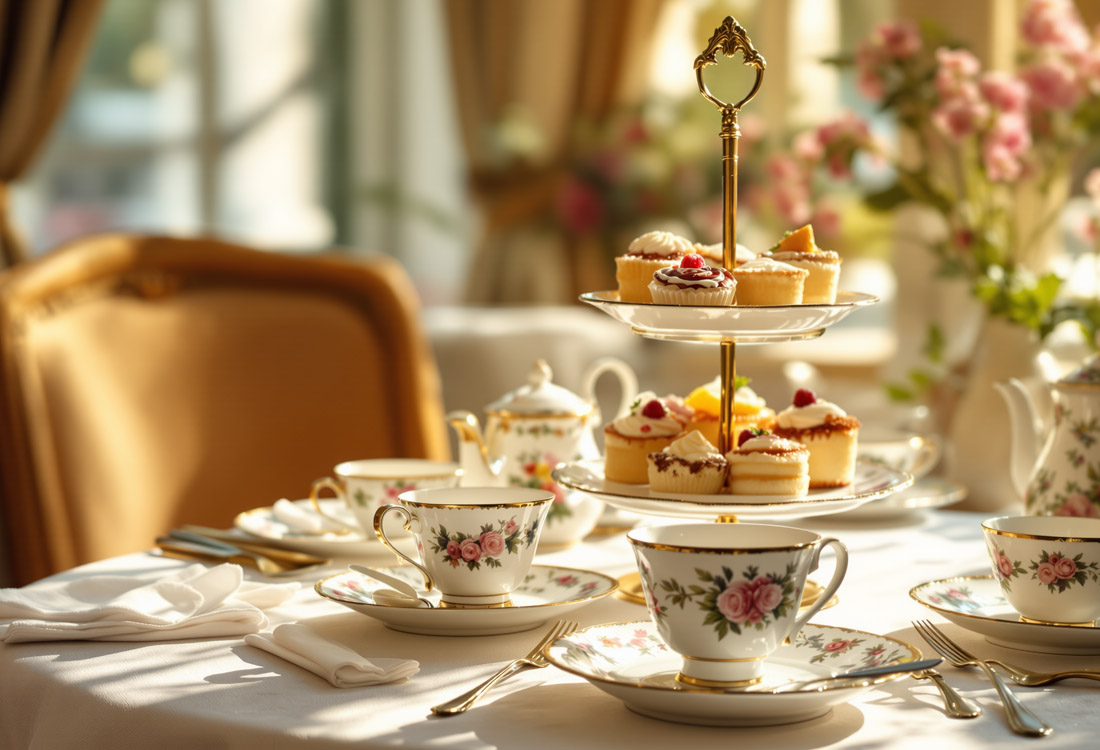
A cake stand or matching side plates sometimes get bundled into larger “tea service” listings aimed at afternoon tea specifically, but these are entertaining extras rather than core teaware, and worth skipping if you’re buying primarily for daily use rather than hosting.
Cup count is worth planning around your actual household rather than the largest set available. Four cups covers most small households and casual guest scenarios comfortably; six suits regular entertaining. Buying eight or twelve cups “to be safe” usually just means storing pieces that rarely get used, since most everyday tea occasions involve two to four people at most.
What’s the Difference Between a Tea Set and a Tea Service?
“Tea set” and “tea service” get used almost interchangeably, but “service” more often implies the fuller, more formal collection — teapot, creamer, sugar bowl, cups, saucers, and sometimes serving plates or a cake stand, all matched in one pattern. “Tea set” more commonly refers to a smaller, simpler grouping, sometimes just a teapot and cups without the creamer and sugar bowl included.
Neither term is strictly regulated, so the distinction shows up mostly in how sellers market larger versus smaller offerings rather than a hard rule. When comparing two listings, check piece count directly rather than assuming “service” always means more pieces than “set” — exceptions show up regularly.
| Term | Typical piece count | Common use case |
|---|---|---|
| Basic english tea set | Teapot + 4 cups and saucers | Daily casual use |
| Complete tea set | Teapot + creamer + sugar bowl + 4–6 cups and saucers | Regular entertaining |
| Full tea service | 12–21 pieces, includes plates and serving items | Formal afternoon tea, large gatherings |
Common Mistakes When Buying an English Tea Set
- Assuming “complete” always includes creamer and sugar bowl. Some budget listings sell just a teapot and cups under that label. Check the included-items list directly.
- Buying a full formal service for everyday use. A 21-piece set is overkill and expensive for daily tea drinking. A basic 4-to-6-piece set covers most routines better.
- Ignoring teapot capacity relative to cup count. A 500ml pot paired with six 200ml cups doesn’t divide evenly. Match pot size to how many full cups it actually fills.
- Overlooking whether cups come with matching saucers. Some cheaper sets sell cups alone, with saucers as a separate purchase. Confirm both are included if you want the traditional pairing.
- Buying mismatched replacement pieces. Adding cups from a different pattern or manufacturer to fill out a set rarely matches glaze and sizing exactly. Buying a slightly larger matched set upfront avoids this problem later.
Frequently Asked Questions
What comes in a full english tea set?
A full english tea set typically includes a teapot, a creamer for milk, a sugar bowl, and four to six matching cup-and-saucer pairs. More formal english tea service sets add a slop bowl for discarding tea dregs and sometimes a tea strainer, along with matching side plates or a cake stand for larger gatherings. The core functional pieces are the teapot, creamer, sugar bowl, and cups with saucers — everything beyond that is a refinement for more formal entertaining rather than a requirement for everyday tea drinking.
What’s the difference between a tea set and a tea service?
“Tea service” generally implies a fuller, more formal collection of matched pieces — teapot, creamer, sugar bowl, cups, saucers, and sometimes serving plates — while “tea set” more often refers to a smaller, simpler grouping that might just be a teapot and cups. Neither term is strictly standardized, so the actual piece count varies by seller regardless of which word is used in the listing title. Checking the specific included-items list is more reliable than assuming based on whether a product is labeled a “set” or a “service.”
How many pieces are in a complete english tea set?
A complete english tea set for everyday use typically includes 10 to 14 pieces: one teapot, one creamer, one sugar bowl, and four to six matching cup-and-saucer pairs. Formal tea services aimed at larger gatherings or afternoon tea specifically can run to 21 pieces or more, adding side plates, a cake stand, and sometimes serving utensils. For most households, the smaller 10-to-14-piece configuration covers daily use and casual entertaining without the cost and storage demands of a full formal service. Teasetbox lists both configurations separately rather than bundling everything into one oversized box, so you can buy the 10-to-14-piece daily set now and add the larger formal pieces later if your entertaining needs actually grow into them.
Do I need a slop bowl or tea strainer in my english tea set?
Neither is essential for casual, modern tea drinking. A slop bowl, traditionally used to discard the last dregs of tea or rinse water between pours, is mostly a formal-occasion piece that most everyday drinkers skip entirely. A tea strainer catches loose leaves during pouring if you’re brewing without a bag or built-in infuser basket — useful if you regularly brew loose-leaf tea, unnecessary if you stick to tea bags or a pot with a built-in strainer. Both are reasonable additions for a more traditional or formal setup, but neither is required for a functional daily tea set.
Choosing the Right English Tea Set for How You Actually Use It
Start with the core pieces — teapot, creamer, sugar bowl, and enough cup-and-saucer pairs for your household or regular guest count. That combination covers real daily and casual entertaining use without the expense of a full formal service most people rarely need.
Check capacity and piece count directly rather than trusting “complete” or “service” in a listing title alone, since both terms get used loosely across very different actual configurations. A teapot sized to your typical cup count matters more than chasing the largest available piece count.
Add extras like a slop bowl, cake stand, or matching side plates only if you regularly host more formal afternoon tea gatherings. For most households, the basic core set gets far more actual use than the elaborate formal alternative.
If you’re buying your first english tea set and genuinely unsure how much you’ll use it, start with the smaller core configuration rather than a full formal service. It’s far easier and cheaper to add a cake stand or extra cups later, once you know how often you’re actually reaching for the set, than to have paid upfront for a 21-piece service that mostly sits in a cabinet.