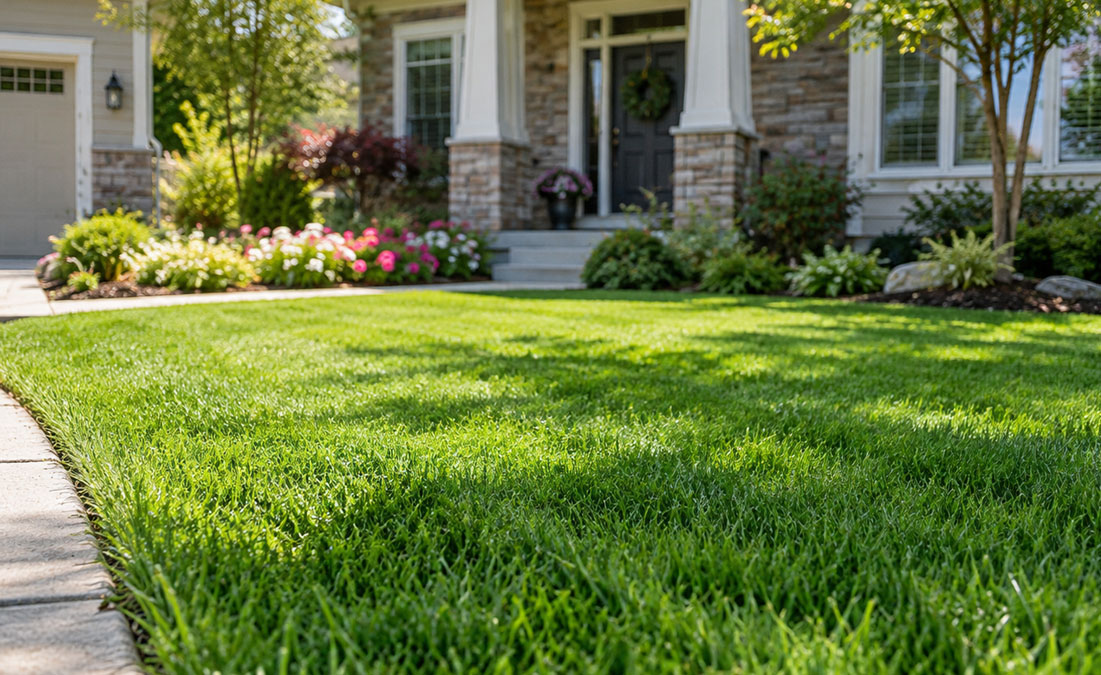
Uneven color, sparse growth, and unwanted weeds can make outdoor areas look less uniform. A lawn care service provides targeted nutrients and treatment programs; these help address specific conditions and diseases affecting turf appearance. Here are some ways lawn fertilizers and other treatments can enhance curb appeal:
Improve Lawn Color
Grass requires access to nutrients that support steady growth and maintain a consistent green appearance. When nutrient levels become unbalanced, some areas may develop lighter coloring than the surrounding turf. Fertilizer applications add selected nutrients, and treatment schedules account for the changing needs of grass throughout the growing season.
Different lawn areas do not always develop at the same rate. Shaded sections may grow differently from areas exposed to direct sunlight, and soil conditions sometimes affect how nutrients reach the roots. Reviewing those differences helps match applications with the conditions present across your property.
Mineral-based fertilizer programs provide another option for supporting lawn growth. Granular applications distribute nutrients across the turf, while the treatment approach can be adjusted around the property’s needs. Seasonal changes also influence grass activity, and treatment timing helps address those changing conditions. Regular observation provides useful information when sections of the lawn develop differently.
Control Visible Weeds
Weeds interrupt the appearance of established grass by growing above or between surrounding turf. Broadleaf plants can create uneven patches, while dense weed growth competes with grass for space and nutrients. A lawn care service offers weed control programs to address nutrient needs and unwanted plant growth. The result is a treatment approach that focuses on the visible condition of the entire lawn.
Preventive and post-emergent treatments serve different purposes. Pre-emergent applications target weed development before certain plants become established, and post-emergent treatments address existing growth. Herbicide-free and bio-herbicide options also provide different treatment approaches for properties with specific preferences. Selecting the appropriate program depends on the weeds present and the condition of the surrounding turf.
Strengthen Soil Conditions
Healthy-looking grass depends partly on what occurs beneath the visible surface. Soil composition affects nutrient availability, while compaction and poor structure can influence root development. Testing provides information about existing nutrient levels before a treatment program is selected. The following areas can help connect soil conditions with visible lawn growth:
- Nutrient levels: Testing identifies minerals that are limited in the soil.
- Soil structure: Compacted or poorly structured ground can affect root development.
- Root access: Available nutrients need to reach the grass root zone.
- Treatment selection: The results provide a basis for selecting suitable fertilizer programs.
Aeration may also complement fertilizer treatments, especially when compacted soil limits movement around the root zone. Removing small sections of soil creates openings that allow water and nutrients to move through the lawn differently. Combining soil information with visible lawn conditions provides a clearer basis for future treatment decisions.
Support Turf Density
Thin grass sometimes creates visible gaps across a lawn, and it exposes more of the soil surface between plants. Nutrient availability influences growth, while traffic patterns and soil conditions may affect individual sections differently. Fertilizer treatments support grass development when nutrient deficiencies reduce coverage. More consistent turf growth creates a fuller appearance across areas visible from sidewalks and driveways.
Tailor Lawn Treatments
No two properties have identical soil, grass, and exposure conditions. A program based on individual lawn characteristics provides a more specific approach than applying the same treatment pattern everywhere. Factors that help shape a property-focused treatment program include:
- Grass conditions: Current color and coverage help identify visible concerns.
- Soil results: Testing provides information about nutrient availability.
- Weed activity: Existing or seasonal weeds influence treatment selection.
- Property exposure: Sun and shade affect how different sections of the lawn develop.
- Treatment options: Mineral-based, organic-based, and herbicide-free programs address different property needs.
Find Professional Lawn Care Service
Curb appeal depends on how well different outdoor features work together; this includes the grass, walkways, planting areas, and visible property edges. Lawn treatment programs provide opportunities to examine the surrounding conditions rather than focusing only on grass color. A lawn fertilizer service can support a more consistent property appearance when treatments reflect the soil, turf, and weed conditions present. Contact a qualified lawn care professional to discuss a treatment program tailored to the visible conditions of your property.