Key Takeaways
- Review the shell, plumbing, equipment, deck, and safety features before selecting cosmetic upgrades.
- Address structural, leak, electrical, drainage, and safety concerns before resurfacing or decorative work.
- Use a written scope to clarify responsibilities, material selections, allowances, and change procedures.
- Consider water use, energy use, access needs, and future maintenance when selecting upgrades.
- Complete a final walkthrough and system test before returning the pool to regular use.
An aging pool can develop problems that reach far beyond a worn finish or a few loose tiles. A thoughtful renovation begins by identifying what is failing, what can remain, and which improvements should be completed together. A https://www.poolrenovation.com/products-services/complete-pool-renovation/ can bring structural repairs, plumbing updates, surface work, equipment improvements, and safety upgrades into one coordinated project.
The best plan puts safety, water containment, and reliable operation ahead of appearance. By inspecting the entire pool system before choosing finishes or features, homeowners and facility managers can make better decisions about scope, budget, scheduling, and long-term maintenance.
Signs a Pool Needs More Than a Simple Repair
One isolated problem may be repairable, but repeated or connected issues often point to a broader renovation need. Persistent water loss, cracks that reopen after patching, peeling finishes, loose coping, damaged tile, poor circulation, or frequent equipment service are all reasons to examine the pool as a complete system.
- Water levels decline without an obvious explanation.
- Cracks, stains, or deteriorated finish areas keep returning.
- Tile, coping, or deck sections loosen in multiple locations.
- The pump, filter, heater, valves, or plumbing require recurring repairs.
- The deck has trip hazards, standing water, limited traction, or poor access.
Completing a Full Pool Condition Check
Start with a documented inspection instead of focusing only on the visible interior. Review the shell, finish, waterline tile, coping, deck joints, skimmers, drains, return fittings, equipment pad, lighting, electrical components, barriers, gates, and drainage around the pool.
A Simple Inspection Sequence
- Walk the deck and note cracking, settlement, drainage paths, and access issues.
- Inspect the shell and finish for cracks, hollow areas, discoloration, and surface wear.
- Check tile, coping, expansion joints, ladders, handrails, and transitions.
- Review skimmers, drains, returns, valves, visible plumbing, and equipment connections.
- Test circulation, filtration, heating, controls, lights, and safety equipment.
Take photographs, record measurements, collect repair history, and identify conditions that need professional testing. This record gives contractors a clearer basis for pricing the work and reduces the chance that important concerns are missed.
Sorting Repairs by Priority
Organize the scope into three levels. Priority one includes active leaks, structural damage, unsafe electrical conditions, broken or unsuitable drain covers, major plumbing failures, and conditions that could cause injury. Priority two includes deteriorated finishes, circulation problems, damaged tile or coping, inefficient equipment, and deck drainage issues. Priority three includes color changes, decorative tile, water features, and other appearance-focused upgrades.
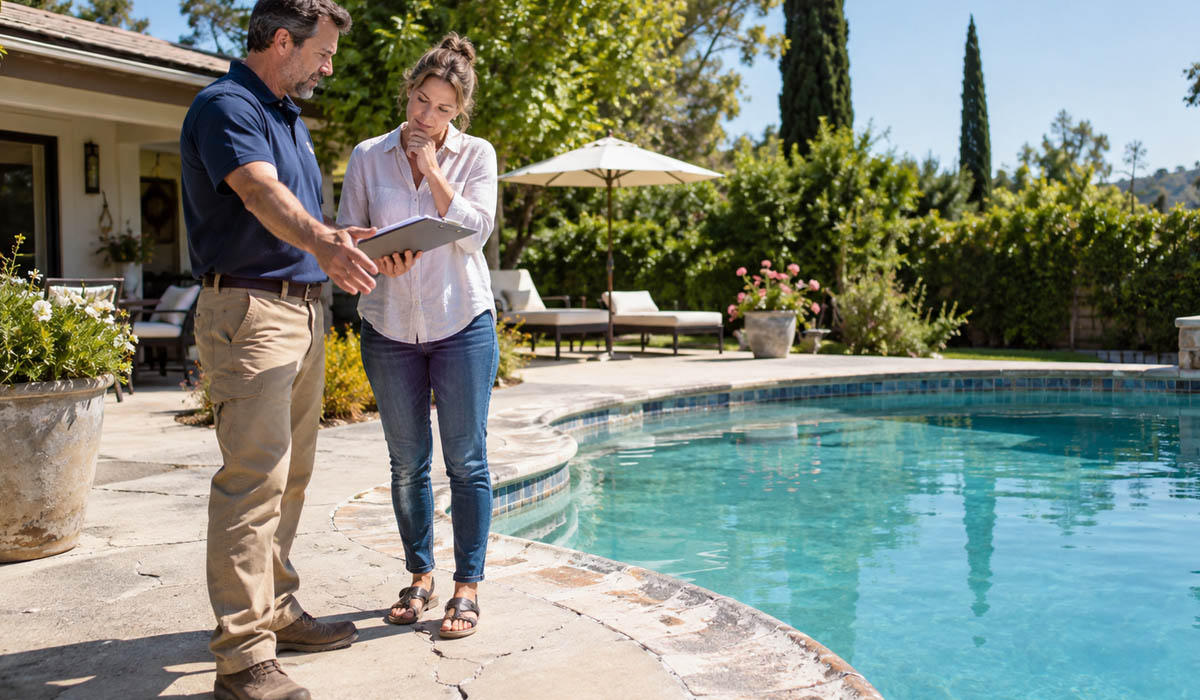
Photorealistic wide establishing shot of an aging residential swimming pool undergoing a complete renovation, with visible worn coping, cracked deck areas, exposed equipment, and a contractor inspecting the pool within the broader backyard setting, natural daylight, realistic scale, clean documentary style.
A new surface should not conceal an unresolved leak or structural concern. Completing connected repairs during the same project can also avoid reopening finished surfaces later.
Repair, Resurface, Renovate, or Replace?
- Repair is appropriate when damage is isolated and surrounding systems remain sound.
- Resurfacing fits a pool with a worn interior finish but a stable shell and reliable equipment.
- Renovation makes sense when several connected systems need attention at once.
- Replacement may be the practical choice when the shell, layout, or major systems cannot support the desired outcome.
The decision should account for the pool’s condition, intended use, remaining service life, code requirements, and the cost of addressing all necessary work rather than only the most visible problem.
Planning Work in the Right Order
Renovation sequencing protects completed work and helps each trade perform its work efficiently. Begin with the written scope, permits, access plan, and any local requirements for draining or disposal. Then complete structural, plumbing, electrical, and drainage work before preparing the shell and surrounding surfaces.
After repairs are complete, install tile, coping, interior finishes, and deck materials. Equipment, controls, lighting, barriers, and other safety components should be installed or tested before the pool is filled, balanced, cleaned, and reviewed during the final walkthrough.
Reviewing Plumbing, Circulation, and Equipment
Circulation equipment should suit the pool’s size, hydraulic needs, and expected use. Review pump capacity, filter condition, valves, skimmers, return lines, heater operation, automation controls, and chemical feed equipment. A system designed for a lightly used backyard pool may not be appropriate for a busy shared or commercial setting.
Energy planning belongs in the renovation discussion. Variable-speed pool pumps can adjust their speed for different pool tasks, allowing filtration to operate differently from cleaning or water-feature operation. ENERGY STAR also notes that lower pump speeds can reduce energy use substantially.
Improving Safety and Accessibility
Safety features should be planned with the renovation, not added as an afterthought. Review entry steps, ladders, handrails, depth markings, lighting, drain covers, deck traction, fencing, self-closing gates, emergency equipment, and clear paths to and around the water. Public and shared pools should also be reviewed against the requirements enforced by the applicable local authority.
Choosing Surfaces, Tile, Coping, and Deck Materials
Select materials for performance as well as appearance. Consider durability, cleaning needs, wet-surface traction, heat exposure, chemical exposure, climate conditions, repair options, and the availability of matching replacement pieces. Tile, coping, deck surfaces, and movement joints work together at the pool edge, so a change in one area can affect drainage and transitions in another.
Building a Realistic Budget and Schedule
A complete budget should include inspection, preparation, demolition, repairs, materials, labor, permits, testing, cleanup, and a contingency for concealed conditions uncovered after demolition. Request a written scope that identifies included and excluded work, material allowances, payment milestones, expected dates, weather delays, change-order procedures, and final cleanup responsibilities.
The lowest initial proposal is not always the lowest total cost if it leaves deteriorated plumbing, drainage, or equipment in place behind a new finish.
Reducing Water Waste and Preparing for Final Care
Water efficiency planning should address leaks, evaporation, splash-out, cleaning practices, equipment operation, and cover use. The EPA explains that properly used pool covers can prevent up to 95 percent of pool-water evaporation, while also helping limit debris and reduce the water needed to maintain the pool level.
Before reopening, inspect the finish, tile, coping, deck, drains, handrails, lights, controls, barriers, and equipment. Confirm circulation and water balance, collect warranties and operating instructions, and establish a regular schedule for water testing, cleaning, equipment service, and prompt repair. Consistent care protects the renovation and helps small issues remain small.