Why Careful Planning Matters
Replacing most or all teeth is a major decision for San Antonio patients. The plan affects more than appearance. It can affect chewing, speech, comfort, cleaning routines, future dental visits, and how the upper and lower teeth meet. A thoughtful process should account for the gums, jawbone, bite forces, facial support, and the space available for replacement teeth. People researching all-on-four dental implants San Antonio, TX, should begin by asking what the proposed treatment includes beyond implant placement. Temporary teeth, healing appointments, final restorations, adjustments, and future maintenance can all be important parts of the overall plan. A clear explanation can make it easier to compare options without focusing only on a headline price.
Questions About Candidacy
There is no universal answer to who is a candidate for full-arch implants. A dental professional may evaluate the remaining teeth, gum disease, infection, bone availability, medical conditions, medications, tobacco use, grinding habits, and the ability to maintain oral hygiene after treatment.
Questions worth bringing to the consultation
- Are any natural teeth healthy enough to save?
- Do gum disease, decay, or infection need to be addressed first?
- Will bone loss change the treatment approach?
- Could grafting, extractions, or other preparatory care be needed?
- How could diabetes, smoking, osteoporosis treatment, or other health factors affect healing?
- Would a removable option meet my goals with less treatment?
Sharing a complete medication list and medical history matters. Patients should also mention prior problems with anesthesia, jaw pain, clenching, loose dentures, dry mouth, or difficulty keeping dental work clean.
What a Complete Evaluation Should Include
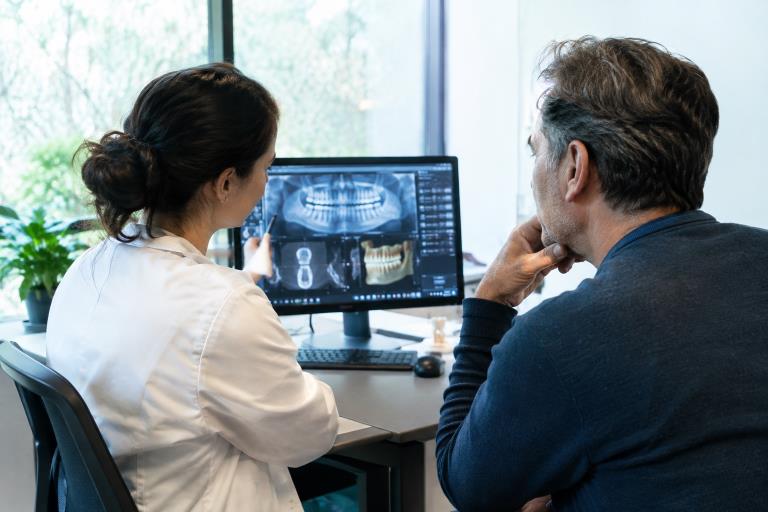
A quick visual examination is rarely enough for a full-arch decision. Depending on the situation, the evaluation may include X-rays or three-dimensional imaging, photographs, gum measurements, bite records, and scans or impressions. These records help the team assess the bone, nearby anatomical structures, the condition of the remaining teeth, and the space needed for a functional restoration. Ask what each record is intended to show and whether it changes the recommendation. Patients should also receive a discussion of benefits, limitations, potential complications, recovery expectations, and alternatives. When treatment is extensive, a second opinion can provide another perspective before irreversible steps are taken.
Replacement Options to Compare
Full-arch fixed teeth are the only option for people with widespread tooth loss. The right choice depends on oral health, goals, comfort, budget, manual dexterity, and willingness to attend regular maintenance visits.
- Traditional dentures: Removable replacement teeth that may be appropriate for some patients and can be adjusted as tissues change.
- Implant-retained dentures: Removable dentures that attach to implants for added stability.
- Fixed full-arch teeth: A restoration attached to implants that is intended to stay in place during everyday use.
Ask how each choice may affect speech, food choices, cleaning access, repair needs, and future costs. The National Institute on Aging notes that missing teeth can be replaced in several ways, so a comparison should be part of the conversation.
Your Treatment Team and Timeline
Full-arch treatment may involve a general dentist, an implant surgeon, a prosthodontist, a hygienist, a laboratory, or other specialists. Before moving forward, ask who performs the surgery, who designs the temporary and final teeth, who checks the bite, and who handles urgent concerns after treatment. Timelines vary. Some plans include teeth placed soon after surgery, but those teeth are often temporary. The final restoration may be designed once healing and bite stability have been evaluated. Request a written sequence that covers preparation, surgery, temporary teeth, follow-up visits, final teeth, and routine maintenance.
Materials and Costs
Temporary and final restorations may use different materials, including acrylic-based options, composite, ceramic, zirconia, or metal-supported designs. Material selection can affect appearance, weight, repair options, cost, and suitability for a person’s bite. Ask whether the proposed teeth are temporary or final, how repairs are handled, and what protection may be recommended for nighttime grinding. A detailed estimate should identify examinations, imaging, extractions, grafting, sedation, implants, temporary teeth, final teeth, follow-up visits, and likely adjustment costs. It should also explain payment timing, financing terms, insurance limitations, warranty details if offered, and charges that could arise if additional procedures become necessary.
Maintenance and Warning Signs
Implant-supported teeth still need daily cleaning. Plaque can accumulate around the gums and restorations so that patients may need a soft toothbrush, water flosser, floss threader, or interdental brush, depending on their dental anatomy. The National Institute of Dental and Craniofacial Research explains that cleaning between teeth helps remove plaque that brushing alone may miss. Regular visits allow the dental team to assess gum health, bite changes, wear, screw access, and the condition of the restoration. Seek prompt dental advice for persistent pain, swelling, bleeding, a loose restoration, a broken tooth, or a bite that suddenly feels different.
Red flags during a consultation
- Pressure to commit immediately.
- Promises that every patient will have the same timeline or outcome.
- No discussion of alternatives or long-term cleaning.
- A vague price without a written list of included services.
- No clear answer about who manages repairs or complications.
Consultation Checklist
Before leaving a full-arch implant consultation in San Antonio, patients should be able to answer these questions:
- What treatment is recommended, and why?
- What alternatives could meet my needs?
- What happens before surgery and during healing?
- Will I receive temporary teeth, and when are the final teeth planned?
- What materials are proposed for the final restoration?
- What is included in the written estimate?
- How do I clean the restoration every day?
- Who provides follow-up care and handles future repairs?
Choosing full-arch dental implants should be based on a plan that fits the patient’s health, goals, budget, and ability to maintain the result. Direct questions and clear written answers can help San Antonio residents make a more confident, informed choice.
Conclusion
Choosing a full-arch tooth replacement in San Antonio requires more than comparing implant techniques or advertised prices. Patients should first understand their oral health, bone condition, remaining teeth, bite, medical history, and ability to maintain the restoration. Traditional dentures, implant-retained dentures, and fixed full-arch teeth each have different requirements, costs, maintenance needs, and limitations. A thorough evaluation and clear treatment plan should explain the proposed procedure, temporary and final teeth, materials, recovery timeline, follow-up care, and potential additional expenses. Patients should also know who will perform each stage of treatment and how future repairs or complications will be handled. Asking direct questions and requesting a detailed written estimate can make it easier to compare options and understand the long-term commitment involved. With this information, San Antonio patients can make a treatment decision based on their individual health needs, goals, budget, and daily routine.