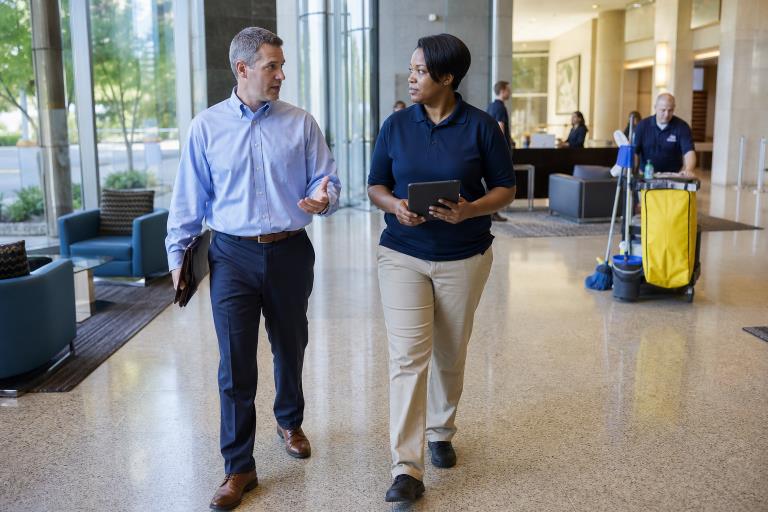
A clean workplace takes more than a generic checklist. In Louisville, Kentucky, offices, clinics, warehouses, schools, churches, and retail spaces can have very different traffic patterns, work hours, floor materials, and sanitation priorities. A plan that treats every room the same may leave busy entrances, restrooms, breakrooms, and shared work areas with less attention than they need.
For businesses comparing local support, commercial cleaning in Louisville from OCD Extreme Clean offers a service built around facility walkthroughs, recurring janitorial work, floor care, and industry-specific needs. OCD Extreme Clean is a family-owned company serving facilities in Louisville and Jefferson County, including offices, medical and dental practices, warehouses, schools, churches, and dealerships. Its approach is relevant because it begins by reviewing the building itself and its problem areas rather than relying on a one-size-fits-all cleaning schedule.
Start With a Walkthrough of the Facility
Before selecting products, assigning staff, or requesting a quote, walk through the entire building. This reveals what employees, visitors, and customers actually encounter each day. A quiet second-floor office may need only routine service, while a lobby near a busy entrance and a frequently used breakroom may require daily attention.
During the walkthrough, review main entrances and reception areas, restrooms and changing areas, breakrooms, kitchens, conference rooms, shared workspaces, warehouses, loading areas, storage rooms, stairs, elevators, and high-touch surfaces. Note practical limitations as well. These can include badge-only access, alarm systems, sensitive paperwork, equipment that cannot be moved, restricted areas, and work-hour rules.
Divide the Building Into Cleaning Zones
Grouping rooms by use, traffic, and risk makes a schedule easier to manage. Instead of assigning identical tasks everywhere, create zones with clear standards.
- High-traffic zones: Entrances, lobbies, elevators, restrooms, and breakrooms.
- Shared-use zones: Conference rooms, training rooms, copy areas, and shared desks.
- Work zones: Private offices, classrooms, production areas, and service counters.
- Low-traffic zones: Archives, utility rooms, storage areas, and lightly used offices.
High-use zones generally need more frequent trash removal, touchpoint cleaning, and spot care. Low-use spaces can often fit a weekly, biweekly, or periodic schedule, provided they remain safe and orderly.
Set a Practical Cleaning Frequency
Separate Daily, Weekly, and Periodic Work
- Daily tasks: Restroom service, trash removal, visible soil removal, breakroom care, and attention to frequently touched surfaces.
- Several times per week: Vacuuming, mopping, dusting, shared-space cleaning, and spot treatment for floors or upholstery.
- Weekly tasks: Detail cleaning around doors, corners, ledges, baseboards, and less-used rooms.
- Monthly or seasonal tasks: Carpet extraction, floor maintenance, high dusting, interior glass, and deep cleaning.
A schedule should not remain fixed simply because it has always been used. Rainy weather can increase tracked-in soil, special events can raise restroom demand, and a busy season can change how often public areas need service. Review frequency whenever occupancy or operations change.
Match the Plan to the Business Type
Office buildings often prioritize meeting rooms, shared equipment, restrooms, breakrooms, and professional-looking public areas. Medical and dental practices need plans that account for patient spaces, privacy, and facility-specific requirements. Warehouses may require extra attention to dust, debris, employee entrances, loading zones, and safe walking paths around equipment.
Schools and churches benefit from schedules built around class times, gatherings, children’s areas, kitchens, and event calendars. Retail stores and dealerships often need consistent care for glass, floors, restrooms, entrances, and customer pathways. The key is to define the required standard for each space, then assign the appropriate frequency and method.
Use Products and Equipment Safely
The right product depends on the surface, the soil type, and the task. Strong fragrance is not proof that a product is appropriate or effective. For community settings, the CDC guidance on cleaning and disinfecting facilities explains that routine cleaning removes soil and reduces germs, while sanitizing and disinfecting have different purposes. Healthcare, food-service, and other regulated settings may have additional requirements.
- Read and follow product labels, including required wet or contact times.
- Never mix cleaning chemicals.
- Use the personal protective equipment specified for the product.
- Keep chemicals clearly labeled, secured, and stored away from unauthorized access.
- Provide ventilation when product instructions call for it.
- Follow manufacturer directions when cleaning electronics, specialty floors, or delicate finishes.
Build Quality Checks Into the Routine
A plan is only useful if someone can confirm the work was completed. Use room-by-room checklists, inspection forms, service logs, issue reports, and photos for special projects. Monthly manager reviews can identify recurring concerns, supply shortages, missed tasks, and slow response times. Quality checks should improve the process, not merely assign blame.
Recent discussion of a structured framework for commercial office cleaning reinforces the value of separating routine maintenance from deeper cycles, documenting completed work, and reviewing service expectations. These steps make it easier to adjust a plan before small problems become repeated complaints.
Plan Around People, Schedules, and Safety
Cleaning at the wrong time can block walkways, create noise, or disrupt customers and staff. Schedule noisy floor work outside peak hours when possible. Coordinate access with managers and security teams, use wet-floor signs and barriers, and keep emergency contacts available for spills or urgent sanitation needs. Restrooms and breakrooms should be serviced at times that minimize disruption without leaving them unattended during busy periods.
Choose the Right Staffing Model
In-house cleaning can offer direct control, but it also requires hiring, training, supervision, supply management, and coverage for absences. Contracted cleaning may provide established crews, specialized equipment, and formal inspection processes. A hybrid approach can work well when employees handle small daily tasks while a professional team manages floors, windows, deep cleaning, or regulated spaces.
Questions to Ask Before Hiring a Provider
- Will the scope be based on an on-site walkthrough?
- Who supervises the crew and handles missed tasks?
- What training, insurance, background checks, and safety procedures are in place?
- Can the schedule change for events, seasonal traffic, or urgent needs?
- What is included in writing, and what services cost extra?
A Simple 30-Day Start Plan
- Days 1 through 5: Walk the facility and map cleaning zones.
- Days 6 through 10: List daily, weekly, monthly, and seasonal tasks.
- Days 11 through 15: Match products, equipment, safety steps, and staffing to each task.
- Days 16 through 20: Set service times and create checklists.
- Days 21 through 30: Train staff, inspect results, gather feedback, and revise weak points.
Conclusion
A strong commercial cleaning plan reflects the building, the people using it, and the work happening inside it. Avoid using the same schedule for every room, selecting products without reading labels, skipping inspections, or comparing providers by price alone. Clear zones, realistic frequencies, safe methods, reliable quality checks, and flexibility for Louisville workplace conditions create a cleaning system that is easier to manage and more consistent from one visit to the next.