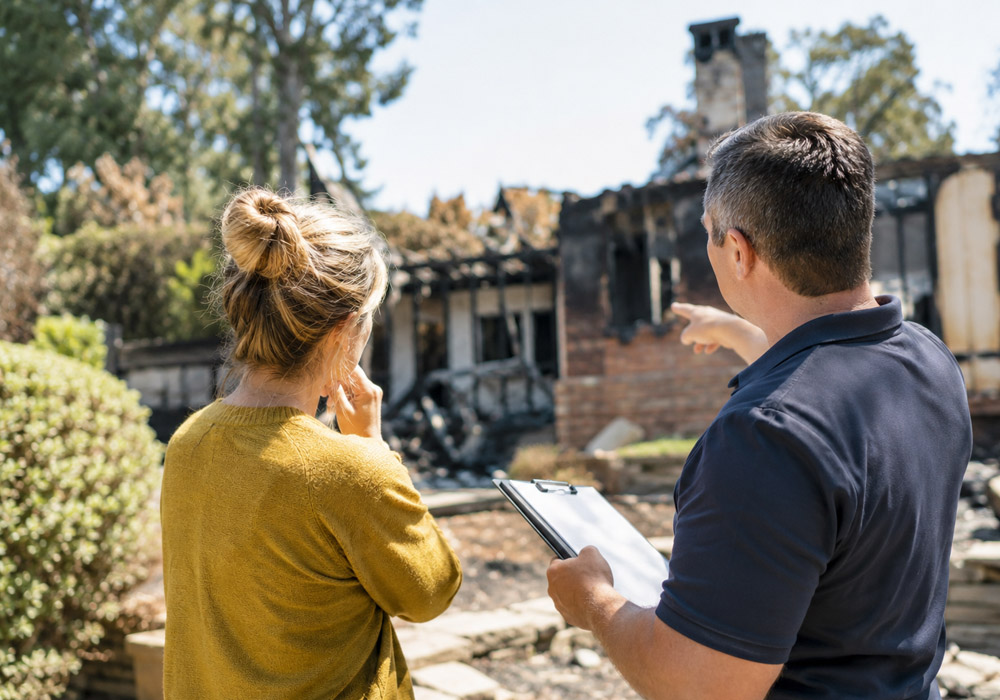
After a house fire, a standard homeowners insurance policy usually pays out in several parts: money to repair or rebuild the house, money to replace damaged belongings, and money to cover extra living costs while you can’t live at home. How much you receive depends on your coverage limits, your deductible and whether your policy pays actual cash value or replacement cost. Payments often arrive in stages, and if you have a mortgage, your lender will usually be involved in releasing funds for the dwelling.
Understanding how these pieces fit together helps you avoid surprises, negotiate confidently and decide whether rebuilding or selling makes more sense for your situation.
What Your Homeowners Policy Covers After a Fire
Most homeowners policies are divided into several types of coverage. Dwelling coverage pays to repair or rebuild the house itself, including walls, roofing, flooring and built-in systems such as plumbing and electrical wiring. Other structures coverage applies to detached garages, sheds and fences.
Personal property coverage pays for belongings damaged or destroyed in the fire, such as furniture, clothing, electronics and appliances. Many policies limit coverage for certain valuable items, like jewelry or collectibles, unless they were scheduled separately.
Loss of use coverage, sometimes called additional living expenses, helps pay for the extra costs of living elsewhere while your home is being repaired. That can include hotel stays or rental housing, higher food costs and additional commuting expenses. Coverage is usually limited by a dollar amount, a time period or both, so it’s important to know how long it will last.
Your policy also typically covers reasonable costs to prevent further damage, such as boarding up windows or tarping a damaged roof. Keep receipts for these expenses, as they’re often reimbursed as part of the claim.
Actual Cash Value vs Replacement Cost
One of the most important details in your policy is whether it pays actual cash value or replacement cost. Actual cash value pays what the damaged property was worth at the time of the fire, after depreciation. A ten-year-old roof or sofa will be valued for much less than a new one.
Replacement cost coverage pays what it costs to repair or replace damaged property with new items of similar kind and quality, without deducting depreciation. However, insurers often pay the actual cash value first and hold back the difference, known as recoverable depreciation, until repairs are completed or items are replaced and receipts are provided.
Coverage limits still apply. If rebuilding costs exceed your dwelling limit, you’ll need to cover the difference yourself unless your policy includes extended or guaranteed replacement cost coverage. Rebuilding may also require upgrades to meet current building codes, and many policies include only limited coverage for these costs unless you have specific ordinance or law coverage.
What Happens If You Don’t Want to Rebuild
Not every homeowner wants to rebuild after a fire. The process can take many months, repair costs may exceed insurance limits, and the emotional toll of restoring a damaged home can be significant. Some owners would rather move on and start fresh elsewhere.
In that situation, your payout may look different. Many replacement cost policies only release held-back depreciation if you actually rebuild or replace the damaged property, so choosing not to rebuild may mean receiving closer to the actual cash value for the dwelling. Some policies allow you to rebuild at another location, so it’s worth reviewing your terms carefully.
Selling the damaged property is one way homeowners bridge the gap. Some sell to cash buyers such as We Buy Fire Damaged Houses, which purchase homes in their current condition, and combine the sale proceeds with their insurance payout to pay off the mortgage and fund their next home. Talking with your insurer and lender before signing any sale agreement helps you understand exactly how the claim and sale will interact.
How the Claims Process Unfolds
Report the fire to your insurance company as soon as possible and ask about emergency funds for immediate living expenses. An adjuster will be assigned to inspect the damage, review your policy and estimate what’s covered. It’s wise to be present during inspections and to take your own photos and videos of all damage.
You’ll usually need to complete a proof of loss form, a sworn statement detailing what was damaged and the amount you’re claiming. Insurers often set deadlines for submitting this form, so check your policy and any letters from the insurer carefully. Build a detailed inventory of damaged belongings, including descriptions, approximate ages, original prices and any receipts, photos or bank statements that support your claim.
If you have a mortgage, dwelling payments are often issued jointly to you and your lender. Many lenders place the funds in a special account and release them in stages as repairs progress, sometimes after inspections. Contact your lender’s loss draft department early to understand their requirements. Personal property and living expense payments are generally paid directly to you.
Handling Disputes and Protecting Your Payout
If you disagree with the insurer’s estimate, start by asking for a detailed explanation of how it was calculated. Getting independent repair estimates from licensed contractors gives you evidence to support your position. Many disagreements are resolved by providing additional documentation or clarifying overlooked damage.
Most policies include an appraisal clause, which allows each side to hire an appraiser to review the loss, with an umpire deciding if they can’t agree. Some homeowners hire a public adjuster, who works on their behalf and typically charges a percentage of the settlement. For complex or high-value claims, or if you believe the insurer is acting in bad faith, consulting an attorney experienced in insurance claims may be helpful.
Keep copies of every document, email and letter, and write down the date, time and details of each phone call with your insurer. Organized records make it easier to resolve problems and protect your rights if disputes arise later.
After a fire, the most useful step you can take is to read your policy carefully, ideally with the help of your agent or an advisor, and write down your coverage limits, deductibles and deadlines. Knowing exactly what you’re entitled to allows you to make clear decisions about repairing, rebuilding or selling, rather than feeling rushed by the process.