The Rising Need for Home Climate and Backup Power Resilience
Power outages are becoming an unwelcome, yet increasingly common, disruption to our daily lives. As extreme weather events grow more frequent and intense, maintaining a comfortable and safe home environment during grid failures is a top priority. Our homes rely heavily on electricity, especially for essential climate control systems. When the grid goes down, ensuring continuous operation of our heating and cooling systems is paramount for comfort and health. This is where understanding your options for residential heating and cooling services during an outage becomes invaluable.
In this comprehensive guide, we will explore why backup power has become a climate resilience priority. We will walk you through the various types of backup power solutions available today, help you calculate your home’s essential power needs, and discuss how to climate-proof your backup plan for regional hazards. Join us as we empower you to ensure your home remains a haven, no matter the weather.
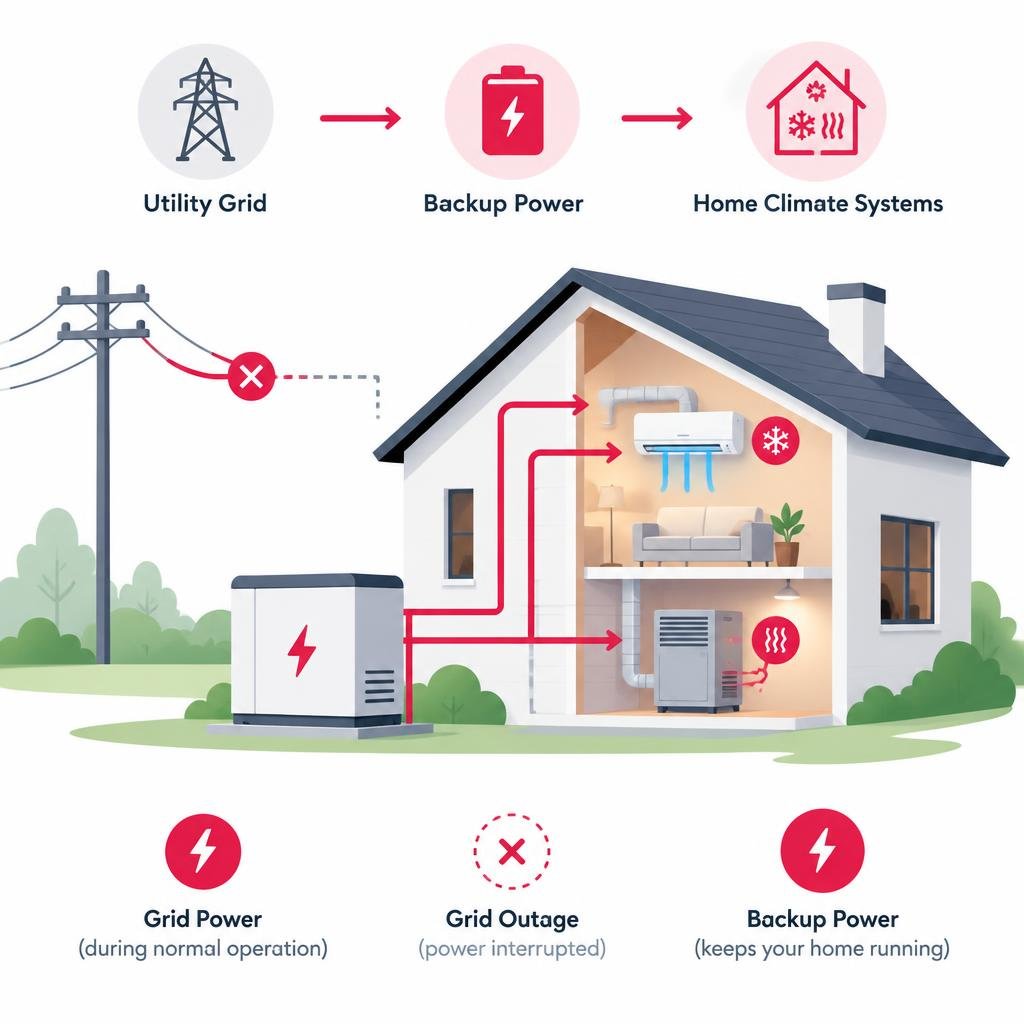
The landscape of energy reliability has shifted dramatically in recent years. What was once an infrequent inconvenience has evolved into a significant concern for homeowners across the nation. The confluence of extreme weather events, an aging grid infrastructure, and our increasing reliance on electricity for daily life has made power security a top priority. In September 2026, we find ourselves facing a future where proactive backup power planning is no longer a luxury but a fundamental aspect of home resilience.
The Rising Frequency of Weather-Related Grid Failures
Statistics paint a clear picture: power outages in the United States have surged. Between 2001 and 2022, the latter half of that period saw a 64% increase in power interruptions compared to the first ten years. A staggering 83% of these outages were directly attributable to weather-related events. From the devastating impacts of hurricanes and severe winter freezes to the increasing threat of wildfires and intense heat waves, our electrical grid is under unprecedented strain. These events can cause widespread transmission failures, leading to prolonged blackouts and significant delays in power restoration, leaving communities vulnerable.
Energy Demand Dynamics of Modern Residential Climate Control
Modern homes are more electrified than ever before, and a substantial portion of our daily energy consumption is dedicated to maintaining comfortable indoor temperatures. Heating and cooling systems, whether traditional furnaces, central air conditioners, or energy-efficient heat pumps, are significant power consumers. The average American household uses between 15 and 50 kWh per day, with the majority of this energy often going towards climate control.
These systems, particularly those with large compressors like air conditioners or well pumps, require substantial starting wattage (surge power) to kick on. Managing these high-demand appliances during an outage is crucial for maintaining comfort and protecting essential functions. Understanding the energy dynamics of your home’s climate control systems is the first step in designing an effective backup power strategy. For specialized advice on optimizing your home’s climate systems for efficiency and backup compatibility, consulting with experts in residential heating and cooling services can provide tailored solutions.
Evaluating Primary Backup Power Technologies for Residential Use
As the need for home backup power grows, so too does the range of available solutions. Today, homeowners have more choices than ever, each offering distinct advantages depending on their specific needs, budget, and regional climate concerns. Understanding the core technologies—their storage capacity, continuous wattage, surge ratings, and efficiency—is key to making an informed decision.
Portable Power Stations and Modular Energy Storage
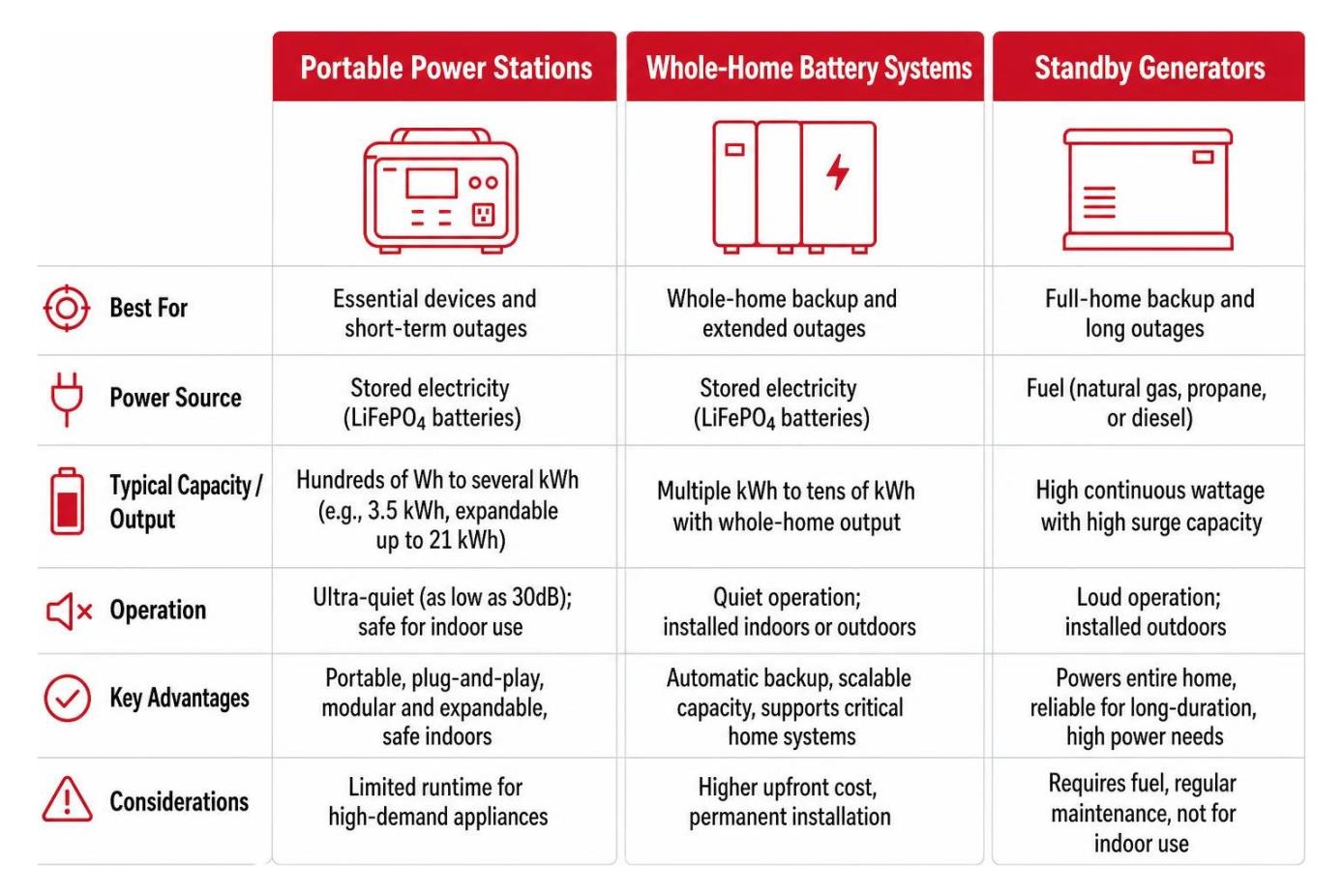
For those seeking flexibility, quiet operation, and indoor safety, portable power stations and modular battery systems have emerged as a compelling option. These units typically utilize Lithium Iron Phosphate (LiFePO4) chemistry, known for its superior cycle longevity (often 6,000 cycles or more, translating to a 16-year lifespan) and enhanced safety compared to older lithium-ion technologies.
Many of these systems are “plug-and-play,” requiring no complex installation. They offer capacities ranging from a few hundred watt-hours for basic device charging to several kilowatt-hours (e.g., 3.5 kWh, expandable up to 21 kWh) capable of running essential appliances like refrigerators, lights, and even small window air conditioning units. A significant advantage is their quiet operation, often as low as 30dB (comparable to a library), making them perfectly safe and comfortable for indoor use without the carbon monoxide risks associated with fuel-based generators. Their modular design allows homeowners to start with a smaller unit and expand capacity by adding additional battery packs as needs or budget evolve.
Fixed Whole-Home Battery Systems and Inverters
Stepping up in scale and integration, fixed whole-home battery systems offer a more comprehensive and automatic backup solution. These systems are typically hardwired into your home’s electrical panel via a hybrid inverter and an automatic transfer switch, ensuring a seamless transition during an outage—often within sub-20 milliseconds, making the power loss virtually unnoticeable for sensitive electronics.
These robust systems boast significant storage capacities, ranging from 6 kWh to a substantial 90 kWh, with continuous power outputs up to 30 kW. They are designed to power a wide array of appliances, including high-draw items like central air conditioning units, well pumps, and electric water heaters. Compliance with safety standards like UL 9540 is crucial for these installations. Features like dual MPPT (Maximum Power Point Tracking) for efficient solar charging and advanced battery management systems (BMS) are common, maximizing performance and longevity.
Traditional Standby Fuel Generators
For decades, traditional standby fuel generators have been the go-to solution for whole-home backup. These powerful units typically run on natural gas or liquid propane, connecting directly to your home’s fuel supply and electrical system. When an outage occurs, an automatic transfer switch detects the loss of utility power and starts the generator, often within seconds, providing continuous output for as long as fuel is available.
Standby generators excel at providing high wattage for extended periods, making them suitable for powering entire homes, including central HVAC systems and large appliances. They offer a reliable solution, particularly in regions prone to long-duration outages. However, they come with considerations such as noise levels, exhaust emissions (requiring outdoor placement and proper ventilation), and the need for regular maintenance and fuel supply. The upfront cost for a whole-house standby generator, including installation, typically ranges from $5,000 to $15,000. For homeowners evaluating these robust solutions, further details on home standby generators can provide valuable insights into their capabilities and requirements.
Vehicle-to-Home and Vehicle-to-Load Systems
An emerging and increasingly relevant backup power option leverages the large battery packs found in electric vehicles (EVs). Vehicle-to-Home (V2H) and Vehicle-to-Load (V2L) technologies allow compatible EVs to act as mobile power sources. V2L enables direct powering of appliances by plugging them into the vehicle, while V2H integrates the EV’s battery with the home’s electrical system, often through a specialized inverter and transfer switch.
This bidirectional charging capability means your EV can supply power to your home during an outage, or even feed excess energy back to the grid during peak demand. With EV battery capacities often exceeding 60 kWh, they represent a substantial, portable energy reserve. While still developing, this technology offers a promising pathway to enhanced energy independence and grid decoupling, turning your daily driver into a powerful emergency backup system.
System Sizing and Technical Integration Strategies
Designing an effective home backup power system requires careful planning, starting with a thorough assessment of your energy needs. It’s not just about having a backup source; it’s about having the right backup source, sized appropriately for your critical loads and integrated seamlessly into your home’s infrastructure.
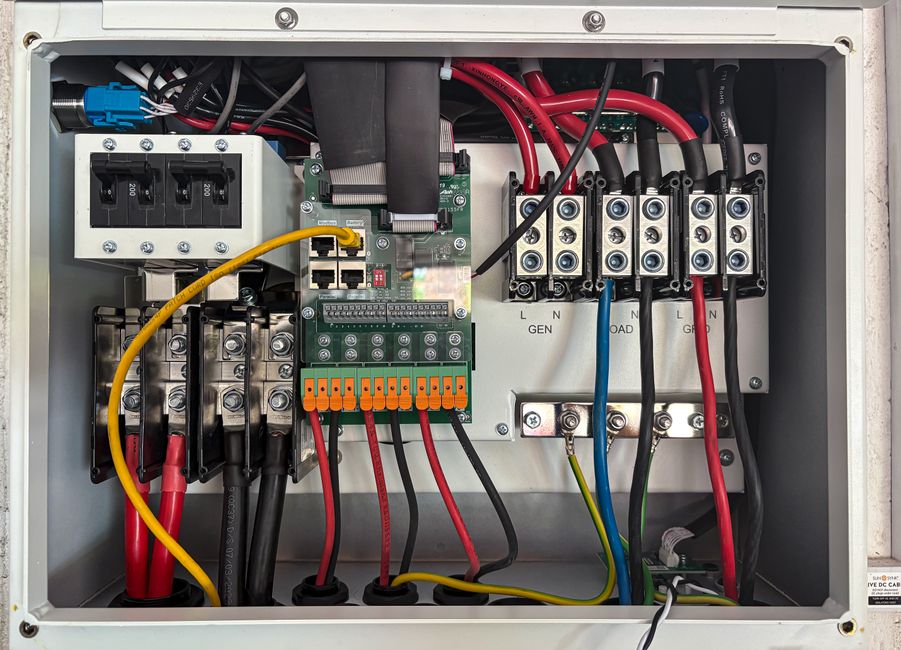
Assessing Home Climate and Backup Power Needs for Critical HVAC Loads
The first step in sizing any backup system is to identify your essential loads—those appliances and systems you cannot do without during an outage. For home climate and comfort, this often includes your refrigerator (which needs about 1.5 kWh per 24 hours to maintain temperature), furnace fan, or air conditioning unit. High-draw appliances like central air conditioners, well pumps, and electric water heaters present a unique challenge due to their significant starting wattage, or “surge.” A typical AC unit, for instance, might require a momentary surge of 3-5 times its running wattage to start its compressor.
To manage these demands, consider:
- Load calculation: List all critical appliances, their running wattage, and their starting wattage.
- Soft-starter modules: These devices can reduce the initial surge current of motor-driven appliances, making it easier for smaller backup systems to handle them.
- Tonnage sizing and zone control: If you plan to back up air conditioning, you might not need to power your entire central AC. A window unit for a critical room or prioritizing specific zones might be more feasible.
- Load priority: Decide which appliances are absolutely essential (e.g., medical devices, refrigeration, communication) versus those that provide comfort (e.g., full HVAC, entertainment). Most homes need roughly 3-5 kWh per day for essential loads, while whole-home comfort (including AC) could require 10-20 kWh or more daily.
Integrating Solar Storage with Home Climate and Backup Power Infrastructure
For extended outages and enhanced energy independence, integrating solar panels with battery backup systems is an increasingly popular and powerful strategy. During a grid outage, a standard grid-tied solar system typically shuts down for safety reasons (to prevent back-feeding the grid while utility workers are making repairs). However, when paired with a battery backup system that includes “islanding technology,” your solar panels can continue to generate electricity, recharging your batteries and powering your home.
This setup offers several benefits:
- Extended autonomy: Solar panels can replenish battery charge during daylight hours, significantly extending your backup duration, potentially for multi-day outages.
- Clean energy: You’re powering your home with renewable energy, reducing reliance on fossil fuels.
- Dual MPPT: Many advanced battery systems feature dual MPPT inputs, allowing for more efficient power harvesting from your photovoltaic arrays, even under varying sunlight conditions.
- Off-grid charging: This allows your home to function independently of the grid, providing true energy resilience.
Energy Management, Efficiency, and Time-of-Use Optimization
Beyond the backup hardware itself, intelligent energy management and efficiency play a crucial role in maximizing your system’s effectiveness and reducing overall costs.
- Energy efficiency: Upgrading your home’s insulation, switching to LED lighting, and utilizing smart thermostats can significantly reduce your overall energy consumption, decreasing the size (and cost) of the backup system you need and extending its runtime. When your home is more efficient, a smaller battery can go a lot further.
- Peak shaving and time-of-use (TOU) optimization: Many utility providers offer time-of-use plans, where electricity rates vary throughout the day. Battery backup systems can be programmed to charge during off-peak hours when electricity is cheapest and then discharge during peak-rate periods, effectively “peak shaving” your consumption from the grid. This strategy can lead to substantial energy bill savings, with some systems demonstrating potential annual savings of over $4,000.
- Dynamic load-shedding: Smart home energy management systems can automatically prioritize loads during an outage, temporarily shutting off non-essential appliances to conserve battery power for critical functions. This ensures that your most important systems remain powered for as long as possible.
Regional Hazard Preparedness and Safe System Operation
A truly resilient home backup power plan considers not just the technology, but also the specific climate hazards prevalent in your region and the critical safety protocols for operation.
Hazard-Specific Power Planning for Hurricanes, Wildfires, and Freezes
Different climate threats demand tailored backup strategies:
- Hurricanes: Focus on extended runtime for refrigeration, communication, and potentially sump pumps. Ensure battery systems are fully charged days before landfall.
- Wildfires: Be prepared for Public Safety Power Shutoffs (PSPS). Battery systems with solar integration are ideal for indefinite power during these preemptive grid shutdowns. Consider air filtration systems if smoke is a concern.
- Ice Storms/Winter Freezes: Prioritize heating (furnace fan, space heaters for essential rooms), pipe freeze prevention (well pump, electric heat tape), and communication. Adequate insulation and energy efficiency are paramount here.
- Heat Waves: Ensure your system can run critical cooling (AC units, fans) to prevent heat-related illness.
Emergency Preparedness and Pre-Storm System Checks:
- Charge all batteries to 100% several days before a forecasted event.
- Test your backup system’s automatic transfer (if applicable) to ensure it functions correctly.
- Clean solar panels for maximum efficiency if integrated.
- Verify battery management system (BMS) settings via companion apps.
- Stock non-electrical essentials like water, food, and first-aid supplies.
- Ensure fuel for generators is secured and sufficient.
Safe Installation and Indoor versus Outdoor Operation
Safety is paramount when dealing with any home power system.
- Gas Generators: Must never be operated indoors or in enclosed spaces (like garages) due to the risk of carbon monoxide poisoning. They require proper exhaust ventilation and should be placed a safe distance from windows and doors. Professional installation with a proper transfer switch is essential to prevent dangerous back-feeding into the grid.
- Battery Systems: Lithium-based battery systems (especially LiFePO4) are generally safe for indoor use as they produce no emissions. However, they still require adequate thermal management and should be installed in well-ventilated areas, away from direct sunlight or extreme temperatures, to ensure optimal performance and longevity.
- Code Compliance: All whole-home backup installations, whether generator or battery-based, must adhere to local electrical codes and be performed by licensed professionals. This ensures the system is safely integrated and legally compliant.
- Regular Servicing: Like any complex system, backup power solutions require maintenance. Generators need regular oil changes and checks, while battery systems benefit from periodic firmware updates and health checks via their monitoring apps.
Frequently Asked Questions About Residential Backup Power
How much battery capacity is needed to run basic climate essentials during an outage?
For basic essentials like keeping a refrigerator running (which needs about 1.5 kWh/day), powering a few lights, charging phones, and maintaining internet connectivity, a small household typically needs 2-4 kWh per day. For a more comfortable setup that includes a furnace fan or a window AC unit for a few hours, you’re looking at the higher end of that range, perhaps 3-5 kWh daily. Prioritizing critical circuits and managing consumption are key to maximizing runtime.
Can a home battery backup start and run a central air conditioning unit?
Yes, many modern home battery backup systems are capable of starting and running central air conditioning units, but it requires careful sizing. Central AC units are high-draw appliances with significant starting (surge) wattage. To power one, you’ll need:
- Sufficient continuous output: A system with at least 5-7 kW continuous output, often requiring a 240V split-phase inverter.
- High surge capacity: The battery system must be able to handle the momentary surge (often 2-3 times the running wattage) when the compressor kicks on.
- Adequate battery capacity: To run an AC for any meaningful duration, you’ll need a large battery bank, typically 10-20 kWh or more, depending on your AC’s tonnage and how long you want to run it. Soft-start devices can help reduce the initial surge, making it easier for the battery system to manage.
How do battery systems compare to gas generators for multi-day storm resilience?
For multi-day storm resilience, both battery systems and gas generators have their strengths:
- Fuel Security: Gas generators rely on a continuous supply of fuel (natural gas or propane), which can be disrupted during widespread emergencies. Battery systems, especially when paired with solar panels, can continuously recharge, offering indefinite power as long as the sun shines.
- Emissions & Noise: Battery systems are silent and produce zero emissions, making them safe for indoor use. Generators are noisy and produce exhaust, requiring outdoor placement and careful ventilation.
- Maintenance: Generators require more frequent maintenance (oil changes, spark plugs, fuel stabilizers). Battery systems are generally low-maintenance, though monitoring and occasional firmware updates are beneficial.
- Long-Term Operating Costs: Generators incur ongoing fuel costs. Battery systems, especially with solar, can have lower operating costs over time, potentially saving money through time-of-use optimization.
- Upfront Cost: Standby generators often have a lower upfront cost than large whole-home battery systems, but battery costs are decreasing rapidly.
The “best” choice depends on individual priorities, regional climate risks, and budget. For clean, quiet, and potentially indefinite power, especially in sunny regions, battery-solar combinations excel. For raw power output and proven reliability over very long durations where fuel access is secure, generators remain a strong contender.
Conclusion
As we navigate the increasing challenges posed by extreme weather and grid vulnerabilities, embracing climate adaptation and resilient home design is no longer optional. Investing in home climate and backup power solutions is a proactive step towards ensuring continuous comfort, safety, and energy independence for your household. From portable power stations offering flexible emergency power to sophisticated whole-home battery systems integrated with solar, the technology available today provides robust solutions for every need. By assessing your essential power requirements, understanding the various technologies, and planning for regional hazards, you can build a resilient home that stands strong against any storm. Don’t wait for the next outage; empower your home with a smart backup power plan today.