Key Takeaways
- Choose material from the part’s real service conditions, not from a familiar grade name.
- Balance strength, toughness, hardness, fatigue resistance, machinability, and cost.
- Specify the heat-treatment condition as carefully as the steel grade.
- Consider bar shape, surface finish, tolerance, and documentation before placing an order.
- Evaluate total manufacturing cost, including machining, inspection, scrap, and downtime.
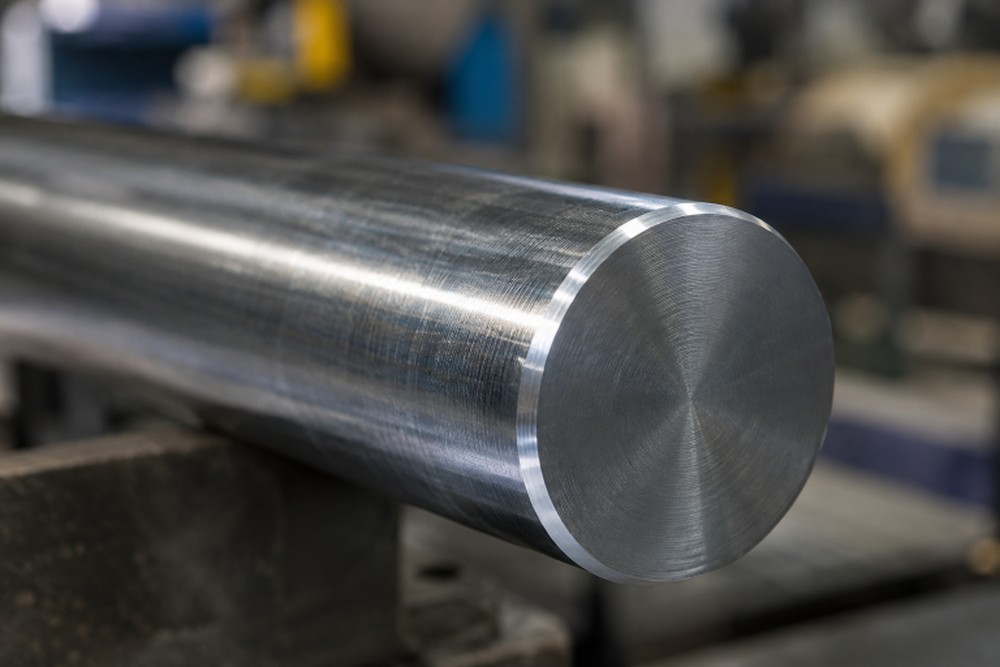
Alloy steel is often selected for parts that face high loads, repeated motion, abrasion, impact, or demanding manufacturing requirements. A useful starting point is to review available alloy steel forms, grades, and conditions. View source for an overview of common alloy bar options and finishes.
The best choice is rarely the steel with the highest possible strength. It is the material and processing route that reliably meet the part’s function, safety requirements, production method, inspection needs, and budget.
Start With Service Conditions
Define what the component must withstand: loads, speeds, temperatures, impacts, vibration, lubrication, moisture, chemicals, and service life. A shaft under steady torque differs from a pin exposed to repeated impacts or a gear in abrasive conditions.
Identify likely failure modes, such as bending, wear, galling, fatigue cracking, deformation, corrosion, or heat-related dimensional changes, as each demands different priorities. A rotating shaft, for example, may need fatigue resistance, straightness, and suitable surface condition more than extreme hardness.
Compare the Properties That Matter
Material selection becomes clearer when each property is connected to the job:
- Strength helps resist yielding or fracture under load.
- Toughness helps a part absorb energy without cracking during shock loading.
- Hardness can support resistance to indentation and wear.
- Hardenability describes how effectively a steel can develop hardness through a section during hardening.
- Fatigue resistance matters when loads repeat over many cycles.
- Machinability affects cycle time, tool wear, finish quality, and manufacturing cost.
Put strength first for highly loaded structural parts, toughness first where shock is likely, hardness first for many wear surfaces, and machinability first when large volumes or complex machining dominate cost. Many alloy steels still require coatings, lubrication, plating, paint, or environmental control when corrosion is a concern.
Choose the Grade After Defining the Job
Steel chemistry influences the response to heat treatment and the balance of properties available after processing. Carbon supports hardening, while alloying elements such as chromium, molybdenum, nickel, manganese, and silicon can influence hardenability, strength, toughness, and other characteristics.
Common chromium-molybdenum grades such as 4140 and 4150 are useful examples of heat-treatable alloy steels, but neither is automatically suitable for every shaft, fixture, gear, or pin. A higher-strength option can add machining difficulty, heat-treatment risk, or cost without improving the service result. The drawing, applicable standard, customer requirements, and qualified engineering review should control the final decision.
Account for Heat Treatment
Steel’s behavior varies with heat treatment: annealing softens it for better workability; normalizing refines its structure; quenching hardens it; tempering balances hardness and toughness; and stress relieving reduces residual stresses from machining, welding, or processing.
Part geometry and thickness affect heating and cooling. Discuss sharp transitions, thin sections, and tight dimensions with the heat treater early. Monitor industry developments for process or capacity changes that could affect planning.
Match Shape, Finish, and Tolerance
Starting material affects both cost and part quality. Hot-rolled bar is commonly chosen when substantial machining is planned. Cold-finished, turned, ground, or polished material may offer improved surface condition or tighter dimensional control, thereby reducing the machining allowance for suitable applications.
Select rounds, squares, flats, or hexagons based on the finished geometry and workholding method. Buying excessive stock allowance raises scrap, cutting time, and tool wear. Conversely, a more accurate starting size may justify a higher purchase price when it simplifies production or inspection.
Review Common Industrial Applications
- Shafts and axles: Consider fatigue, straightness, toughness, and bearing or seal surface requirements.
- Gears and sprockets: Evaluate tooth wear, impact, hardness depth, and dimensional stability.
- Pins and bushings: Review contact stress, lubrication, galling risk, and surface hardness.
- Fixtures and tooling: Balance rigidity, machinability, wear resistance, and repeatable dimensions.
- Heavy-equipment parts: Prioritize shock resistance, abrasion resistance, repairability, and suitability for field conditions.
A component used inside a clean, lubricated machine may require a different solution when used outdoors, where it is exposed to dirt, moisture, and abrasive particles. The operating environment can change the importance of protective finishes, sealing, lubrication, and wear resistance.
Check Documentation and Traceability
A Material Test Report, often called an MTR, helps confirm that delivered material matches the purchase order. Review the alloy designation, chemical composition, mechanical test results when specified, hardness, heat-treatment condition, dimensions, quantity, and heat number.
Keep the heat number associated with the material throughout receiving, cutting, machining, and inspection when traceability is required. Third-party inspection, ultrasonic testing, or additional testing should be stated in the purchase requirements. Monitoring steel industry reporting can also help procurement teams follow broader production and supply conditions.
Compare Total Cost and Supply Risk
Purchase price is only one part of the decision. Compare material cost with machining time, tool consumption, heat treatment, scrap, inspection, lead time, and the cost of a premature part failure. Uncommon sizes, special finishes, and unusual processing conditions can add lead-time risk.
When availability is limited, identify approved alternatives before an urgent shortage occurs. Any substitution should receive engineering approval, because similar grade names do not guarantee equivalent chemistry, properties, processing behavior, or performance.
Use a Practical Selection Checklist
- Define the component’s function and likely failure modes.
- List loads, speeds, temperatures, environment, and lubrication.
- Set required strength, toughness, hardness, and fatigue targets.
- Select a suitable grade family and heat-treatment route.
- Choose the shape, size, finish, and tolerance that fit the production process.
- Specify documentation, testing, and traceability requirements.
- Compare total cost, availability, and approved alternatives.
Frequently Asked Questions
Is stronger steel always better?
No. Higher strength can reduce ductility, increase machining difficulty, and create unnecessary cost. The target is an appropriate balance of properties for the actual service conditions.
Does alloy steel resist corrosion?
Not necessarily. Alloy steel is not automatically stainless or corrosion-proof. Many applications still need protective coatings, lubrication, paint, plating, or environmental controls.
Why does heat treatment matter so much?
Heat treatment can change hardness, strength, toughness, residual stress, and dimensional stability. Specify the required condition, hardness range, test location, and acceptance criteria before ordering.
Can one alloy steel grade replace another?
Only after a technical review. A substitute must satisfy the required properties, processing needs, applicable standards, and expected service conditions.
Conclusion
Choosing alloy steel is a design and manufacturing decision, not just a purchasing task. Start with the service environment, define the failure risks, select the necessary properties, and then confirm heat treatment, stock form, documentation, cost, and availability. This disciplined process helps industrial teams select steel that fits both the part and the production process.