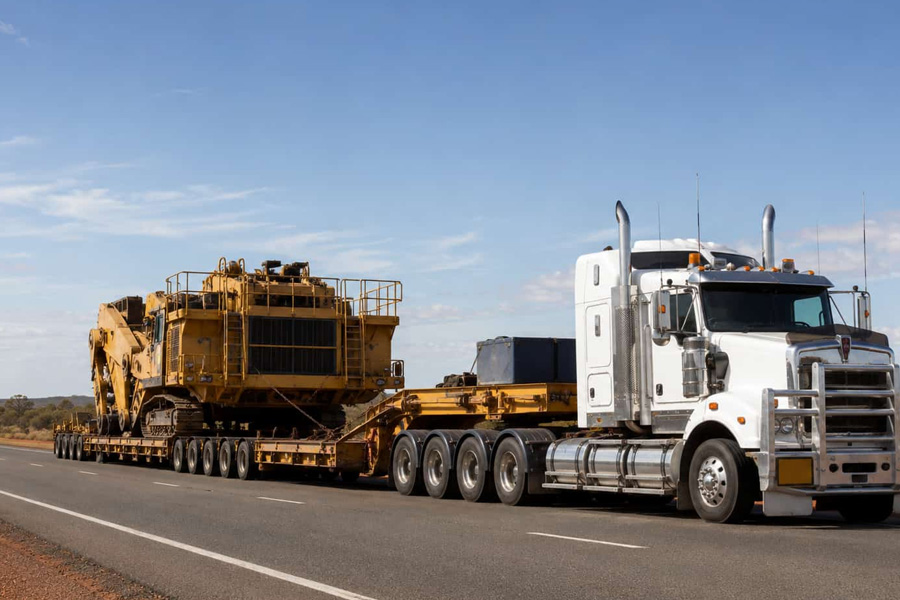
Australian roads are not like roads anywhere else. Some stretches run for hundreds of kilometres without a single town.
The heat climbs past 45 degrees in the outback. Dust gets into everything. Road trains haul loads that would be illegal almost anywhere else in the world.
A truck built for Europe or the US falls apart out here if it wasn’t engineered for this exact punishment, which is why www.westernstar.com.au focuses so heavily on local testing before any truck reaches a dealer.
This article covers what actually goes into building a truck tough enough for Australian conditions.
What Parts of a Truck Get Rebuilt for Australian Conditions?
Several key systems get fully reworked before a truck is ready for Australian roads, not just tweaked slightly.
- Cooling systems are upsized to handle extended idling in 45 degree heat without the engine running hot
- Air intake filters use a higher dust rating, built for red dirt roads instead of clean bitumen
- Suspension gets reinforced for corrugated dirt tracks that shake a standard chassis apart within months
- Fuel tank capacity increases so drivers can cover 1,000 plus kilometre gaps between fuel stops
- Cab insulation and air conditioning get upgraded to handle cabin temperatures that would otherwise climb past 50 degrees
How Hot Does It Actually Get Inside a Truck Cab?
Without proper engineering, a truck cab parked in outback sun can hit internal temperatures over 60 degrees Celsius, based on Australian government heat exposure research. That’s hot enough to warp plastic dashboard components and damage electronics within a year or two. Engineers counter this with reflective glass coatings, upgraded air conditioning compressors, and cab insulation that’s nearly double what’s used in a European spec truck.
Does Road Train Weight Change How a Truck Is Built?
Completely, yes. A standard semi trailer in most countries runs around 40 tonnes gross weight. Australian road trains regularly haul over 100 tonnes, and in some Northern Territory routes, legally up to 200 tonnes. That weight changes everything from brake sizing to axle spacing to frame rail thickness.
| Build Factor | Standard Truck Spec | Australian Road Train Spec |
| Gross vehicle weight | Around 40 tonnes | Up to 200 tonnes (NT routes) |
| Brake system | Standard air brakes | Reinforced multi axle braking |
| Frame rail thickness | Standard gauge steel | Heavy gauge, reinforced steel |
What Should a Buyer Check Before Choosing a Truck?
The buyer must always verify the cooling capacity rating as well as the dust filtration rating first – since these two specifications determine if a truck endures outback conditions or fails within one year itself. Engine horsepower gets most of the attention in sales talk, but it’s the parts nobody sees, the filters, the cooling fins, the suspension bushings, that decide whether a truck is still running strong five years from now. My honest take after looking at the numbers: a truck engineered specifically for Australian conditions costs more upfront, but it almost always wins on total lifetime cost for anyone running long haul or outback routes.