A bright, vibrant smile is often seen as a hallmark of youth, vitality, and personal health. Over time, however, even well-cared-for enamel naturally loses its original brightness. Tooth discoloration falls into two main biological categories: extrinsic staining and intrinsic staining. Identifying the true source of discoloration is an essential first step before choosing any whitening treatment.
Extrinsic discoloration occurs on the outer layer of the enamel. It develops through repeated exposure to heavily pigmented foods and beverages, including dark coffees, black teas, red wines, and rich tomato sauces. The tannins and chromogens in these foods gradually bond with the microscopic pores in the enamel surface, creating a dull, yellowed, or grayish tint. Extrinsic stains also collect quickly from tobacco use and everyday environmental factors.
Intrinsic discoloration, on the other hand, develops deep within the inner dentin layer of the tooth. This deeper staining can result from childhood exposure to certain medications like tetracycline, excessive systemic fluoride intake during tooth development, natural aging, or physical trauma to a tooth. Because intrinsic discoloration sits beneath the surface enamel, standard surface abrasives cannot lift it, requiring targeted peroxide-based solutions to break apart the deep stain molecules. Typical discoloration sources include chromogen-rich foods, chronic tobacco habits, natural enamel thinning that exposes underlying dentin, and systemic developmental factors.
Professional In-Office Whitening Procedures
Professional in-office whitening offers the fastest, most effective, and most carefully controlled way to lift deep enamel stains. Done directly in a clinical setting, these treatments safely use high-potency peroxide gels to deliver noticeable, immediate results in a single visit.
High-Concentration Whitening Agents
In-office treatments use professional-grade hydrogen peroxide or carbamide peroxide formulations, typically ranging from twenty-five to forty percent concentration. These powerful formulations break down rapidly into reactive oxygen molecules upon application. The oxygen penetrates deep into the porous enamel structure, breaking down the chemical double bonds of complex stain molecules and restoring the tooth’s natural brightness.
Because these potent gels could irritate soft oral tissues, dentists place a protective barrier over the gums before application. The clinician carefully paints a light-curing liquid dam along the gumline to shield the delicate pink tissues from the active bleaching agent. This step protects against chemical burns and localized sensitivity, ensuring the gel stays focused entirely on the teeth. Patients exploring high-tier cosmetic enhancements often find that teeth whitening in Portland delivers radiant, fast, and clinically supervised transformations.
Advanced Light Activation Methods
Many modern in-office whitening systems use specialized light-activation units to boost the stain-lifting process. Clinicians apply the concentrated gel to the teeth and position a high-intensity, cool-spectrum LED lamp directly in front of the smile.
The specific wavelength of the light excites the peroxide compounds, accelerating the release of active oxygen radicals without heating or harming the tooth pulp. Treatment usually involves three to four fifteen-minute cycles during one continuous appointment. Patients leave the chair with a smile that is noticeably brighter, often lightening by five to eight full shades in roughly an hour.
Evaluating At-Home Whitening Options
For patients who prefer whitening their teeth gradually at home, options range from custom clinical take-home trays to mass-market over-the-counter kits. While at-home methods can be effective, they vary widely in terms of safety, comfort, and final results.
Custom Take-Home Trays from the Dentist
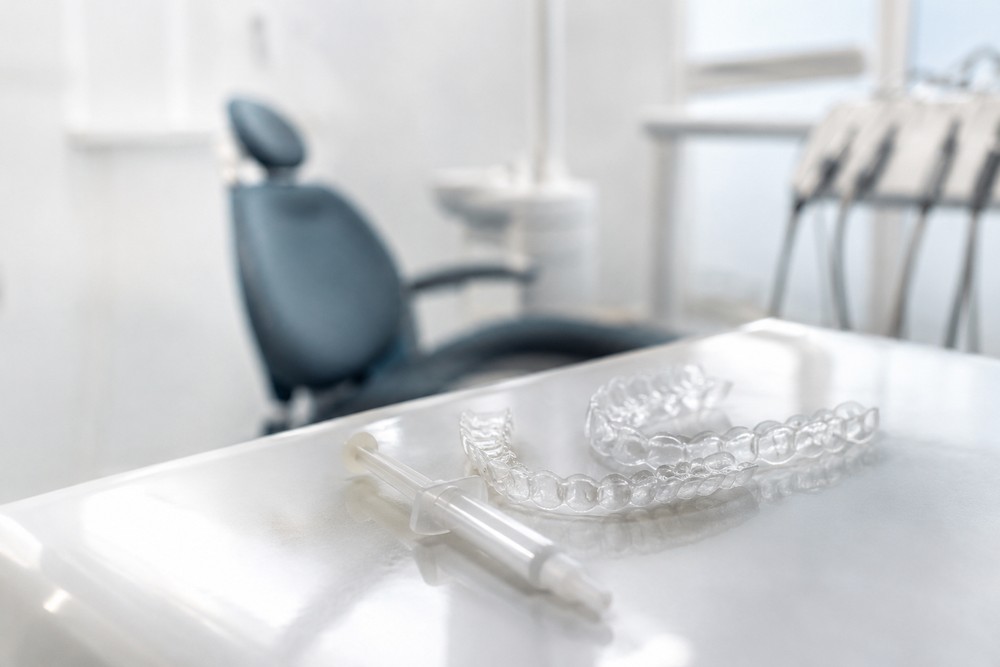
Custom take-home kits provided by a dental practice offer a balanced middle ground between in-office power and at-home convenience. The dentist takes precise digital impressions of the patient’s teeth to create thin, flexible, custom-fitted plastic trays. These trays fit snugly over the teeth, keeping the whitening gel in close contact with the enamel while preventing it from leaking onto the gums.
Patients receive professional-grade carbamide peroxide gel, which works more slowly and gently than in-office formulas. The trays are worn for thirty to ninety minutes each day over one to two weeks. Because the trays match the patient’s unique tooth contours, they deliver even, predictable whitening while minimizing the gum irritation often caused by loose, generic trays.
Over-the-Counter Strips and Pastes
Over-the-counter options, such as whitening strips, generic trays, and abrasive toothpastes, are widely accessible at local stores. Whitening strips feature a very thin layer of low-concentration peroxide stuck to a flexible plastic film. While they can lighten mild surface stains over several weeks of daily use, their generic rectangular design cannot match the natural curves and spacing of teeth.
This one-size-fits-all fit often leaves uneven, missed spots near the gumline and between teeth. Furthermore, without a protective barrier, the gel can slide onto the gums, causing soft tissue irritation. Whitening toothpastes rely primarily on physical abrasives like silica to scour away superficial surface stains. While helpful for basic upkeep, they cannot change the natural shade of the tooth and can gradually wear away enamel if scrubbed too aggressively.
Managing Sensitivity and Protecting Your Results
A common side effect of any whitening treatment is short-term tooth sensitivity. As peroxide molecules pass through the enamel into the dentin tubules, they can temporarily irritate the internal nerve fibers. Fortunately, this sensitivity is temporary and resolves within a few days. Using a desensitizing toothpaste containing potassium nitrate or stannous fluoride before and after treatment helps soothe the nerves and maintain daily comfort.
Keeping a newly whitened smile bright requires thoughtful everyday care. For the first forty-eight hours following treatment, the enamel pores remain slightly open, making teeth especially prone to new stains. Patients should follow a plain, non-staining diet during this window, avoiding dark berries, rich sauces, coffee, and colorful sodas. Practicing thorough daily hygiene and scheduling regular dental cleanings will preserve your bright, polished smile for months to come.