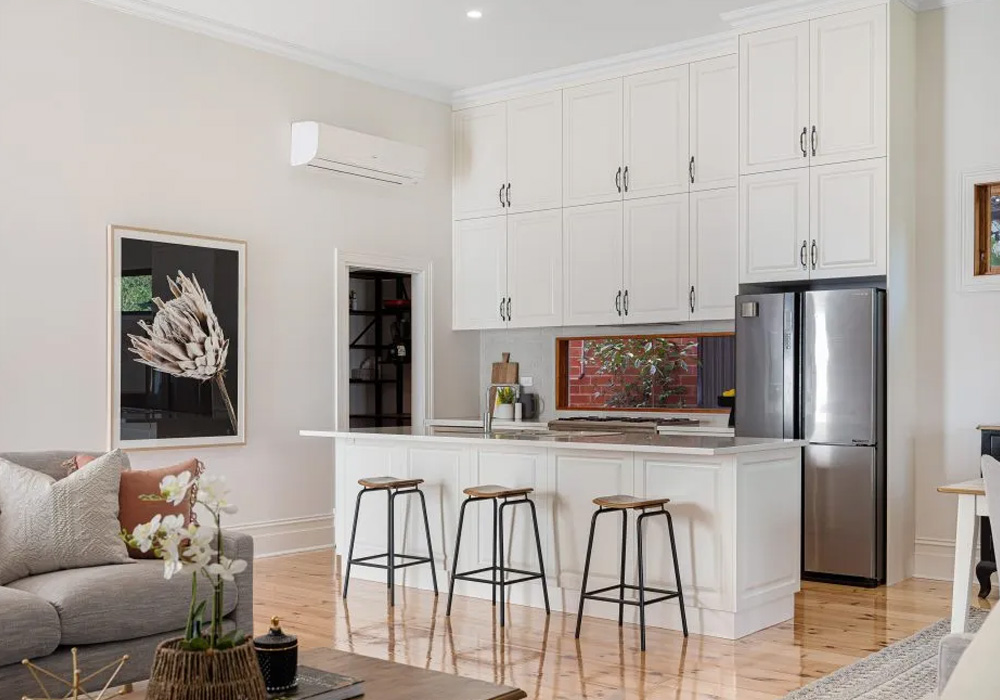
Melbourne’s established suburbs, such as Carlton, Fitzroy, and Ascot Vale, are famous for their stunning Victorian terraces and Edwardian villas. However, living in a century-old property often highlights a clash between historic charm and modern lifestyle needs. The solution lies in the highly requested modern heritage design trend. This approach deliberately retains original aesthetic features while updating the home to meet contemporary standards of comfort and flow.
The Financial and Aesthetic Value of Authenticity
It is tempting to completely gut a dated property to make way for a modern interior. Yet, real estate analyses from recent years show that buyers place a massive premium on authentic architectural character. Well-executed heritage renovations can command price premiums of 10 to 20 percent on the local property market. Preserving ornate fireplaces, decorative cornices, and original overlays is a financially protective measure. When you focus on restoring underlying structural elements rather than just covering them up, you are investing in practical upgrades that create a more profitable home. Historic districts consistently maintain niche buyer demand, making these beautifully preserved properties far less susceptible to broader market fluctuations.
Furthermore, preserving authentic details establishes a unique narrative for the property that new builds simply cannot replicate. Homebuyers are often drawn to the craftsmanship of the past, appreciating the intricate plasterwork and stained glass that define these spaces. By highlighting these elements instead of masking them, you elevate the home’s overall aesthetic and ensure it stands out in a crowded real estate market. This careful balance of preservation and modernisation ensures the home remains both highly functional and deeply atmospheric.
Focus on Restoring Rather Than Replacing
One of the most significant features of any period home is its original flooring. Many historic properties still house original hardwood boards such as Baltic Pine, Tasmanian Oak, or Jarrah. Unfortunately, homeowners sometimes rip these out in favour of modern engineered floating floors. While engineered boards might look sleek initially, they typically have a lifespan of only 15 to 20 years and offer limited refinishing capacity over time.
In contrast, original solid timber floors can last for generations when they are cared for properly. By enlisting professionals for timber floor restoration Melbourne, you can breathe new life into tired and weathered floorboards. Professional sanding and refinishing not only uncovers the rich natural grain of the wood, but it also provides a robust foundation that suits both classic and modern furniture. According to the Australasian Timber Flooring Association, high-quality timber flooring can add up to 3 percent to the overall value of a property and makes the home generally easier to sell.
Beyond the financial appeal, restored floorboards bring warmth and texture to the living space. Applying contemporary matte or satin finishes can modernise the look of classic wood, allowing it to seamlessly blend with modern cabinetry and minimalist decor without losing its inherent character.
The Environmental Case for Preserving Historic Materials
Beyond aesthetics and financial gain, preserving your period home’s original materials is a highly sustainable choice. The local design industry is seeing a major shift toward residential adaptive reuse, which focuses on repairing existing structural timber and joinery instead of relying on modern reproduction materials.
According to the Department of Climate Change, Energy, the Environment and Water, bypassing the wasteful process of demolition and reconstruction offers significant environmental benefits and makes adapting historic buildings an essential component of sustainable development. Choosing to restore rather than replace eliminates the manufacturing emissions, transportation footprint, and chemical processing associated with producing brand-new materials.
Furthermore, approximately 50 percent of the dry weight of timber is composed of stored carbon. Restoring existing floorboards and structural wood actively maintains this carbon sequestration, keeping valuable materials out of local landfill facilities. When you choose preservation, you are making a direct, positive impact on the environment while simultaneously honouring the architectural legacy of your neighbourhood.
Practical Steps for a Modern Heritage Renovation
Balancing the old with the new requires strategic planning. If you are preparing to modernise a classic home, keep the following principles in mind to ensure a successful transformation.
- Prioritise thermal comfort: Modern renovation guidelines heavily emphasise unseen upgrades. Add high-quality insulation and double glazing to improve energy efficiency without altering the traditional facade.
- Embrace contemporary minimalism for additions: Keep spatial extensions and modern kitchen additions sleek and understated so they do not compete with the ornate details of the original structure.
- Revive foundational elements: Repair original skirting boards, window frames, and architraves to maintain a cohesive historical narrative throughout the front rooms of the house.
- Limit high-VOC products: When restoring heritage features, opt for low-chemical finishes and adhesives to improve indoor air quality and align with modern environmental standards.
- Integrate hidden technology: Install modern smart home systems, heating, and lighting with discreet wiring, ensuring the home functions intelligently without visible clutter disrupting the heritage charm.
Updating a period home does not mean you have to erase its history. By taking a thoughtful approach that values restoration over replacement, you can enjoy all the conveniences of contemporary living. You will not only protect the distinct character that made you fall in love with the property in the first place, but you will also secure its legacy for generations to come.