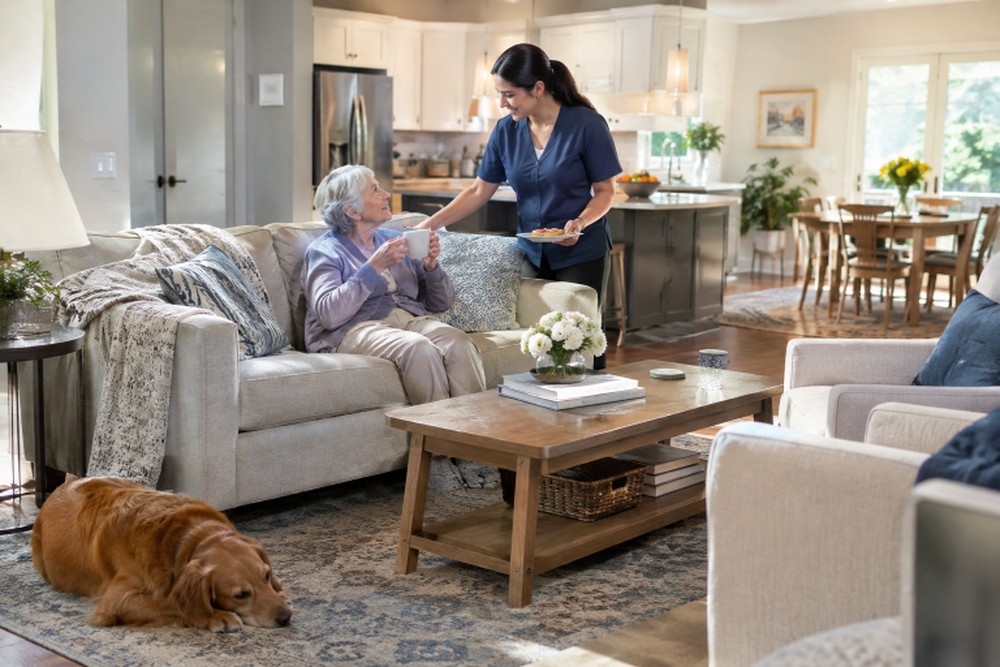
For a person living with dementia, a predictable day can offer reassurance when memory, attention, and decision-making become more difficult. Whether care happens at home or through person-centered memory care, familiar rhythms can help each day feel more manageable, respectful, and connected.
A routine is not a minute-by-minute rulebook. It is a flexible pattern built around the person’s history, preferences, strengths, and current needs. The goal is to reduce unnecessary stress while preserving opportunities for comfort, independence, and enjoyment. Even small moments of familiarity, such as having coffee in a favorite spot or greeting the day with a familiar phrase, can help create a calmer transition from one part of the day to the next.
Why Routine Matters in Dementia Care
Everyday tasks can become harder to begin, organize, or complete when a person has dementia. A regular sequence, such as washing up, getting dressed, eating breakfast, and taking a short walk, can reduce the number of decisions required at once. Structure may be especially useful during transitions, which can otherwise feel confusing or rushed.
Daily plans work best when they balance personal care, meals, activity, quiet time, and sleep. A person should still be invited to make simple choices whenever possible, such as selecting between two shirts or choosing music for the afternoon. Keeping expectations realistic is important: the same task may be easy one day and difficult the next, and a supportive routine makes room for that variation without treating it as failure.
How Familiar Patterns Can Reduce Daily Stress
Familiar rooms, objects, voices, sounds, and activities can serve as useful cues. Following the same general order for bathing, dressing, and eating may make those steps feel less unfamiliar. Consistent wake and sleep times, along with pleasant activities matched to the person’s interests and strongest times of day, are practical parts of a daily care plan.
It can also help to keep commonly used items in predictable places. For example, placing eyeglasses, a hearing device, slippers, or a favorite sweater in the same location may reduce the need to search for them. Visual cues work best when they are simple and uncluttered rather than adding too much information at once.
Sudden changes are sometimes unavoidable, but caregivers can make them easier by explaining one step at a time, allowing extra time, and keeping the environment calm. A familiar object, such as a favorite blanket, cup, radio station, or chair, may also offer a reassuring cue.
Building a Simple Morning Routine
Mornings often set the tone for the rest of the day. A simple sequence can reduce pressure while supporting personal care and a sense of accomplishment:
- Wake at a familiar time when possible.
- Open curtains or turn on soft lights to signal the start of the day.
- Use the bathroom and complete personal care with support as needed.
- Offer a limited choice of comfortable clothing.
- Serve breakfast and give prescribed medications as directed by the clinician or pharmacist.
- Briefly describe the next activity using short, clear statements.
If mornings tend to be slow or difficult, avoid trying to complete every task immediately. A few calm minutes to wake up, listen to music, or sit with a warm drink may make personal care easier afterward. Keep the tone reassuring, and offer help in a way that maintains privacy and dignity.
Adding Purposeful Activities Throughout the Day
Purposeful activities can help someone remain involved in daily life. The right activity is not determined by age. It should reflect what the person has enjoyed, valued, or done before. Folding towels, watering plants, sorting buttons, looking through photographs, setting the table, or listening to favorite music are all options that can be adapted.
Activities do not need to be elaborate to feel meaningful. Someone who enjoyed cooking might wash vegetables, stir ingredients, or talk about favorite family recipes rather than prepare a full meal. A former gardener may enjoy arranging flowers, holding seed packets, or spending a few minutes outside. Matching an activity to a familiar role can be more engaging than introducing an entirely new hobby.
Focus on participation rather than a perfect result. Offer materials, demonstrate the first step, and step in only when needed. If a task becomes frustrating, break it down into smaller parts, switch to a simpler role, or let the person observe and talk about the activity instead.
Using Meals, Music, and Movement as Anchors
Meals
Keeping meals at fairly consistent times can provide a natural shape to the day. Familiar foods, a quiet eating area, and an unrushed pace may make mealtimes more comfortable. Reduce competing noise when possible, and offer assistance in a way that protects dignity.
Simple cues can also support participation, such as placing utensils within easy reach or serving one food at a time when a full plate feels overwhelming. Pay attention to preferences, appetite, and comfort, and allow enough time to eat and drink without pressure.
Music
Music can create opportunities for recognition, conversation, singing, tapping, or simply resting together. Try songs connected to meaningful times in the person’s life, then watch their response. A favorite song may be soothing for one person but overstimulating for another.
Keep volume at a comfortable level and use music intentionally. Gentle music may support a quiet afternoon, while a familiar upbeat song may encourage movement or make a routine task feel more pleasant. If the person appears uncomfortable, distracted, or agitated, turn it off and try another calming approach.
Movement
Movement can be part of ordinary routines through a walk, gentle stretching, chair exercises, dancing, or light household tasks. Activities should fit the person’s mobility and health needs. Stop if there is pain, dizziness, fatigue, fear, or frustration, and ask a health professional about safe activity choices when needed.
Regular movement does not have to happen all at once. A few short periods of activity throughout the day may feel more achievable than a single longer session. Choose stable footwear, a clear route, and a pace that allows the person to feel secure.
Making Routines Flexible Rather Than Rigid
A strict schedule can create more stress when someone is tired, unwell, or simply having a difficult day. Keep the order of important tasks familiar, but allow their timing to shift. Build extra time into bathing, dressing, meals, and appointments. Offering two clear choices is usually easier than asking broad questions.
Have a quiet backup plan for disruptions. On a rainy day, a planned walk might turn into looking through photo albums, folding laundry together, or sitting by a window with music. Adapting activities to the person’s abilities and watching for frustration can help keep the experience positive, as guidance on good habits and routines also emphasizes.
Flexibility also means recognizing when rest is the best choice. Skipping a nonessential activity is often more helpful than pushing through when the person is overwhelmed, fatigued, or not feeling well. The routine should support the person, not become another source of pressure.
Supporting Safety During Daily Tasks
- Keep walkways clear and use adequate lighting in halls, bathrooms, and stairways.
- Store cleaning products, sharp tools, and other potentially unsafe items securely.
- Use labels, calendars, or visual reminders when they are helpful.
- Break a complex task into one step at a time.
- Encourage independence while staying close enough to offer support.
Safety measures should be introduced as respectfully as possible. Rather than taking over every task, consider what parts of an activity the person can still do comfortably. Providing support for the difficult step while allowing involvement in the remaining steps can help preserve confidence and routine.
Signs That a Routine Needs to Change
Review the routine when you notice more agitation during a certain activity, repeated refusal, visible fear, unusual tiredness, loss of interest, near-falls, or new difficulty with familiar steps. Changes in eating, drinking, sleep, or bathroom habits also deserve attention.
Try to notice patterns before making changes. An activity may be difficult because it occurs at a time of day when the person is tired, because the room is too noisy, or because it involves too many steps. Writing down what happened before and during a challenging moment can make it easier to identify a practical adjustment.
Sudden or marked changes should be discussed with a qualified health professional. They can sometimes be related to pain, illness, dehydration, medication effects, or other health concerns that need assessment.
How Families Can Work as a Care Team
Families can create consistency by sharing a simple record of meals, sleep, mood, preferred activities, difficult times of day, and calming approaches. Use similar language for instructions, agree on safety practices and emergency contacts, and review the plan regularly. Early conversations can prevent confusion and make it easier to respond when needs change.
When several people provide care, a brief written update can reduce mixed messages and help everyone follow the same general approach. It can include what went well, what was difficult, and any changes that may need follow-up. Caregivers should also communicate honestly about their own limits so that support can be arranged before exhaustion becomes a crisis.
Common Questions About Dementia-Friendly Routines
Should every day follow the same schedule?
Consistency is useful, but every day does not need to be identical. Leave room for rest, appointments, visitors, weather changes, and spontaneous enjoyable moments.
What if a person refuses to participate in an activity?
Pause, stay calm, offer another choice, and try again later if appropriate. Avoid arguing or turning the activity into a test.
How long should activities last?
There is no single right length. Short activities that end successfully are often more helpful than longer ones that lead to fatigue or frustration.
When should a family ask for more support?
Additional help may be needed when supervision becomes constant, safety risks increase, sleep disruption becomes severe, or the main caregiver is exhausted and cannot continue safely.
Conclusion
A dementia-friendly routine does not need to be complicated. A calm morning, a familiar meal, a favorite song, a meaningful task, or a short walk can give the day a steady shape. The most helpful routine respects the person’s life story, supports choice, and changes as needs change. With patience and observation, families can build daily rhythms that promote comfort, dignity, safety, and connection.