Why Colorado Hailstorms Pose a Threat to Outdoor HVAC Units
Colorado’s geography, particularly along the Front Range and near the eastern edge of the Rocky Mountains, creates a unique environment for severe weather. The National Weather Service tracks thousands of hailstorms annually, many featuring stones larger than 1 inch in diameter. When these ice projectiles strike an outdoor heat pump, the kinetic energy can be devastating.
Hail damage is especially concerning because an outdoor heat pump remains exposed year-round. Unlike windows, vehicles, or patio furniture that may be moved or shielded before a storm, the condenser cannot be brought indoors. A brief storm can therefore leave damage that is easy to overlook from a distance but significant enough to affect the system’s performance during the next cooling or heating cycle.
The primary threat is the physical deformation of the unit’s exterior. Heat pumps rely on a delicate balance of airflow to transfer heat efficiently. When hail strikes, it often impacts the condenser fins—the thin, aluminum strips surrounding the coils. Once these fins are flattened or crushed, the path for air to pass through the coil is blocked. This forces the system to work significantly harder to move the same amount of air, leading to increased strain on the compressor, higher electricity consumption, and a gradual decline in the system’s overall lifespan. Even minor damage, such as a 10% reduction in surface area, can trigger a noticeable drop in efficiency.
Vulnerable Heat Pump Components
While the entire unit is exposed, certain components are more susceptible to damage:
- Condenser Fins: These are the most common victims. Because they are made of soft aluminum, they bend easily upon impact, creating “dead zones” where air cannot flow.
- Fan Blades: If hail is large enough to penetrate the top grille, it can chip or bend the fan blades. Even a slight imbalance in a fan blade can cause vibration that damages the fan motor bearings over time.
- Copper Tubing: The internal refrigerant lines are generally shielded by the fins, but a direct, heavy hit can occasionally dent the tubing, potentially leading to refrigerant leaks.
- Electrical Disconnect and Casing: While less common, heavy hail can crack the plastic or metal housing of the electrical disconnect box or the unit’s outer protective shell, exposing internal wiring to moisture.
- Top Grille: This is the first line of defense. If the metal or plastic grille is damaged, it can no longer prevent debris from entering the fan assembly.
Assessing Hail-Damaged Heat Pumps: A Post-Storm Inspection Checklist
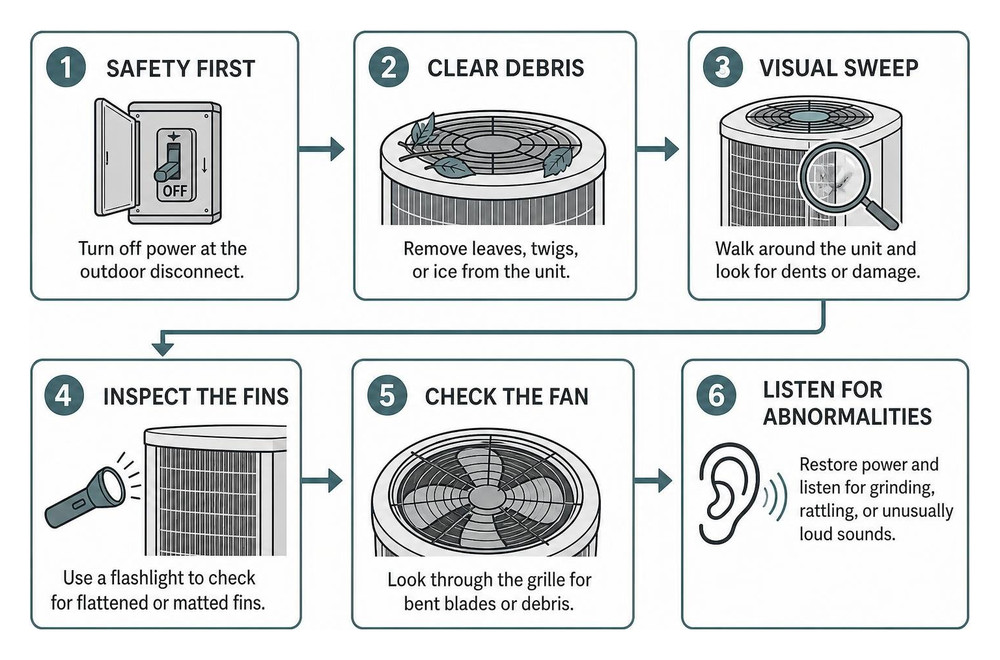
After the clouds clear and the hail stops, your first priority is safety. Never attempt to inspect the interior of an electrical unit while it is live. Follow these steps to conduct a preliminary assessment of hail-damaged heat pumps:
- Safety First: Turn off the power to the heat pump at the outdoor electrical disconnect box before performing a close-up inspection.
- Clear Debris: Remove any leaves, twigs, or ice chunks from the top and sides of the unit.
- Visual Sweep: Walk around the entire perimeter of the unit. Look for dents in the metal casing or the protective grille.
- Inspect the Fins: Use a flashlight to look into the coil fins. If you see areas that look “matted” or flattened, you have confirmed damage.
- Check the Fan: Gently look through the top grille to see if the fan blade appears bent or if there is debris resting on the motor housing.
- Listen for Abnormalities: Once you have cleared the area and ensured it is safe, turn the power back on and listen for grinding, rattling, or unusually loud humming sounds.
It is also helpful to note the date of the storm and keep photos even if the unit appears to be operating normally. Hail-related performance problems may not be immediately obvious, particularly when outdoor temperatures are mild, and the heat pump is not working at full capacity. Documentation can make it easier to compare conditions later if unusual noises, icing, or reduced comfort develop.
Visual Signs of Hail-Damaged Heat Pumps
Beyond the obvious dents, look for these subtle indicators:
- Oil Residue: If you see a greasy, dark substance on the fins or the ground near the unit, this may indicate a refrigerant leak caused by a punctured coil.
- Ice Formation: If the unit is running but you notice ice forming on the coils during the cooling season, it indicates restricted airflow, likely due to fin damage.
- Fan Wobble: If the unit vibrates excessively or makes a “thumping” noise, the fan blade may have been bent by an impact.
When to Call a NATE-Certified Technician
If you notice any of the signs above, it is time to call a professional. A NATE-certified technician can perform a deep diagnostic that goes beyond what a homeowner can see. They will use specialized tools like thermal imaging to identify “hot spots” in the coils, which indicate restricted refrigerant flow. They can also perform pressure tests to ensure no micro-leaks were created by the impact, and check the electrical components to ensure the compressor is not drawing excessive amps due to the added strain.
A professional inspection is also a prudent choice when hail has visibly struck other exterior property, such as roofing, siding, gutters, or vehicles. Those signs may indicate the heat pump was subjected to the same impact. Avoid straightening deeply bent fins with household tools, as additional pressure can damage the coil or worsen the obstruction.
Repair vs. Replacement: Evaluating Severe Coil and Fan Damage
Deciding between a repair and a full replacement depends on the severity and age of the system.
| Damage Level | Recommended Action |
|---|---|
| Minor surface dents (less than 5% of surface) | Monitor performance; usually no action needed |
| Moderate fin damage (10-20% of surface) | Fin combing (professional straightening) |
| Severe damage (25%+ or punctured coils) | Coil replacement or unit replacement |
| Compressor or fan motor damage | Evaluate cost-effectiveness vs. unit age |
If your system is relatively new, a coil replacement might be worth the investment. However, if the unit is nearing the end of its typical 12-15 year lifespan, the cost of labor and parts for a major repair often outweighs the benefit, making a full replacement the more logical choice.
Compatibility also matters when evaluating a replacement. Heat pumps operate as matched systems, so a contractor should consider the condition and specifications of both the indoor and outdoor units. A written diagnosis that identifies the affected components, expected repair work, and warranty considerations can help homeowners make a clearer comparison between repair and replacement options.
Long-Term Operational Risks of Hail-Damaged Heat Pumps
Ignoring damage might seem like a way to save money in the short term, but it often leads to “death by a thousand cuts.” When airflow is restricted, the compressor must work harder to compress the refrigerant. This leads to:
- Increased Energy Bills: Your system will run longer cycles to reach the desired temperature.
- Compressor Burnout: The heart of your heat pump is the compressor; constant overheating will eventually lead to a total system failure.
- Reduced Comfort: Your home may struggle to maintain a consistent temperature, especially during the extreme heat of a Colorado summer.
Insurance Claims and Prevention Strategies for Colorado Homeowners
Most standard homeowners insurance policies in Colorado cover damage caused by “acts of nature,” including hailstorms. However, coverage limits and deductibles vary.
Filing an Insurance Claim for Storm Damage
- Document Everything: Take clear, high-resolution photos of the damage from multiple angles. Include wide shots of the unit and close-ups of the dented fins.
- Professional Assessment: Contact a qualified HVAC technician to document the damage in writing. An expert opinion is invaluable when dealing with insurance adjusters.
- Review Your Policy: Check your policy for specific language regarding HVAC equipment. Some policies require a separate rider for high-value exterior equipment.
- Get an Estimate: Obtain a formal repair or replacement estimate from your service provider before filing the claim.
When communicating with an insurer, keep copies of photos, inspection reports, estimates, invoices, and any claim correspondence in one place. Do not discard damaged components or authorize major work until you understand the insurer’s documentation requirements, unless immediate work is necessary to prevent further damage or address a safety issue.
To prevent future issues, consider installing a hail guard. These are rigid, metal-mesh covers designed to fit over the condenser coils. While they slightly reduce airflow, they are engineered to withstand significant impacts from large hail, protecting the delicate aluminum fins underneath.
Frequently Asked Questions About Hail Damage to Heat Pumps
Can a heat pump still run with bent condenser fins?
Technically, yes, it may continue to run. However, it will do so inefficiently. If the damage is minor, a technician can use a “fin comb” to straighten the aluminum strips and restore airflow. If the damage is extensive, the restriction will cause the compressor to overheat, leading to premature failure.
Does homeowners insurance in Colorado cover hail damage to HVAC units?
Generally, yes. Most comprehensive homeowner policies cover sudden and accidental damage caused by weather events. However, it is essential to check if your policy has a “cosmetic damage exclusion.” Some newer policies limit coverage if the damage is purely aesthetic and does not affect the machine’s function.
How much does it cost to fix hail damage on a heat pump?
Costs vary wildly depending on the extent of the damage. Simple fin combing is a relatively minor service call, whereas replacing a condenser coil is a major repair that involves recovering refrigerant, brazing, and recharging the system. Because labor rates and part availability fluctuate, it is best to have a technician provide a site-specific estimate.
Conclusion
Colorado’s weather is beautiful, but it can be unforgiving to your home’s infrastructure. By staying vigilant after every storm and performing a quick visual check of your outdoor unit, you can catch damage early and prevent long-term system failure. If you find yourself dealing with the aftermath of a storm, don’t wait for the heat to rise before seeking help. Professional intervention is the best way to ensure your hail-damaged heat pumps continue to provide the comfort and efficiency your family relies on.