The Fundamentals of Home Climate Control and Insulation
To understand why your home feels the way it does, we must first look at the physics of heat flow. Heat naturally moves from warmer areas to cooler ones, seeking equilibrium. In the winter, your heating system works to pump heat into your living spaces, while the cold outdoors pulls that heat through your walls, ceiling, and floors. In the summer, the process reverses, with the hot exterior air pushing its way into your cool, air-conditioned rooms.
How Heat Transfer Affects Indoor Comfort
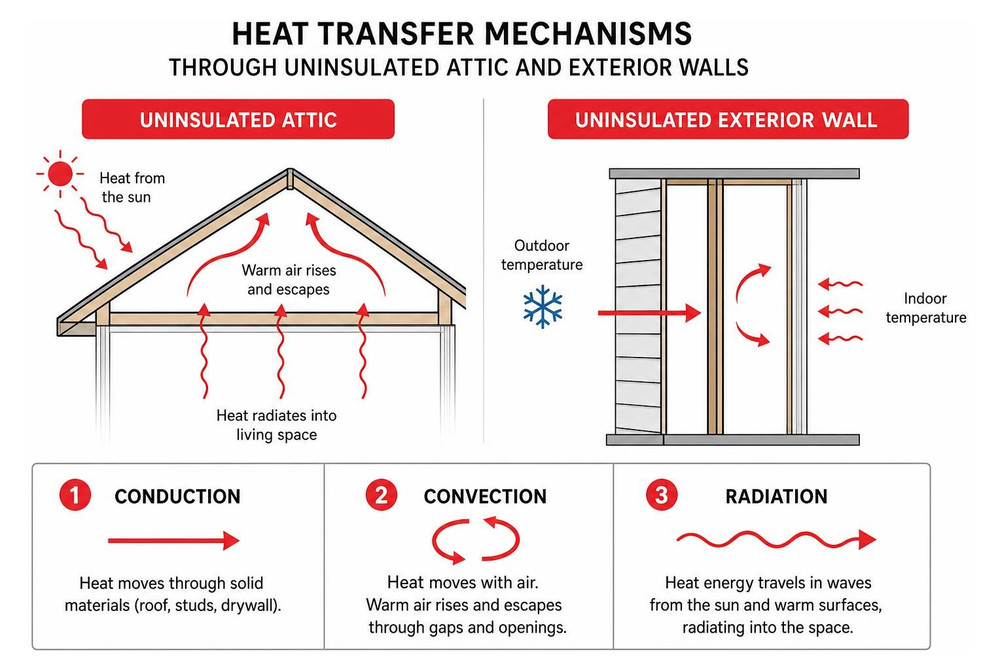
Heat moves through your home via three primary methods: conduction, convection, and radiation. Conduction occurs when heat travels through solid materials, such as wood studs or drywall. Convection is the movement of air, where warm air rises and escapes through gaps, effectively “leaking” your climate control outdoors. Radiation happens when heat energy travels through space, such as the sun heating your roof, which then radiates that heat into your attic.
When your home lacks a proper thermal barrier, these processes create temperature fluctuations. You might notice “cold spots” near exterior walls or drafts near windows. By implementing robust insulation and air sealing, you interrupt these heat transfer paths. This not only keeps your home at a steady, comfortable temperature but also ensures that your indoor surfaces remain closer to the ambient air temperature, which is a key requirement for true thermal comfort as defined by industry standards.
Achieving Energy Efficiency with Home Climate Control and Insulation
Energy efficiency is the direct result of reducing the workload on your HVAC system. When your building envelope is “tight”—meaning it is well-insulated and free of air leaks—your furnace or air conditioner does not need to cycle on and off as frequently. This reduction in runtime not only slashes your utility bills but also extends the operational life of your mechanical equipment. Furthermore, by burning less fuel or using less electricity, you directly reduce your household’s carbon footprint, contributing to a more sustainable future.
Insulation Types, R-Values, and Material Selection
Selecting the right insulation is a balancing act between thermal performance, budget, and environmental considerations. The effectiveness of any material is measured by its “R-value,” which represents its resistance to heat flow. A higher R-value indicates a more effective barrier. However, material selection also involves looking at how well a product handles moisture, its acoustic properties, and the ease of installation in specific cavities. When sourcing these materials, opting for quality building materials like insulation ensures that the product will perform as expected over the long term without settling or degrading.
Evaluating Common Insulation Materials
| Material | R-Value per Inch | Moisture Resistance | Best Application |
|---|---|---|---|
| Fiberglass Batts | 3.0 – 3.8 | Low | Open wall cavities, attics |
| Blown-in Cellulose | 3.5 – 3.8 | Moderate | Attic floors, wall retrofits |
| Open-Cell Foam | 3.5 – 3.8 | Moderate | Interior walls, roof decks |
| Closed-Cell Foam | 6.0 – 7.0 | High | Basements, rim joists, exterior |
| Mineral Wool | 3.7 – 4.2 | High | Sound dampening, fire resistance |
Determining Climate Zone R-Value Requirements
The Department of Energy provides specific R-value recommendations based on your local climate. Homes in colder northern regions require higher R-values in attics and walls to combat extreme temperature differences, whereas homes in milder climates may prioritize reflective barriers to manage solar heat gain. Generally, attic insulation should be upgraded to between R-38 and R-60, while exterior walls typically benefit from R-13 to R-21. In many cases, adding continuous exterior insulation is the most effective way to eliminate “thermal bridging,” where heat escapes through the structural studs of your home.
Priority Areas for Insulation and Air Sealing Retrofits
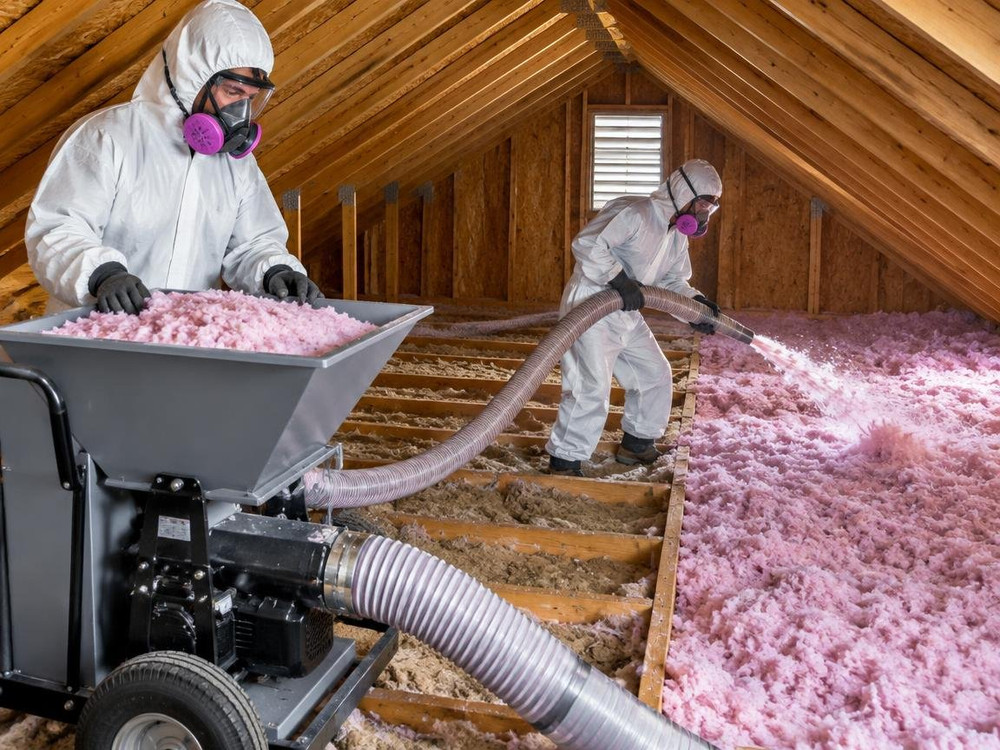
If you are beginning a retrofit project, you should always prioritize the “envelope” before addressing mechanical systems. The attic is almost always the highest priority because heat rises; an uninsulated attic acts like a chimney, drawing warm air out of your house during the winter. By sealing the gaps where wires, pipes, and light fixtures penetrate the ceiling, you stop the “stack effect” that pulls cold air in at the bottom of your home and pushes warm air out the top.
Prioritizing Attics, Basements, and Crawl Spaces
After the attic, focus on your foundation. Rim joists—the area where your home’s frame meets the foundation—are notorious for air leakage. Sealing these areas with spray foam and insulating them can drastically reduce cold floors in the winter. If you have a crawl space, installing a moisture-resistant vapor barrier and insulating the walls (rather than the floor above) can help keep the entire structure more temperate and prevent moisture-related issues.
Duct Sealing and Building Envelope Integration
Your HVAC system’s ductwork is often located in unconditioned spaces like attics or crawl spaces. If these ducts are leaky, you are essentially paying to heat or cool the outdoors.
- Inspection: Check for disconnected joints, crushed sections, or visible gaps.
- Sealing: Use professional-grade mastic sealant or foil-backed tape to secure all connections.
- Insulation: Wrap ducts in unconditioned areas with appropriate insulation to prevent thermal loss.
- Balance: Ensure that your return air vents are not blocked, as this creates pressure imbalances that force conditioned air out of the building.
Sequencing Upgrades: Insulate Before Replacing HVAC Equipment
One of the most common mistakes homeowners make is replacing an old, inefficient furnace with a high-efficiency model before upgrading their insulation. When you improve your home’s envelope, you reduce the “load” on your heating and cooling system. If you size a new system based on your home’s old, leaky state, you will end up with an oversized unit. An oversized HVAC system will “short cycle,” turning on and off too frequently, which leads to poor humidity control, increased wear and tear, and reduced comfort. By insulating first, you can often justify a smaller, more efficient system, which is a key step toward achieving high-quality HVAC installations that are perfectly matched to your home’s actual needs.
The Role of Manual J Load Calculations
Before any new equipment is installed, a professional contractor should perform a “Manual J” load calculation. This is a rigorous, science-based process that accounts for your home’s square footage, window orientation, insulation levels, and airtightness. It determines exactly how much heating and cooling your home requires. Relying on a “rule of thumb” based on square footage alone is a recipe for inefficiency. Always insist on this calculation to ensure your investment in new equipment pays off in energy savings rather than wasted capacity.
Moisture Management, Ventilation, and Indoor Air Quality
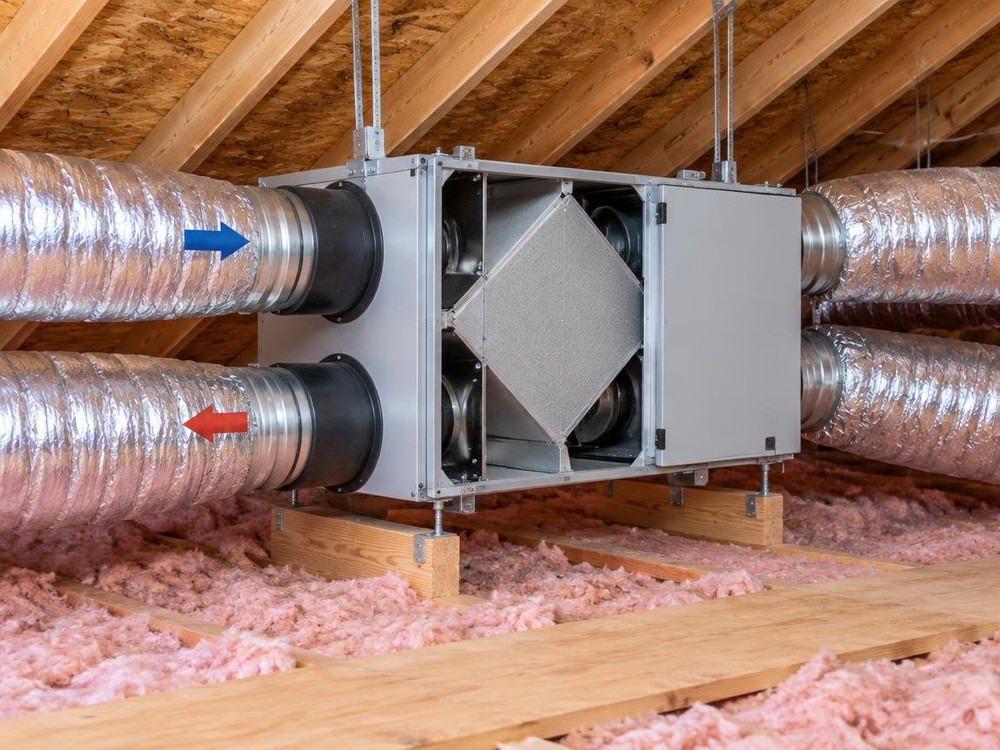
A tighter, better-insulated home is a healthier home, but it requires careful moisture management. When you seal a home, you must ensure that water vapor generated by cooking, showering, and breathing has a way to escape. If moisture is trapped, it can condense on cold surfaces, leading to mold growth and structural rot.
Managing Moisture and Indoor Air Quality through Home Climate Control and Insulation
To prevent mold, you must keep interior surface temperatures above the dew point and maintain indoor relative humidity levels between 30% and 60%. Proper insulation keeps interior walls warm, preventing the condensation that mold thrives on. Furthermore, by sealing the envelope, you prevent outdoor pollutants, pollen, and pests from entering your living space, significantly improving your indoor air quality.
Mechanical Ventilation and Humidity Control
Because your home is now sealed, you need a way to introduce fresh air. A balanced mechanical ventilation system, such as a Heat Recovery Ventilator (HRV) or Energy Recovery Ventilator (ERV), is the ideal solution. These systems bring in fresh outdoor air while simultaneously exhausting stale indoor air, using the heat from the outgoing air to pre-condition the incoming air. This provides the necessary ventilation to keep your air fresh and your humidity levels stable without throwing your energy efficiency efforts out the window.
Frequently Asked Questions About Home Climate Control and Insulation
Should I upgrade my insulation before replacing my HVAC system?
Yes. Improving your insulation first reduces the heating and cooling load of your home. This allows you to install a smaller, less expensive HVAC system that will run more efficiently and last longer.
How does proper insulation improve indoor air quality and prevent mold?
Proper insulation keeps interior wall and ceiling surfaces warmer, which prevents the condensation that mold requires to grow. Additionally, when combined with mechanical ventilation, insulation allows you to control exactly how much fresh air enters your home, filtering out allergens and pollutants.
What financial incentives and rebates are available for insulation upgrades?
Many local utility companies and federal programs offer significant rebates and tax credits for energy-efficiency upgrades. These incentives are designed to offset the upfront cost of insulation and air sealing, often significantly shortening the “payback period” of your investment. Always check with your local energy provider before beginning your project to see what programs are currently active.
Conclusion
Maximizing your home’s energy efficiency is not about buying the most expensive gadget; it is about creating a holistic, well-performing system. By treating your home as an integrated unit—where insulation, air sealing, and mechanical equipment work in harmony—you can achieve a level of comfort that most homeowners only dream of.
Start by auditing your attic and crawl spaces, prioritize the sealing of air leaks, and ensure that your insulation levels are appropriate for your specific climate. By following these steps, you are not just saving money; you are investing in the long-term durability and resilience of your home. Whether you are working with quality building materials like insulation to seal your envelope or consulting with professionals for high-quality HVAC installations, every step you take contributes to a more efficient, comfortable, and sustainable living environment for years to come.