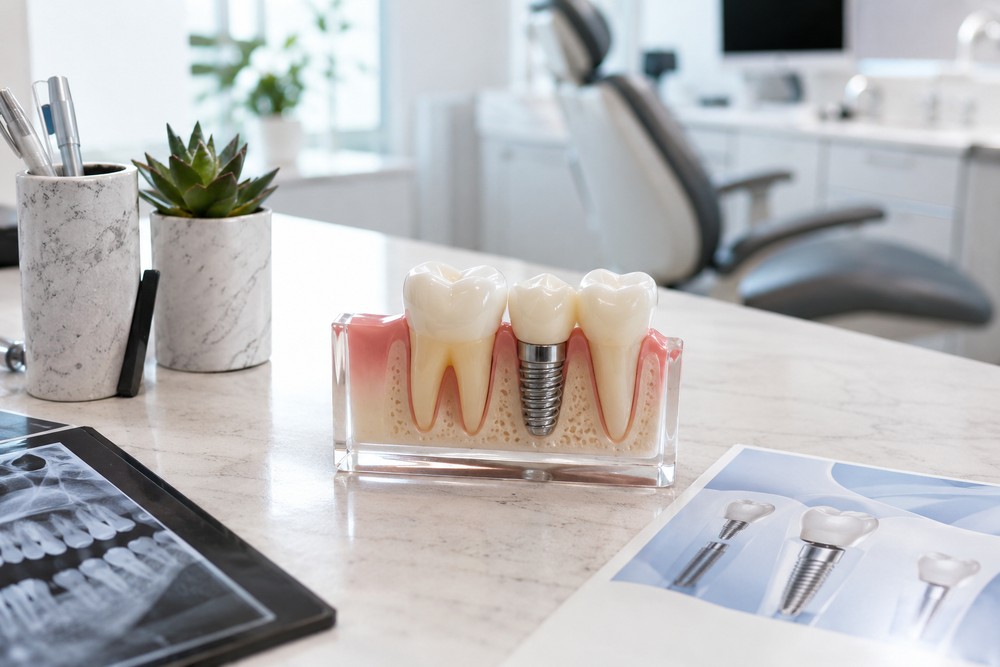
Missing teeth can affect comfort, chewing, speech, and confidence, but uncertainty about the cost often leads people to postpone treatment. Harmon Dental Center helps Louisville patients explore affordable dental implants and payment options through individualized treatment planning, clear cost discussions, insurance guidance, and financing information.
Why Do Dental Implant Costs Vary?
Dental implant treatment is a process, not a single procedure with a universal price. A patient replacing a single recently lost tooth may need a very different plan than someone replacing several teeth or transitioning from traditional dentures. The number of teeth being replaced, the type of final restoration, jawbone support, gum health, medical history, and the need for preparatory care can all affect the scope of treatment.
For example, some patients need an extraction, periodontal treatment, bone grafting, or other care before implant placement is appropriate. Others may be ready for implant treatment after diagnostic imaging and planning. Harmon Dental Center evaluates these details before providing a personalized recommendation and estimate, helping patients understand what their proposed treatment involves.
What Does the Cost of Dental Implants Include?
When comparing estimates, it is important to ask what is included. An implant post alone is not the same as a completed tooth replacement. The final result may also require an abutment and a crown, a bridge, a denture, or a full-arch restoration. A complete plan also considers the services needed to prepare for treatment and monitor healing.
The following comparison can help patients ask more specific questions about an implant estimate.
| Cost Category | What It May Include | Why It Matters |
|---|---|---|
| Evaluation | Exam, imaging, and treatment planning | Identifies candidacy and treatment needs |
| Preparatory Care | Extractions, gum care, or bone grafting | Helps create a healthier treatment foundation |
| Implant Placement | Surgical placement of the implant | Creates support for the replacement tooth |
| Restoration | Crown, bridge, denture, or full arch | Restores visible teeth and daily function |
| Follow-Up Care | Healing checks and adjustments | Supports ongoing comfort and maintenance |
What Payment and Financing Options Should Patients Consider?
Harmon Dental Center discusses treatment costs before care begins and can review accepted payment methods, insurance considerations, and financing resources. Qualified patients may be able to divide treatment expenses into monthly payments, making a larger treatment plan easier to manage over time.
Before selecting any financing arrangement, patients should review the annual percentage rate, repayment period, possible fees, promotional terms, and the total amount to be repaid. The annual percentage rate can help compare borrowing costs across financing options. A lower monthly payment may help with the budget, but it does not always mean the total cost will be lower.
Questions to Ask Before Moving Forward
- Does the estimate include the final crown, bridge, denture, or full-arch restoration?
- Could extractions, grafting, or gum treatment be needed?
- What insurance benefits may apply to related services?
- What are the financing terms and the total repayment amount?
- Can treatment be phased when clinically appropriate?
Can Dental Insurance Help Pay for Implants?
Dental insurance coverage differs by plan. Some policies may provide benefits for related services, such as an examination, extraction, or crown, while implant coverage may be limited or excluded. Annual maximums, waiting periods, network requirements, preauthorization rules, and alternate-benefit provisions can also affect what a plan pays.
Patients should contact their insurer or bring their benefit information to Harmon Dental Center for review. It is useful to ask specifically about the implant, abutment, final restoration, extractions, bone grafting, and diagnostic imaging rather than assuming all parts of treatment are handled the same way.
Which Dental Implant Solution May Fit Your Needs?
The most appropriate solution depends on the number and location of missing teeth, oral health, bone support, appearance goals, and budget. A single-tooth implant can support one crown. Several missing teeth may be replaced with individual implants or an implant-supported bridge. Patients who wear dentures may be candidates for implant-supported dentures, while full-arch treatment may be considered for extensive tooth loss.
A thorough diagnosis should come before a treatment recommendation. The American Dental Association notes that patients should receive a comprehensive examination and discuss the range of options that fit their diagnosis, oral health, needs, and preferences when considering treatment options for missing teeth.
Why Consider the Long-Term Value of Dental Implants?
Dental implants are secured in the jaw and can support fixed crowns, bridges, dentures, or full-arch restorations. Many patients value the stability this approach can provide for eating, speaking, and smiling. Implant-supported teeth may also reduce reliance on removable appliances and denture adhesives.
Still, implants require an upfront investment and regular maintenance. Long-term value depends on careful planning, the final restoration, daily oral hygiene, routine dental visits, and the patient’s individual health factors. The best choice is not necessarily the lowest initial price. It is the option that appropriately addresses the patient’s clinical needs and goals.
What Happens During a Harmon Dental Center Consultation?
A consultation gives patients a clearer picture of candidacy, treatment timing, and expected cost. The team can review dental and medical history, examine the teeth and gums, evaluate jawbone support with diagnostic technology, and discuss options for replacing one tooth, multiple teeth, or an entire arch.
Patients can also ask about preparatory procedures, restoration choices, insurance benefits, and financing. Before treatment begins, Harmon Dental Center can provide a personalized plan so patients understand the recommended stages of care and the financial considerations involved.
Frequently Asked Questions
How much do dental implants cost at Harmon Dental Center?
There is no single price for every patient. Cost depends on the number of implants, the type of restoration, oral health, jawbone support, and any additional procedures needed before or during treatment.
Does Harmon Dental Center offer payment plans for dental implants?
The practice can discuss financing and payment options that may allow qualified patients to make monthly payments. Terms and availability depend on the selected option and applicant qualifications.
Can Harmon Dental Center replace several missing teeth?
Yes. Possible solutions include individual implants, implant-supported bridges, implant-supported dentures, and full-arch restorations. A consultation helps determine which approach fits the patient’s needs.
How can patients get started?
Scheduling a consultation is the best first step. Harmon Dental Center can evaluate oral health, explain treatment options, provide an individualized estimate, and discuss payment considerations before treatment begins.