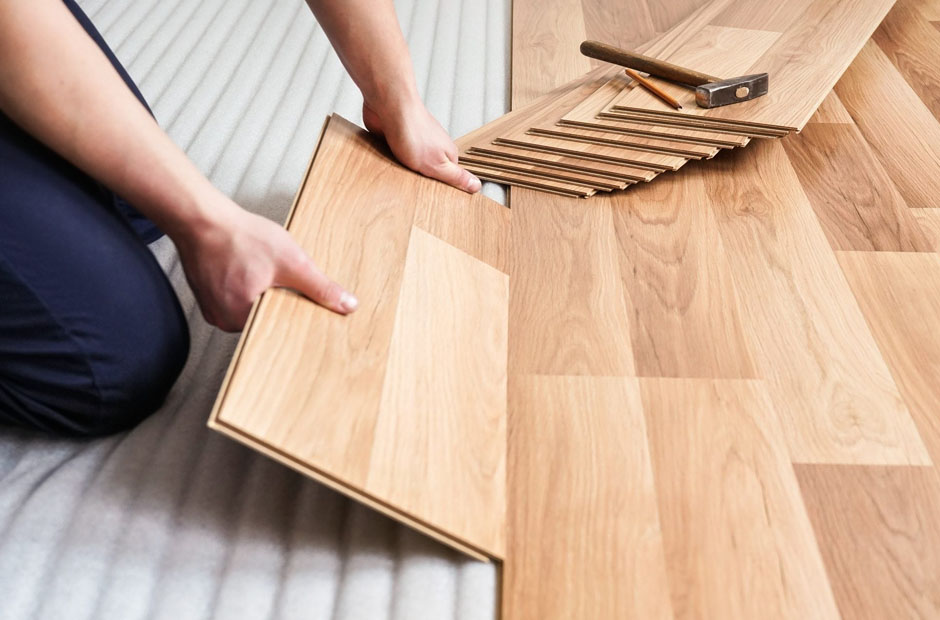
The choice of your flooring solution is dependent on your personal preferences and the design you’re trying to achieve. Laminate flooring is a manufactured product made by fusing multiple layers under heat and pressure, including a decorative layer that can simulate wood or stone. Here is the difference between vinyl plank flooring and laminate:
Compare Durability
Vinyl plank flooring and laminate flooring are both durable options that can work well in many areas of the home, but their performance differs based on their construction and how they handle moisture. Vinyl plank flooring is generally more water-resistant due to its synthetic composition, and many options are fully waterproof. Its layered construction also helps improve resistance to scratches and dents.
Laminate flooring has a fiberboard core that is more vulnerable to moisture exposure. When exposed to high humidity or standing water, it may swell, warp, or become damaged over time. Because of this, vinyl is often preferred for moisture-prone spaces such as bathrooms, kitchens, and basements, where water resistance is especially necessary.
In everyday use, vinyl flooring also tends to handle impacts and surface wear well, including from foot traffic and furniture, while still offering a degree of scratch resistance. Both vinyl and laminate show signs of wear if heavy furniture is dragged across them, but protective pads help reduce this risk. Vinyl flooring also provides additional comfort benefits, including some sound-dampening qualities depending on the product and underlayment. Vinyl planks are widely available in designs that realistically replicate natural materials such as hardwood or stone, offering flexibility in style without sacrificing durability.
Examine Appearance
Vinyl flooring comes in a wide range of styles and designs, making it easy to coordinate with many different interior design schemes. Many products are designed with textured or embossed surfaces that help create a more realistic look and add visual depth, whether you’re aiming for a rustic, natural appearance or a more modern, streamlined finish. There is also a wide variety of colors, tones, and patterns available in vinyl flooring; this makes it simple to match or contrast your flooring with existing walls, furniture, and décor.
The flexibility also allows you to choose flooring that either blends seamlessly into your design or serves as a visual focal point in the space. Vinyl flooring is produced in different formats, including planks, tiles, and sheet vinyl, which provides flexibility in both design layout and installation methods. Finish options also vary, with some products offering a higher-gloss appearance for a more contemporary look. Others use matte or low-sheen finishes to create a more natural or understated style.
Evaluate Maintenance
Vinyl flooring is generally easy to maintain once installed and is designed to support everyday, low-effort care. Unlike traditional hardwood floors, which require periodic refinishing or polishing, vinyl typically only needs routine cleaning to stay in good condition. Regular sweeping or vacuuming helps remove dust, dirt, and debris that builds up on the surface. For more thorough cleaning, a damp mop with a mild cleaning solution will handle everyday spills or light stains. Laminate flooring can also be maintained with regular cleaning, but it requires more caution around moisture. Excess water or wet mopping leads to damage if it penetrates seams or reaches the core layer. Cleaning methods for laminate are generally more controlled than for vinyl.
Assess Installation
Vinyl plank flooring installation follows a straightforward process when handled by a professional. Installers use a click-lock system that lets planks fit together securely. This method supports immediate use of the floor after installation. Laminate flooring installation includes an underlayment beneath the planks to add cushioning and support. Laminate requires a flat, level subfloor to keep the locking system stable and to provide proper alignment during installation. To prepare for professional installation:
- Clear the Room: Remove all furniture, appliances, and other items from the installation area to provide full access to the subfloor.
- Acclimate the Flooring: Place the vinyl planks in the installation space ahead of time so they adjust to the room’s temperature and humidity conditions.
- Measure and Cut Planks: Measure the length and width of the room and calculate the number of planks needed before installation begins.
Use Vinyl Plank Flooring
Hiring a professional installer provides a practical way to install vinyl plank flooring. A professional will assess the space, offer guidance on design and color selection, and work with a range of product options. Contact a professional installer today to explore options for updating your living space with vinyl plank flooring.