A home cleanout can make a Hollywood, Florida property feel safer, larger, and easier to maintain, whether you are preparing for a move, clearing a rental, or reclaiming an overfilled garage. For larger loads, scheduling junk removal Hollywood, FL homeowners can rely on may be more practical than trying to move furniture, bags, and bulky items in several vehicle trips. South Florida cleanouts also require a little extra planning. Heat, humidity, sudden rain, and storm-season clutter can quickly damage boxes of donations or turn curbside piles into a mess. A simple plan helps you move useful belongings toward reuse while keeping true waste and restricted materials out of the wrong containers.
Why Home Cleanouts Feel Harder Than Expected
Most cleanouts involve more than unwanted belongings. A garage may contain holiday decorations, old tools, paint cans, boxes of papers, broken patio furniture, and items that still have value. The hardest part is often making repeated decisions rather than lifting the items. Reduce that pressure by dividing the project into small, visible tasks, such as clearing one closet shelf or opening enough garage floor space for a car.
Step 1: Set a Clear Cleanout Goal
Your goal determines the timeline, labor, and sorting decisions. Someone preparing a home for sale may need a fast, whole-property reset. A family making room for a nursery may only need to clear one bedroom. Write one outcome that can be measured, such as “empty the guest-room closet,” “clear the patio,” or “prepare the apartment for a new tenant.” A narrow goal prevents a weekend project from spreading into every room.
Step 2: Gather Supplies Before Sorting
Bring sturdy boxes, heavy-duty bags, labels, markers, tape, work gloves, and basic cleaning supplies into the area before you begin. Make large labels for each destination so every item has an immediate place to go. Keep a small container for loose hardware, keys, manuals, chargers, and cords. Use a phone to photograph potentially valuable items before selling or donating them, and save donation documentation when it is relevant to your records.
Step 3: Use a Simple Five-Category System
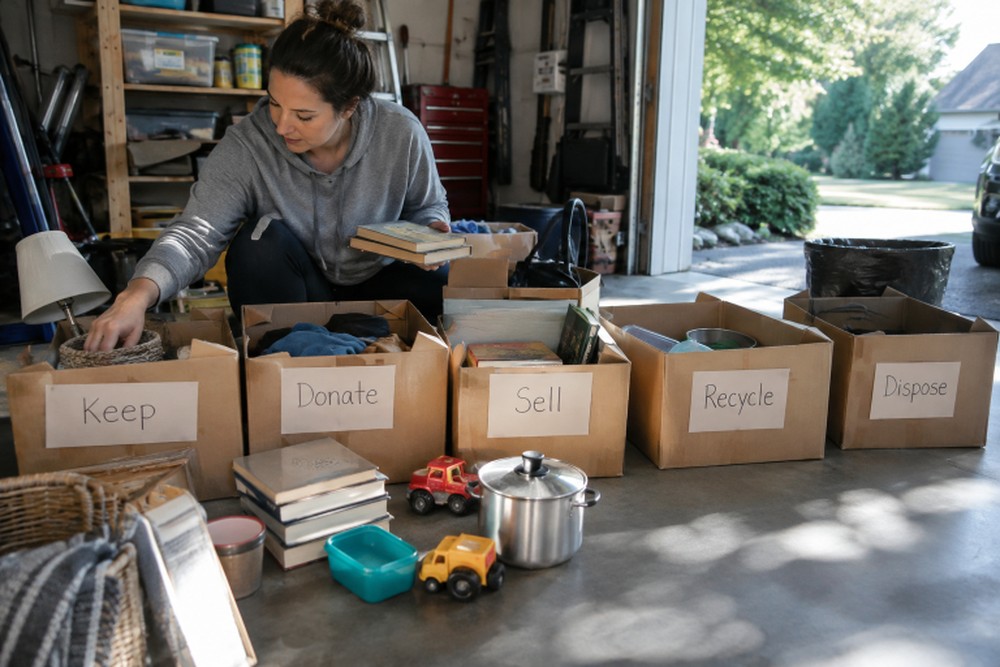
A fixed sorting system prevents the familiar “I will deal with this later” pile from taking over the room. Choose only these five categories:
- Keep: Items you use, need, or intentionally want to retain.
- Donate: Clean, complete, safe items another household can use.
- Sell: Items valuable enough to justify photographing, listing, and coordinating pickup.
- Recycle: Materials accepted through the appropriate local program.
- Dispose: Broken, contaminated, unsafe, or unusable items.
Step 4: Work Room by Room
Finish one space before opening another. A sensible order is entry areas and living rooms; bedrooms and closets; kitchen storage; garage or attic space; then outdoor sheds and patios. Remove full donation, recycling, and disposal containers from the room promptly so you do not reconsider the same item later. If something has not been used for years but feels difficult to let go of, put it in a labeled review box and set a firm decision date.
Step 5: Separate Reusable Items From Waste
Protect reusable goods from rain, dirt, and pests while you sort. Usable furniture, working appliances, tools, books, household goods, clean linens, and wearable clothing may deserve a second life through donation, resale, repair, or by giving them to a neighbor who needs them. Do not treat every old item as donation-ready, however. Stained mattresses, damaged furniture, incomplete electronics, and unsafe goods may not be accepted. Reuse works best when items are clean, dry, and clearly separated from trash.
Step 6: Handle Recycling With Care
Recycling rules are local, so avoid guessing based on a recycling symbol alone. Hollywood’s accepted recyclable materials include common paper, glass food and beverage containers, plastic bottles and jugs, metal cans, cartons, and flattened brown corrugated cardboard. Containers should be emptied and rinsed when required. Keep cardboard dry, remove lids when local instructions call for it, and do not place hazardous materials, loose batteries, or unknown items into a standard recycling cart.
Step 7: Create a Safe Disposal List
Set aside anything that needs special handling before arranging a bulk pickup or hauling load. This list may include paint, solvents, pesticides, pool chemicals, gasoline, motor oil, propane cylinders, tires, rechargeable batteries, and electronics. Never mix unknown liquids or open sealed containers to identify them. Broward County provides guidance for household hazardous waste and electronics disposal, but eligibility, locations, and accepted materials should be checked before leaving home.
Step 8: Decide Between DIY Work and Outside Help
A do-it-yourself approach can work well for a closet, a few boxes, or a single small room. Consider outside help when the job includes heavy furniture, appliances, several rooms, tight stairways, renovation debris, limited time, or physical safety concerns. Before booking, ask what materials are accepted, whether labor and cleanup are included, how pricing works, and whether the provider separates reusable or recyclable items from ordinary debris.
How to Keep the Project on Schedule
- Choose a realistic start date and finish date.
- Assign short work sessions to individual rooms or zones.
- Schedule donation drop-offs or pickups as containers fill.
- Plan special-material disposal before those items accumulate.
- Reserve time for sweeping, wiping surfaces, and checking cabinets, sheds, and hidden corners.
Common Home Cleanout Mistakes to Avoid
- Starting with the most emotional room or collection.
- Allowing a “maybe” pile to grow without a deadline.
- Leaving donations outdoors where rain or humidity can damage them.
- Assuming all plastics, appliances, or electronics belong in curbside recycling.
- Underestimating the effort needed to move large items safely.
- Waiting until the last day to arrange hauling, transportation, or special disposal.
Frequently Asked Questions
How long does a home cleanout take?
A small room may take a few focused hours, while an entire home can require several work sessions. The timeline depends on the amount of clutter, the number of helpers, access to transportation, and whether special items need separate disposal.
What should be donated instead of thrown away?
Donate items that are clean, functional, complete, and safe to use. Check the receiving organization’s current acceptance rules before loading a vehicle, since needs and restrictions vary.
Can broken furniture be recycled?
Some furniture contains recoverable metal or wood, but mixed materials can be difficult to process. Check local options before dismantling an item, especially if it contains glass, upholstery, or damaged components.
How can a cleanout create less waste?
Sort early, protect usable goods, repair worthwhile items, recycle accepted materials correctly, and send only true waste to disposal. A calmer process usually leads to better decisions and a cleaner Hollywood property.
Conclusion
A successful home cleanout in Hollywood, Florida, starts with a clear plan, organized sorting, and responsible disposal. By working room by room, separating reusable items from waste, and checking local recycling and hazardous-material guidelines, homeowners can make the process more manageable and reduce unnecessary waste. Whether handling a small decluttering project or clearing an entire property, arranging donations, transportation, and hauling in advance can help prevent delays and keep the space organized. With the right preparation, a home cleanout can create a cleaner, more functional living environment while making better use of items that still have value.